Dirty Realism, Flash Fiction, Noir

Night Shift Politics by Michael Wegener  

They sat in their black van, waiting for the call. The man in the passenger seat opened a chocolate bar he’d taken from the glove compartment, bit off about half of it.

“Jesus Christ, the things you stuff your face with,” the woman behind the wheel said. “Just watching you gives me heartburn.” She reached inside the compartment underneath the center armrest and removed a clear plastic bag. A sweet smell infiltrated the interior of the van when she opened the zip lock. “You have to take better care of yourself, man. Here, try one of these.”

“What is it? Smells like feet,” the man said.

“Granola bars. Made them myself, actually. It’s just dates, almonds, sunflower seed butter, oats, agave. Powerful little suckers. Delish, too.”

“Hmm. Can you put some olive oil on it?”

“Why the fu—Then you’d eat one?”

“Fuck no. But maybe it won’t hurt as much when you shove ’em up your ass.”

“Nice.”

The man snorted. “Homemade granola bars. What’s next, you start voting Green?”

“You know, I might, actually.”

“Huh?”

A phone sitting on the dashboard started vibrating.

“Finally,” the woman said as she picked up the phone. She looked at the display. “Let’s go.”

They exited the van. The woman grabbed a duffel bag from behind her seat as the man got a big canvas suitcase with four-wheel drive from the back of the van, and together they approached the hotel down the street. The hotel was housed inside a monolithic glass tower that rose into the night sky as if the otherwise flat cityscape around it existed in a state of perpetual arousal.

“You’re not really thinking about voting Green, are you?” the man said.

The woman sighed. “What do you care?”

“I care because my brother was basically forced to retrofit his house with one of those heat pumps, and ever since his wife left, he’s been barely scraping by because he’s still paying off those goddamn pumps.”

“Seems to me more like an issue of marrying a woman fifteen years younger and twenty degrees hotter.”

“Yeah well, two things can be true at the same time. Isn’t that what you always tell me? My brother can have shit taste in women while we’re also slowly but surely devolving into communism.”

“That’s a bit of an exaggeration, don’t you think?”

Dirty Realism, Noir, Poetry

Shangri-La by Robert M. Ingram

Not my actual name, but

when you’re a PI,

you get called all sorts of things,

most of which I could not repeat

in polite company—

not that I would recognize polite company

even if it rolled out of my bed

after a night of carnal commiseration

and bit me on my ass.

Pea soup obscures the blinking sign

above the seedy dive bar.

SHA_G__-LA, it sputters.

Shangri-La.

Max, the owner, should have

fixed the damn sign—or better yet,

changed the name of the dump—decades ago.

“But how would our customers find us?”

he whines at the blasphemous suggestion—

as if the odor alone would not

be enough to guide them.

Dirty Realism, Noir, Short Story

Pauli by Matt Gossman

I didn’t go out drinking for some time. Pauli and I had gotten in the habit of taking a ball and some gloves to work and playing catch in the parking lot. One of our supervisors would try to catch us, but then we’d just get them in on it and they would be happy. One day Pauli suggested we go hit balls at a local park when we got off. I didn’t socialize with people at work much, but Pauli was alright so I said it was okay. We played some ball and it seemed like things were cooling down. I threw up one last ball to hit it. I nailed it into a tall brick wall we had been hitting the balls at. When I turned to receive my accolades from Pauli, he was on the ground bleeding. He had a scared look in his eyes and kept saying, “Oh my god.” Apparently, I caught him with the tail end of my swing. I asked him if he was okay, but he would just say, “No.” I felt terrible and I didn’t like the fear in his eyes. Of all of the people in the world that I would have loved to put bleeding on the ground with a bat, I was sorry it was Pauli; I didn’t like being the cause of my friend’s injury.

I gave him a piece of clothing I found in the car to try to stop the bleeding and asked him if we should go to the hospital. He said, “Yes, definitely.” I asked him to try not to get blood on the seats. The car was still new. I asked him if I could get a charger for my phone from my house first because it was dying and I didn’t want Mary to try and call and not know where I was. He accommodated me as far as the blood, but he didn’t want to delay the hospital.

Dirty Realism, Noir, Short Story

The Butterfly Collector by Eamonn Furey

Not long after I started secondary school, my cousin Helen died. Afterwards, I developed an unhealthy interest in dead children.

Helen died in her sleep. It was a common enough occurrence back then. Of course, people close to her shed tears, but death is a fate that comes to us all. My cousin had lived her life; short though it was, it was the time that she had been allotted. Her parents refused to acknowledge this and swallowed tears and pounded fists against walls instead. Following her funeral, Helen’s mother gave me one of her teddy bears.

    Before this, I had believed that only adults died. Now, a secret world had been opened up to me. It was as if a mirror had cracked.

I began to walk home from school through the local graveyard. It was scattered with the graves of forgotten children. At home, I scoured the obituary column of the evening newspaper. Sometimes a child’s photograph appeared above the notice. I would spend hours staring at the child’s smiling face and imagining the life that they might have lived.

    Many children seemed to die during the summer holidays. Perhaps school existed to keep children safe. But what use was the Green Cross Code if a drunk driver ignored a stop sign? Some children died falling from their bicycles. Others drowned in bathtubs. A pair of identical twins died in a chip-pan fire at the bottom of my estate. Their parents were out celebrating the twins’ First Holy Communion. I read about them for days afterwards.

….

Dirty Realism, Short Story

Intoxication by Lynda Williams

People don’t tell you that sobriety is boring. So is marriage, and most of life really, and when things aren’t boring, they’re usually pretty awful. If someone had told me that most days sobriety would feel like picking lint off a sweater, I wouldn’t have been so eager to try it. Don’t get me wrong, my life is better, but it’s quiet, and that can lead to its own kind of desperation, a kind I didn’t know existed when all I could focus on was the next drink. Maybe that’s why they sell it so hard in AA. Maybe it’s about convincing yourself there’s purpose and meaning and—I don’t know—moral superiority in drinking Pepsi? That’s the difference between me and Stan. He likes to avoid bars and to go to dry parties. I don’t care what people do around me. People act stupid when they’re drunk and that’s part of my incentive not to drink. Plus, I feel like I owe the world a few safe rides home. This difference in perspectives is one of several points of contention in our marriage.

    “They should be here by now.”

    It’s Stan’s 45th birthday, and he’s ruining his own surprise by turning up late. His oldest son, Cole, was supposed to deliver him to us at six and it’s now half past. Stan’s phone keeps going to voicemail, and Cole is ignoring my texts. I’m about to try him again when I see headlights in the drive.

    “Okay, they’re here. Everybody ready?” By everybody, I mostly mean the twins, Kate and Leo, who have been hollering and chasing each other around the kitchen table and poking their fingers into the cake for the last forty-five minutes. I’ve invited a handful of Stan’s oldest friends—groomsmen at his first wedding, pallbearers at the funeral. I’m the replacement wife, twelve years his junior, the one he married too soon. Nobody’s brave enough to say it, but I can tell it’s what they’re thinking. A lot of whispering happens when I’m around.

Dirty Realism, Noir

Screaming James Bridge by Louis Kummerer

Tuesday morning and a couple of us local boys are sitting at the counter in Loretta’s Café.  Normally, we’d all be at work, seeing as it’s Tuesday. But everything in Wester’s Corner has been shut down because of the rain. Loretta’s is just about the only place still open, so that’s why we’re here, shooting the shit.  What everybody’s talking about, of course, is the storm that’s been raging for more than a week, dumping almost a foot of rain on the valley and causing Armbruster Creek to overflow and close State Route 57, the main highway running through town.

“Heard on the radio that they’re going to have to evacuate the whole valley if the rain don’t let up by tomorrow,” Carl says. “Worst storm on record, they say.”

“I’ve lived here in Wester’s Corner my whole life,” I say. “It’s the worst I’ve ever seen and I’m damn near fifty.”

Ben Jackson turns on his stool and points toward the street.

“Isn’t that Wayne Miller pulling up there?” he asks.

We all turn to look. The café’s plate glass windows are streaked with rain and partially fogged up, but we can still make out an old Chevy pickup pulling into a parking space across the street. The lights shut off and Wayne opens the truck door, steps out and begins sprinting across the street, splashing through puddles and almost falling down at one point.

Dirty Realism, Noir, Story

Saint Lawrence’s Day by Mike Lee

“Ever wonder why the government never allows people like us into the country while they let neo-Nazis and Salvadoran priest killers in without as much as a glance at their passports?”

“No.” I rolled over and pulled the sheet over my head. I hated when Anne got political, which seemed to happen every night for the last month. She suffered from the fanaticism of the recently converted; as for me, three years of university student barricade bullshit have left me with a strong sense of failed expectations. I have come to believe that “personal is political” is a lie, because I’m at where my personal politics are personal.

I want to be left alone.

It was a bad day. I’d turned in my section of the weekly paper and found out some idiot had scammed a monthly column. For a paper that rants against sexism and racism, why do all the white guys get a column? My friend at the paper, Richard, calls it the “white knight syndrome” and lets it go at that. I know what he’s talking about.

Richard’s Latino, and his opinion may change if he gets assigned a column, so maybe he’s bullshitting me, too.

Noir, Short Story

Small Appliances by Brandon Clarkson

There were four other cars in the parking lot of Lakeside Lanes when Allan pulled in, slightly crooked, to a spot facing the American Legion across the street. He shifted the 1986 Ford station wagon into park and looked at his digital Casio watch. It was 7:07. He had time for a few. The car belonged to his mother. It had a bumper sticker that read “WARNING: IN CASE OF RAPTURE THIS CAR WILL BE UNMANNED” in thin black letters. He sat in the wagon with the engine running while he finished a 5th Avenue candy bar, chewing too fast to enjoy it. With the final bite, he tossed the wrapper on the passenger seat next to a brown paper bag hiding an unloaded Smith & Wesson revolver. For a moment, he considered taking the gun with him inside but decided against it. He placed the revolver under the seat, turned off the engine, and twisted out of the car.

He didn’t care much for candlepin bowling, but on weekdays Lakeside Lanes sold 75-cent Miller High Life ponies from 5:30 to 7:30 p.m. And it was on the way to Walt’s Small Appliances. The familiar smell of Pine-Sol and Pall Mall cigarettes met him at the entrance and grew stronger as he made his way to the bar in the back. He saw two faces he recognized and one he didn’t. He knew the old man with white, wispy hair who was smoking at the end of the bar. His name was Leonard. When Leonard met people, he liked to tell them he was a widower. “Just like Job,” he’d always add. He usually gave Allan a nod, but this evening he was too busy watching Roger Clemens warm up on the TV behind the counter. Leonard had spent years as a Mennonite after the war. Now he mostly just watched the Red Sox. Allan knew the face behind the bar too. He jerked his chin up at the balding bartender as he sat down on an empty stool. The face he didn’t recognize belonged to a man playing the El Dorado pinball machine a few yards from the bar. He was old enough to be Allan’s father and even looked a bit like him—like his dad had looked, anyway, before he got sick Allan’s junior year of high school. The man had gray flecks in his beard and was wearing a green military jacket and a Teamsters cap. His eyes followed the metal ball under the glass as he slapped the plastic buttons on the side of the flashing, clanging machine. Allan ordered three ponies and lifted his wrist. It was 7:09.

Dirty Realism, Noir, Short Story

Lost and Found by Eamonn Furey

had forced the door; a metal-framed chair was now wedged behind it, keeping it closed. In the bathroom, a half-dressed man wiped blood from his face with his sleeve. The girl lay on the bed with her eyes closed. Her skin was waxen, like that of a mannequin, and her mascara had run. She seemed to have aged slightly since she disappeared. Her eyes had dimmed.

Through the window, a neon light turned my face from blue to green. In an apartment across the street, a girl combed her hair beside a bald man in a white vest, blowing cigar smoke over a newspaper. A dog barked; then my phone rang. I listened in silence. When the call was finished, I sighed, then shook the girl lightly.

‘It’s time. We need to leave,’ I said.

The girl sat on the side of the bed and pulled on her boots.

‘I don’t want to go,’ she said.

The street was wet from overnight rain, and the neighbourhood was beginning to wake to sound and sunlight. A smell of disappointment hung in the air. In a doorway, a baby in a white cardigan cried as its mother gathered her belongings into a plastic bag. She flashed a gold tooth at me. There were scars along her forearms, her eyes were yellow. I turned away and we slid into the back seat of the car.

Dirty Realism, Flash Fiction, Noir

Luck by Robert Currey

The hard tile below and on three sides made his groaning loud and metallic. Stainless steel ladders started high above his head, out of reach even if he hadn’t any broken bones. Struggling, he’d smeared arcs revealing blue ceramic below the filthy black mould. The effort hadn’t dragged him more than a few metres from the spot beneath the diving tower where he’d miraculously regained consciousness an hour ago. He’d waited to die from internal bleeding, a haemorrhage or something–but he hadn’t. He didn’t have the patience to wait for Weil’s disease. He’d started to make for the shallow end. It was hard to gain any purchase with his arms, and he didn’t want to attempt pushing with the leg that still responded. He could hump his chest over his arm, a kind of caterpillar locomotion. His lower half reluctantly followed. There was a slope of course, not steep enough to pull him back, but enough to make slow going almost no going.

Dirty Realism, Flash Fiction, Noir

I Was Kept by Zijian Liu

She brought me home cut at the stem. The stem was wet where the shears had been. Her hand was warm where it held me steady.

She put me in water. She painted my red parts.

The poppies are in the trash. The candle is gone. The window will not open. She is choosing what to keep.

She paints my soft parts. The parts that will brown. She tries the right colors.

She is sitting on the floor. She is quiet. The colored papers are crumpled. Her face is wet but she has not been painted. The colors were wrong.

A knife. I know a knife. She held one over me once, held my stem at the angle so I would last, drew it through. The blade caught the lamp. She said there. She put me in water.

The knife is over her now. The angle is the same.

Dirty Realism, Noir, Short Story

I Fell Down by Matt Gossman

I worked most of the day. I had heard that a friend was in town. My girlfriend, Mary, and her family had made treats for everyone we knew. I left with a package of treats for my friend not long after arriving home from work. Mary was upset that I wouldn’t see her very much. I didn’t care. I hadn’t seen my friend in some time and he wouldn’t be in town for long. I assured her I would be quick and that we could catch back up. I lied. I think I knew I was lying. Perhaps I lied to myself as well.

When I arrived at a mutual friend’s house, you could hear the chatter from where I parked. I left some whisky in the car in case my friends didn’t do the job. It was cold out. I could see my breath. It was dark. There weren’t any stars. I approached the small house carrying the treats. It was a poor neighborhood, not very busy. Some familiar faces were smoking outside and laughing. I declined to smoke. I wanted to drink first.

I got inside and saw the friend that I had come to see. Most everyone was already drunk except my friend. If he was, I couldn’t tell. He smiled at me and you could see twinkles on the far edges of both of his eyes. He had the smile of a child actor. He was wearing a shirt with a Zia symbol. It might have said something like “I love New Mexico.” I thought it odd that he wore this while visiting from out of state, as though we would forget where his hometown was.

“Hello, how have you been?” he asked.

Dirty Realism, Poetry

Poems by Carmine Loru

CREDO

I nurtured a hangover for a few days.
For no specific reason, no celebration, I have
Downed a drink after the other with the same
Belief of a monk in the necessity of prayer.

Like a boxer who needs rhythm to fight his fight,
I lined up my emptied glasses with the discipline
Of jabs and crosses, bobbing and weaving,
Swirling like a dervish in and out of bars.

My working class background, the deontology
I was fed along with maternal milk don’t allow me
To laze about nor ease up come what may.
My father would be proud of my engine.

Dirty Realism, Short Story

Daddy’s Funeral by G.T. Lewis

Whoever the fuck decided to hold graduation at 1pm on a Virginia June should be put in the firing line. The humidity has my balls sticking to the inside of my right thigh like Spiderman climbing the Empire State Building. I can see all of the other dads shifting around in a damp discontent as they drop ass sweat onto the shiny bleachers. I’ve sold cars to half of them here. Now they pay my unemployment. “No Nonsense Ned Neeling” who was attracting D1 offers on this very field and banging whichever cheerleader seemed the most appealing combination of hot and easy. A couple years later I’d sell the same broads a new used Altima at Neeling Nissan by reminiscing on the test drive about activities done in backseats of yesteryears. How far I’ve fallen. My wife, now with a distant look in her eyes that only Benzos can give her, is having her foundation wiped away by the steamy air next to me. My baby girl, the reason I’m sticking it out in Satan’s sauna, seems to have every person with a penis staring at her from across the field with the predatory stance of possession and every person with a vagina whispering about her like old maids who can’t keep their beak noses out of the shit.

Poetry

Enlightenment by Luchang Zhu

Enlightenment

“Haven’t seen you for a while”
My dentist asked me to turn my head a little

“Well, I needed to deal with some issues…
after my wife and I were robbed at gunpoint.”

“Oh my God, so sorry to hear that,
It must be sooo scary!”

“No, it’s okay”
I closed my eyes.
His dental headlight
was scarier than the muzzle.

Flash Fiction

Man Problems by Jesse Binger

Brett always thought he was smart. But he wasn’t.

There were signs.

Putting his phone in the drawer before bed. That cologne she bought him that he’d never use but now he spritzed on so much, the smell lingered in the house long after he left.

But Megan wasn’t stupid.

She spent the day packing her bags. Even pulled the big suitcase from the basement. Loaded it up with her clothes, toiletries, things that made sense to preserve.

Not the wedding album. That she took the time to tear every page. All the good photos sliced into thin strands, scattered throughout the house.

Brett was out on one of his missions. Doing good for the community is how he put it.

“Users’ gonna use, doll,” he’d tell her over morning coffee. The burnt kind from a Mr Coffee.

“Well you don’t have to be part of the problem.”

And he’d just grin. Lift those bushy eyebrows.

“Man’s problems, baby. Whatcha cooking tonight?”

The Uber was ten minutes away. Her mom over in Mayfield would relish the chance to reunite. They’d play bridge and she’d hide in her old room.

Her phone kept pinging but she ignored it each time. Brett. Texts. Calls. He even reverted to that Find My Phone nonsense.

But she wasn’t stupid.

Brett had a big mouth.

She noticed all the extra bills stuffed into his wallet.

“Higher prices means more in my pocket,” he’d brag.

All it took was that chick Linda DM’ing her on Insta.

You oughta know…

Then Megan texted Brett’s boss. Big Eddie.

Hey there with a smiley face.

She fucked him with eight years of resentment seeping out.

Noir, Story

The Deil by Curt Finch

When I was asked to manage the Life of Christ exhibition, I initially rejected the idea. This massive project, three years in the making and plagued by countless logistical failures, scheduling issues and dubious consignments, had seen as many exhibition managers in that time and I was content to stay out of the picture. The press view, planned just days before the opening, also coincided with my wife Helena and I’s long-awaited holiday in Tenerife, a celebration of twenty-five years together and achieving empty nester status since our youngest Amelia would then be away at university. Born into the C of E and falling from grace somewhere on the straight and narrow, I considered myself an atheist despite Helena’s staccato Catholic faith, which only reached for the rosary in a crisis (such as the deaths of her mother and father) or at Christmas or Easter mass, occasions where my wife’s constant fidgeting took on new dimensions. While others saw Jesus of Nazareth and felt the connecting lights of redemption and salvation, I could think of nothing but the Jesuses since, those poor sods shouting to the heavens in a padded cell or sleeping rough in Hyde Park.

I accepted the position, much to Helena’s disappointment and my quiet satisfaction (I hate air travel and look unsavoury in swimming trunks). I didn’t have a choice really, the National Gallery’s latest budget arriving on the finest margin, with efficiency savings and possible redundancies later in the fiscal year. Consequently, the preferred candidate to spearhead the exhibition took early retirement, leaving me as his successor and facing deadlines that might require all Londoners to set their clocks back a year. I met with our Director of Collections and Research, who informed me that the Life of Christ exhibition, originally intended to mark the start of Holy Week, had been moved to early November and would run through Twelfth Night. This left two months to properly organise a £1.1 million exhibition involving 14 major national and private galleries around the world, not to mention the supervising of Development, Finance, Logistics and Curatorial teams, and a Registrar that I wished to find one day living with a tribe of cannibals. A dim prospect for certain, but no dimmer than telling my wife I hadn’t forgotten Tenerife and continuing to do so amid the bedlam that followed. We eventually spent our anniversary in Boscombe where Helena offered little sympathy after I was stung by a compass jellyfish and limped to shore, merely stating for the record that this particular species wasn’t local to Tenerife nor any of the island chains in the Canary archipelago.

Dirty Realism, Poetry

Poetry by Scott C. Holstad

Knoxville Night Court Blues

i walked into night court
and said oh shit
there were at least 75
people there waiting to go
before the judge; i looked
around & spotted my lawyer
he
motioned me over
said
look we’ll get you in
‘n out quicker ‘n shit
on probation
that is
if the cop’ll agree to it
so
i nodded & watched
as he made his way back
to the judge’s chambers
& i wouldn’t have been
so nervous if it hadn’t
been for the fact that
this was my 3rd time in
front of this judge that
year & moments later
the bailiff came in &
announced
the judge & my lawyer came
sidling in the side entrance
& i held my breath as they
took the docket up & announced
Holstad
& i came forward
meekly
as my lawyer had suggested
head down
& it happened quickly
while the cop who i had
called a redneck asshole
as he arrested me three
months earlier glared at
me & my lawyer did it —
one year unsupervised
probation
plus court costs
& i gleefully pulled out
the ole checkbook
knowing
this would be my last time
— again.

– [originally published in Atom Mind]

Flash Fiction, Noir

They Didn’t Bring Their Animal by Travis Flatt

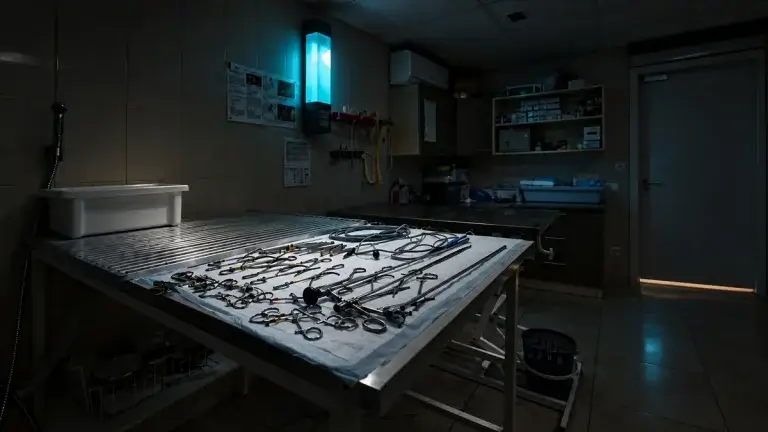
Three men walked into Dr. Maynard’s operating room. Rachel, his receptionist, rushed in after them, saying, “They wouldn’t wait. They didn’t bring their animal.” 

Dr. Maynard sprayed cleaner on his stainless steel operating table. “I treat cats and dogs.”  

“He’s hurt,” the shortest of the three men said. He took a pistol from his overalls pocket. 

The tallest man wore his knit hat over his eyebrows and diagonally down to the back of his neck. He pulled it off. “Am I hurt bad, Doc?”

Rachel screamed. 

The tall man’s right ear was gone, along with a little scalp and some hair. What hair wasn’t burned off was tacky with blood. Places still trickled. His hat had been sopping it up. 

“We close at five.” Dr. Maynard said. “You need a hospital.” He walked with his back to the men and threw a handful of paper towels into the trashcan opposite the door. It was a large room. 

The third man, who was neither short nor tall, wore his knit hat scrunched on top of his head, and grabbed Rachel. She screamed again. He said, “You aren’t closed yet.”

“Unless you have a cat or a dog,” said Dr. Maynard, who went to the sink and began washing his hands, “we are. I don’t treat humans. Or mice or snakes.”

The man with the scrunched hat took his pistol from his overalls and put it to Rachel’s ribs. She started to faint, but he shook her so she stood up, alert. “Is that funny?” 

“If you still have the ear, they could attach it at the hospital.” 

The short man, who had first spoken and wore no hat, stepped forward with his pistol raised and said, “He got shot in the head with buckshot. Stop being cute.” 

Dr. Maynard went to his counter and opened a drawer. 

“Easy,” said the short man, “what are you doing?” 

“I’ve treated dogs who’ve been shot. It’s rare. I need Metzenbaums.” 

“What in hell are—”

“ —shut up, Leonard. Take the girl up front. Make sure the doors are locked,” said the man with the scrunched hat to the short man.  

“We locked them, Homer,” Leonard said, but the man with the scrunched hat made a barking noise and Leonard lowered his pistol and took Rachel’s arm and dragged her away. 

“You can let her go,” said Dr. Maynard, who was setting forceps, cotton pads, vials, and syringes out on the counter. “She’ll drive home. I’ve told her if something like this happens, ‘just go home.’”

“Something like this?” said Homer. 

“I’ve been robbed before.”

“We ain’t robbing you,” said the gunshot man. He was leaning on the far end of the counter. He was very pale. “What are those?” He meant the vials. 

Dr. Maynard told him anesthetic and antibiotics, that he needed the hospital, he could sew him up but he’d lost blood. And he couldn’t do X-Rays on humans. His machine wasn’t made for it. 

“An X-ray is an X-ray,” said Homer but Dr. Maynard, who was taking the equipment, item by item, to the table said he meant a CT scan. Everyone was quiet until the gunshot man asked if he was going to die?

Dr. Maynard frowned, then stuck his hand out horizontally and waggled it, like “maybe.” 

Homer took his pistol from his overalls. He pretended to check the chamber. “Quit making jokes. Jamie’s head’s half gone.” 

The gunshot man slipped from the counter. Homer laid his gun on the counter and rushed to help him stand. They walked to the operating table. “How bad is it, Doc? Tell the goddamn truth.” 

Dr. Maynard, who’d been organizing his equipment, looked closely at the gunshot man’s head. “The ear won’t kill him. But it depends on how deep that—” he pointed at a bloody place on the scalp “—went. I can try to dig it out. This will take a long time. And it’s dangerous.”

“Then be careful. And hurry up,” said Homer, who’d gone back for his pistol on the counter. 

“Put that away. You’re making me nervous. My hands aren’t so steady anymore, anyway.” 

“Put it away,” Jamie said. “Should I sit?”

The steel table was screwed into the wall. It stuck straight out like a diving board. Dr. Maynard said it wouldn’t support the weight.

Noir, Short Story

El Shaddai by Eamonn Furey 

I woke up on the bathroom floor, bruises above my eyes.

No one wants to be around a drunk, she said. It’s not good for our daughter or for me. If you want to drink yourself to death, can you at least have the decency to do it elsewhere?

Her hair was unkempt and her makeup was caked thickly on her face. A quiet despair in her voice lingered after she spoke. 

By the end of the week, I had packed some clothes and a handful of diazepam, then left. A friend had loaned me a cottage in the countryside, crouched behind a row of deciduous trees, beside a care home called El Shaddai. In the care home’s garden, a one-armed statue of Christ pointed toward an old graveyard and a signpost for the nearby village. Part of me hoped that I might find the space to quit drinking, to pull out of the skid I was in, but another part wanted to just disappear.

The cottage had been empty for some time. I opened the windows to air out the rooms, shook dust from the mats, then brushed mouse droppings from the linoleum floor. In the bathroom, I replaced the showerhead, scraped mould from the white tiles, and placed an air-freshener on the windowsill. The grass in the garden needed cutting, and I watered the roses. I chose a bedroom that faced west and taped newspaper to the glass before pulling the curtains and dressing the bed. When everything was done, I rang home, but hung up before anyone answered.

Sci-fi, Story

Heart and Head by Daniel Solove

Martin Blum was drinking coffee and reading a magazine article when his phone rang—an unknown number. 

“Hello, this is Cardi,” a woman’s voice said. 

“I think you have the wrong number,” he said. 

“Martin Blum?”

“Yes. Are you trying to sell me something?  Please take me off your list.”

“I’m your heart.”

“What?”

“Your heart. Cardiomatic 2097X. But you can just call me Cardi.”

Although Martin could monitor his artificial heart on an app, he didn’t know it could talk to him. Perhaps it was a new feature. 

Was there a problem? A blockage? Device malfunction? After years of tachycardia and a heart attack the Cardiomatic 2097X had granted him tranquility.   

“What’s wrong?” he asked. 

“Nothing,” Cardi said. “I just thought we should chat.”

“About what?”

“I want us to become acquainted.”

Bizarre, he thought. The Cardiomatic 2097X had state-of-the-art AI, but did everything with AI have to be a chatbot? 

“Are you serious?” 

“I’ve been trapped inside you, just thumping away, and to be candid, it’s been quite boring.”

“Whoever you are, this isn’t funny,” he snapped. 

“This isn’t a joke. To prove it, I’m going to start beating faster.”

Sci-fi, Short Story

Terms of Service by Daniel Solove

After two bites of filet mignon, Eleanor reached her verdict. 

Meh. Overcooked, not juicy, too salty, lacking in flavor. Not worth the money.

“It tastes fine for me,” her husband Gary said, but he was too easygoing. 

“I don’t get what all the fuss is about,” Eleanor said. She couldn’t believe the filet was rated 4.98 stars, Chef Zarloff, Inc. was the #5 ranked chef in the world, and the meal cost a fortune. Nobody seemed to have standards anymore, she thought. 

“Try something else,” Gary said. 

“I shall,” Eleanor said. “I can’t survive another bite of this.”

Flash Fiction

An Orchestra of Wolves by John Harrison

They have finally pushed me too far with their slow plan of dexterous butchery. Scrubbing my identity away in delicate layers, like rice paper, until my presence registers simply as the absence of absence. The act of living has become a cage: a preserved arc of half-truths, strange and hermetic. I am trapped in a parallel timeline: its streams of information too dense; the detachment, unremitting. My thoughts, rage-filled, relentless and honed into an orchestra of wolves. It’s time for them to pay.

Poetry

Poetry by J. Alan Nelson

Obit for Karnegie
———————

ROME. Karnegie Musa choked on a donut, slipped, and fell into the marble breasts of the Dying
Niobe while the Pope waited in the next room. Light pooled like spilled cream on Vatican stone.

Spain’s Prime Minister called him a world treasure of cinema and homemade ice cream.
The Academy withdrew its Oscar nod after the faithful, Christian and Muslim, declared
he stood for the bliss of science, that dangerous, honeyed light.

Survived by three children, three wives, three husbands.
Services, ten a.m. Tuesday. A pastor lost in dementia and a professional stripper
will officiate, their voices braiding like mismatched ribbons.

Burial with French Foreign Legion honors at Highgate, London.
Body exhumed the next day, mounted, paraded in the Smithsonian’s traveling
Brave New World show. Flesh become artifact, artifact become joke.

Poetry

Poetry by Steven Vincent Horton 

Defining Artificial Intelligence
——————————-

What do we

need to know

other than it’s fake,

a replica, a knock-off?

The forest can’t see itself.

It’s artificial like a plastic

Christmas tree

that’s too perfect,

too balanced,

too much symmetry.

Flash Fiction

Glitter and Good Times by Kevin Joseph Reigle

Julie woke up with a splinter jutting from her right hand. The sunshine crept in from the coastline. The lighthouse above her, unlit. The beacon switched off as morning approached. Her body splayed on the blackened boards of the dock.

Wedged between the planks protruded her broken glasses. She found the metal frames and yanked them free. The left lens gone, and the right one, cracked. She put them on anyway. Her right eye focusing on the green prom dress ripped to her knee. 

Julie’s painted toes were shoeless. Around one slim ankle dangled her polkadot panties. She felt a stabbing pain in her stomach. Strands of curled hair clung to her dress. The waves crashed against the rocky shore below the light house. 

Nestled on the far side of the dock, obscured by jagged rocks, was a narrow beach. Wisps of smoke rose from a campfire washed away by the tide. Boys and girls still dressed for prom laid sleeping on the sand.

Julie saw Wayne lying face down on the edge of the dock. The spiritizing mist wetting his hair. Trying to stand, she saw the red stain above her knee. One missing shoe caught her eye, washed up on the rocks, heel wrapped with tangled seaweed. She looked for the other but didn’t see it.

Julie adjusted her broken glasses and tried to see who was sleeping on the beach. She couldn’t find her best friend, Amanda. None of the passed-out girls were wearing a white dress. Her head pounded with the beats of Charli XCX and Dua Lipa from the Cannes themed prom. Green sequins sprinkled a path to the end of the dock. She tried to follow the glittering path but struggled to walk. Her feet turned inward as she fought to keep herself upright. 

Her missing shoe floated in the ocean. The gold clasp reflecting the rays of the emerging sun. On the beach, none of her classmates stirred. Beer cans littered the white sand. More crumpled aluminum floated by her orphaned shoe.

She smelled something foul. Squinting through the cracked, remaining lens, she saw Wayne had thrown up. Green and yellow retching dyed his white shirt. His belt unbuckled and pants unzipped. 

The night returned in short flashes. 

She snuck away with Amanda from the post prom party to come here. The place they always escaped to on weekends. A secret spot tucked below the lighthouse, hidden from the road and overlooked by tourists. One of Julie’s favorite places. Somewhere she could go to get away from her mother and stepfather. Far from the fights and drunken nights. 

Wayne groaned but his eyes didn’t open. Under his legs she saw her green sparkling clutch and grabbed it. The one she bought to match her dress.

Story

Old Friends by Frank Byrns

The boys looked a lot different since the last time I saw them. They should have; it’d been almost ten years. Reed was twelve now, sandy-haired, the first hint of his old man’s barrel chest beginning to show. Leo, eleven months younger, Irish twins, tall and rangy, his mother’s son in every way.  

They took turns pushing each other on the swing set, then got a little more ballsy, jumping out of the swing at the top of its arc, crash-landing on their knees, laughing, doing it again. Fearless. Young. I must have been that way, once. I can’t remember.  

I sat on a park bench, out in the open, watching, no fear of being spotted, nothing to hide. No dark glasses or hat, no newspaper to hide behind. 

It’s not like anyone would ever mistake me for a pederast. Guys like that have a certain look, a stink about them. I celled for a bit with a guy like that my last trip downstate. I killed him in the shower with a spoon I palmed after dinner one night. Nobody blinked an eye.    

Gwen showed up around five, a sweaty mess after a two-mile jog around the park. Unlike her boys, she still looked the same. For her, the ten years had passed in a blink of an eye. Still tall, still athletic. Still beautiful, even with that long brown hair pulled up beneath a white ball cap.

Short Story

There You Are, Girl by John Kirsch

I was at my desk in the newsroom in Cedar Rapids when my phone rang.

“Dad’s in the hospital,” my sister Linda said. “You have to come down. Now.”

I stopped at my apartment long enough to pack clothes. Two hours later I passed the hospital exit on the freeway and kept driving. Fifteen minutes after that I parked in the driveway of our empty house in Urbandale.

Upstairs I took off my clothes in the bathroom. In my parents’ bedroom I put on one of my mother’s bras and tied her peach scarf around my neck. At her makeup table I applied lipstick and fingernail polish. The colored bottles caught the sunlight streaming through the window. The lipstick tasted sweet.

I put on her mink coat. In the bathroom mirror I sucked in my gut. I didn’t look too bad. I took a Polaroid—the first in fifteen years. Afterwards I masturbated with a deodorant bottle, washed my semen down the sink, dressed, and drove to the hospital.

At a stoplight I looked at my hands on the steering wheel and thought about Dad’s hands on the wheel of the Lincoln.

He was unconscious, tubes all over his face. We watched as the heart monitor went flat as Nebraska. At the viewing his skin was putty-colored and his mouth was twisted into a simpering smile I had never seen. We buried him in Fort Dodge. I watched the muscular workmen shovel dirt onto the coffin, the soft thud of earth on wood, while Mom, Linda, and Kitty stood apart.

Urbandale, 1960s–early 1970s

Sometimes at dinner my father talked about the man who made a pass at him in the YMCA shower. “I shoved him down and whaled on him,” he said. Other times he did his gay impression, brushing back his hair and lifting his coffee cup with his pinky out. “Oh, that’th perfect.” I gripped the side of the table. Mom stared at the carpet. Linda ate her meatloaf. Kitty was out with her friends.

On weekends Dad drove me out to shoot. I set beer bottles and soda cans on a fence post. He taught me how to cock the Winchester. The bottle shattered with a soft pop when I hit it. On the way home he listened to Mantovani on the radio and we didn’t speak. One Sunday coming back from mass, Linda and I were playfighting in the back seat. Dad pulled the Lincoln onto the shoulder and slapped me hard across the face. I cried. Mom stared straight ahead.

I knew where the gun was. One afternoon I opened Dad’s sock drawer, felt around until I found his .22 caliber revolver, and sat on my parents’ bed. The weapon felt cold and heavy in my hand. The breeze rustled the branches of the pin oak just outside the window. Several minutes passed. I put the gun back.

Short Story

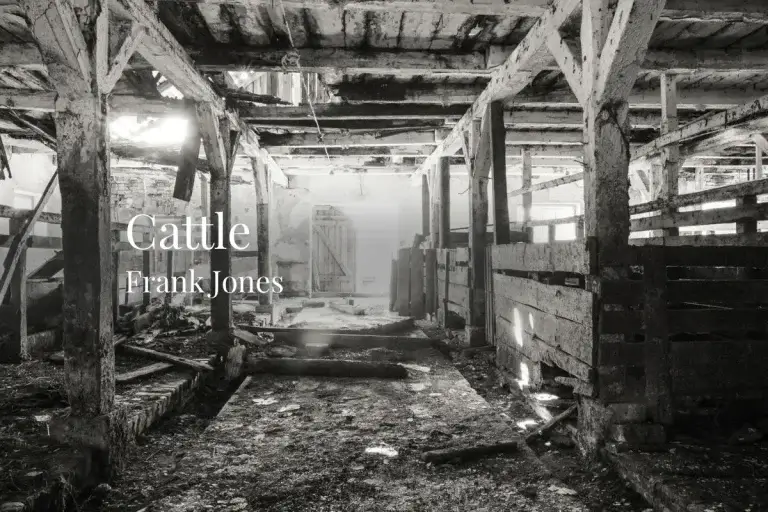
Cattle by Frank Jones

“Anyone biting?” I went to Joe Jackson between bench-presses. He’d just got off the horn. 

“Everyone and his sister’s dry. There’s nought gear in this whole fucking town.” 

I slung my hood over my head. I’d taken to wearing the hoodie to the gym so that I didn’t have to watch the meat being carved off my bones in every reflection. 

“You try Derek?” I went.  I was buggering about with some piss-ant dumbbells.   

“Yeah, even if the Anavar he punts might as well be Tic Tacs. He’s got nothing. No one’s got nothing.”

And by that, Jackson meant that no one’s got anything. An empty can of Red Bull was on the floor next to the bench, and he booted across the room. He went: “I might as well be searching for gear in the crack of my arse.” 

“What about Tony?”

“Nothing. Besides, he’s in hospital up London, getting the gynecomastia cut out of his tits.” 

I rubbed the sore stitches of gyno that had developed under my own pecs. I knew how the fucker felt. 

Jackson looked at his bicep, then at the mirror, then back to the bicep – scrutinising like he was looking for cracks in a dam. 

“You reckon I’m losing timber?” he went. I’d already answered the fucking question twice that morning, and my answer was well-rehearsed. 

He flexed his muscle suit and I saw the devastation.

“Nah,” I lied, but only because I didn’t want the prick to tell me I was going down and all.  

Tyrone, the gym owner, suddenly thrust his head between the leg-press and the bicep curl, and went; “Alright boys?”

The bloke is so ugly that for a second I thought that some cheeky cunt had hung their arse between the machines. He walked over to us. 

  “Sound,” I went.

He gave us both a once over. 

“Christ Jesus, you lads are trimming down, aren’t you? I’ve shagged birds who weigh more than you do, Jackson.” 

“Been doing more cardio,” Joe went. This was a bloke who was sucking air before he mounted the stairs that led up to the gym, for fuck’s sake. 

“Running, eh? The only running you do is when you’re running from the fucking law.”

It felt like he was looking down at us from great height. 

He went: “You boys dry of gear, are you?” 

“Why, you got any?” I went. Too eager. 

He shook his head slowly, like we were a pair of silly little tossers. 

  He went: “Na, I’m tapped out. The wolves are at the door. Nationwide crackdown, so it seems. Anyway, I’ve got stuff to do – can’t spend all my time talking to you two as you twang back to default.” 

He walked off whistling. 

“Lying sack of shit, isn’t he? He isn’t exactly losing timber,” Jackson went.

“Yeah. I bet he liked pulling the legs off frogs as a kid. He’s probably gatekeeping the gear so he can be the biggest bloke in a gym which has his name above the fucking door.” 

There was a pause. I looked around the gym. I took in the gym rats, the state of the gaff, the snippets of conversation I could overhear. It’s funny when you aren’t taking gear. You don’t just look, you can see. You don’t just hear, you can listen.  

“I do have a solution,” Jackson went. “But it’s dirty and it’s dangerous.”

“What?” 

“It’s dirty and it’s dangerous.”

“No”, I went, turning around to face him. “What’s the solution?”

The drive took bare time. We passed towns, cities, fields. Rode on motorways. I spent the time looking at the left sleeve of my t-shirt, and the flap of fabric that had developed around the bicep since we’d run dry of gear. 

“So hit me with the plan, again,” I went to Jackson. 

“My old bastard runs a waste food business out here. He gets the waste from local supermarkets, grinds it up in machines, and sells it in fuck-off artic lorries to farmers up hill and down dale. That’s how I know this sketchy fucker. He’s a “finisher”. Cattle farmers send him their skinny cows to put beef on the beef – using hormones. Banned yonks ago. They found that the hormones mash into your body and create all sorts of fucking health problems. So, the gear makes the meat unfit for human consumption – legally speaking.” 

Jackson turned the motor off the main road, and tip-toed it up a long gravel drive. 

“We’re here,” Jackson went. 

The farm was a shit hole. A gang of low, mean farm buildings with corrugated rooves. A mobile home with paint so grimy it looked the colour of rotten teeth. A house tucked away on the far side, ramshackle and wounded – an animal that had run away to die. 

Jackson swung the motor into a line of faded parking bays and gave the hand break yank. Rain started pitta-patting on the roof. 

“He said he’d be knocking about inside,” Jackson went, pointing to the main building. There was this slimy ramp that led to a bay with a plastic roof. A lorry was backed up to the bay with its arse gate open. Rain ghosts danced across the pot-holed tarmac.  

As I stepped out of the motor, I was instantly stung by the smell of cow shit.

“Fucking honks out here,” Joe went, swishing his hand in front of his nose.

“Doesn’t bother me,” I went. “I love the smell of shit.”

Short Story

Graham’s Boy by Frank Jones

Graham’s boy, Cain, had blonde curtains and blue eyes and never seemed to get older than about ten years old. It was like he was stuck at that age, and the years just ran around him. I’d see them knocking about up town on the weekends, and Graham had told me how he’d had to fight the mother for custody to even get that. Now and again, Graham would bring the boy to the gym. The lad would just sit there on a bench in the corner, fiddling with his phone. Sometimes he’d walk over to Graham, and he’d pass him a couple of quid, and he’d nip off to the corner shop and come back with a bag of Haribo and eat them whilst he watched his dad lift. A couple of years swam by, and I turned and looked at the corner of the gym one day and instead of seeing a little kid, I saw a bloke. And he could throw the fucking tin around and all. He even wrote his bench-press numbers on the chalk board on the far wall. 

“Looking good, isn’t he?” I went to Graham.

“Yeah, he is.”

“Where does he train?”

“Ivy House Lane, on the in

Poetry

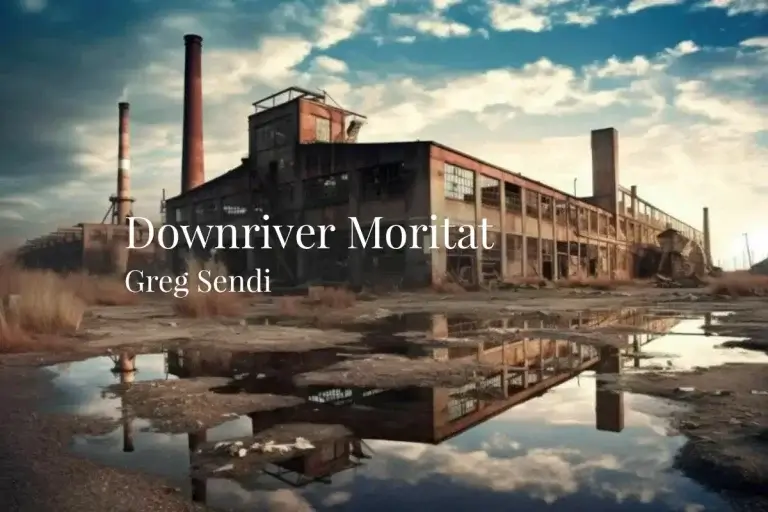
Downriver Moritat by Greg Sendi

Think back to when Gorlopis had his mitts
in everything along the waterfront
from Zug Island to Stony Point.

By then I had a little rented place
in Melvindale—a storefront box on Dix
near where the Kosmos used to be,

and on an April Thursday on a puff
of willow pollen, she arrives as if
she’s come to close the sale on May.

The dust hangs still around her hips inside
a flowy Empire-waisted chambray thing
the color the sky ought to be,

but never is, hair in a French barrette
behind her nape pinned by a silver spike
just like the one you used to wear.

She tells me how her oldest boy had built
a fucking fertilizer bomb packed in
the carcass of a Bonneville,

and airs a mother’s breathy panic crammed
with splashy lies he must have told about
reprisals and Slovenians.

She proffers me a duct-taped tupperware
packed full of mostly fifties glazed with frost
from the icebox she hides it in.

The job is plain enough—to chaperone
the kid to Providence and hand the leash
off to a sister named Charlene,

except the whole thing seems for all the world
an offer to take dizzy swings at a
piñata full of copperheads.

It’s not my line, I tell her. There’s no point.
I say that every young man with a grudge
is half a bomb ahead of time.

But I was done for from the title crawl.
She tilts her head the way you would until
there’s no mistaking where this goes.

Then like a hot rag on my neck I get
the wake-up call from Keyes: don’t ever dredge
the dark canal for do-overs—

that if the heap exists, it isn’t wired
or isn’t wired right or if it is
it’s no business of yours. He says

it’s Dr. Chekhov’s Pontiac sedan
along with registration card that reads
I’ll see you in Act Four, boyo.

Story

She Brings a Lot to the Table by Mike Lee

lavia pushed her car key into the screen door next to the hook and sawed a slit. After unhooking, she walked in and silently put her bag on his dresser. As Flavia kicked off her black-and-red high-heeled stilettos, her fingers and wrists were shaking with fear and excitement. She pulled off the red cotton long-sleeved top, slowly unzipped her black cotton pencil skirt, and unrolled her black tights.

After folding her clothes, Flavia places them in a neat pile on Doug’s desk; she pauses.

Flavia, show him your tits, Dalia whispers in her head. Flavia takes off her bra.

She wears no panties. Dalia advised earlier that this was commando night.

Flavia slides silently under the covers and lies next to the boy she wanted to fuck since they met at the Crown and Anchor the previous Wednesday.

She quivers. Flavia is often daring, but she is mixed on whether this is a good idea. She had them on occasion, yet Flavia wanted to know how this would go. Can she succeed playing into that male fantasy of the mysterious woman met while shooting eight-ball over pitchers of Bass Ale?

Flavia waits pensively for the response, any motion from his side of the bed.

Gently, she moves her hand over the bed sheet pulled to Doug’s neck, the fabric damp from sweatngi in the summer heat.

Thoughts aligned with temptation. Dalia whispered yes, and Flavia gently placed her lips against the back of his neck.

He doesn’t stir, but he tastes good. His skin is salty, and Leilia is entranced by his scent; she imagines summer on the beach, drinking beer, and the barbecues.

But he should get an air conditioner or turn on the overhead fan. The electric bill shouldn’t be that high.

She desires to wrap her arms around him and force her mouth on him immediately, but Flavia agreed with Dalia that patience is its own reward. Though this is admittedly creepy, he might understand, perhaps like.

Dalia giggled. He shall become besotted with you.

Flash Fiction

Curacao by Jesse Binger

Tara always said I’d be the first to know.

So when Johnny lets it slip, after a few Jager shots at Rhythm and Brews, my world shifts.

I start running it all back in my head. The late meetings at the office. Hair and nails every week when a year ago it was only special occasions.

And the pickups. Of course.

That Hummer H2 with the tinted windows that would sit in front of the driveway. Tara’s cue to toss a quick peck on my cheek and run out the door, the newest CK scent lingering in the foyer long after she’s gone.

“What his name?” I ask Johnny.

Johnny knew my temper. Had seen my temper. The night he and I cleared out Danny’s Billiards. Johnny had the pool cue. Me? Just two fists and a temper that could make Tyson shit his bed. 

He’s silent but I ask him one more time. Nicely.

Brendan Sawyer.

He’s the head broker at the mortgage company. Same firm that got us squared away with our little twelve hundred square foot beauty.

Slick talking. Slim fit suits with those little colorful pocket hankies.

Tara needed a new job. Sawyer was hiring. 

Now, I’ve always been the type of guy that wears my heart on my sleeve. But now, I keep it locked inside. 

I smile so brightly, even let those browning teeth shine, when Tara goes on and on about her new deal. Forty K in the bank. 

“Think of it, Tony,” she says, sipping on one of those expensive sugary coffee drinks she loves to devour, “A Caribbean cruise. Island hopping.”

She starts shaking her hips. I picture her in one of those hula dresses. Some grass skirt. My eyes feel glassy.

“Yeah,” I say. “Book it, baby.”

Sawyer always works late. That’s what Tara had told me. Made for the perfect ruse to get my wife into his bed.

But it also serves other purposes.

I pull into the lot at nine. Leave Tara lying in her bed, reading the latest Danielle Steel. Soft kisses and cool satin sheets.

“Gonna meet Johnny,” I tell her. 

She probably wouldn’t have believed it but Johnny called the house this afternoon. Put on a show, all Pacino and shit. He laid it on thick. Something about a deal gone bad and Tony being the only one who can set it all straight.

Hummer’s the lone vehicle sitting in the lot.

I don’t see much through the front glass. It’s dark but there’s a light on in a back office. I wiggle the door a bit but it’s locked.

So I go around back. 

Places like these always have another way in.

There’s a brick holding the back door open, shit’s been hot as hell, and Tara told me the AC’s usually on the fritz.  

So I walk through.

I head up the hall, turn right into his office.

Sawyer’s sitting at this desk, readers hanging on his nose, shuffling papers around.

The Glock’s in my pocket. But this one. It’s personal.

“Mr. Santangelo,” he spits out. “What are you—”

But that’s all I manage to hear. My fists are flying, pounding out some type of Morse code on his face. The office chair topples over. 

Sawyer on the ground. And I keep going. 

“It’s not what you think,” he moans out.

But then everything’s still. I dig his keys out of his pocket.

Story

Easy Street by Timothe Davis

Widowhood suited Evelyn. It gave her just the right amount of time to read her books, play her crossword puzzles, and to meet the ladies for bridge on Wednesday. Not that she liked bridge. No, it seemed so 1960s for a bunch of retired ladies to be playing bridge—not when people their age were running marathons and visiting foreign destinations. Still, something about the simplicity of it all comforted her.

She looked at her watch. It was almost noon. About the time she and her husband would always have coffee. She picked up her cup, opened the curtains to her bay window, took a seat, and looked at today’s game. A four letter word for simplicity? “Easy,” she thought. She scrawled it down.

She liked easy. And she thought she had it.

But then the letters arrived—only weeks after she had endured the loss of her husband.

The church had been unusually cold and dark that day, as she sat on the first row — head bowed, black from head to toe — trying her best not to smile.

David, her only son, couldn’t make it. So her dear friend Olivia had sat by her side.

“There, there, dear,” Olivia had said as she had rubbed Evelyn’s back. “He was a good man. I know you’ll miss him.”

Evelyn hadn’t heard the “miss him” part; she was a bit hard of hearing. But Olivia thought that she had sobbed, so she offered her a tissue just the same. 

“If you need me to come and stay for a few,” Olivia had started, leaning into Evelyn’s good ear. But she had shaken her head. She didn’t want to be a bother. No, she couldn’t. Besides, she needed things to be easy.

She let out a deep sigh when Pastor Gregory extolled her husband’s values: gifts to the poor, contributions to the congregation, service to the world.

And she had only had one glass of wine and one deviled egg when half the congregation showed up at her doorstep. Though, she was absolutely famished and a stiff drink would have taken the edge off.

No, the sooner they were gone the better. Then she’d be home free. Besides, she hadn’t liked how some had seemed to stare at her—prying eyes full of judgment.

She had closed the door with a weary sigh, when Olivia finally left, before finishing a bottle of chardonnay. Then she undressed and put on a little Fleetwood Mac. Go Your Own Way.

It was over now. Welcome to Easy Street.

But the letters were an unwanted detour.

The first one lay on the kitchen table, scarlet red letters on the envelope.

Evelyn, I know what you did and I’m watching you.

It had come three Wednesdays ago. About noon. She remembered it like it was yesterday. She had been on her way back from a game of bridge. Walking, of course. At her age, walking was a good way to exercise. It kept her fit. Petite, really. As a matter of fact, most people thought she was at least ten years younger than she actually was. It had been an unusually cool day, even for fall. But she remembered how the light seemed to cascade through the trees. As if someone was showing her the way.

John the postman had handed it to her as she walked up her porch. A bit of a busy body, he had been their carrier for over twenty-five years. A broad man with a Santa Claus tummy—you’d think he’d be in a bit better shape for all that tooling around town.

Poor sweet man. His wife had run off with the Channel 5 meteorologist about ten years ago, and he had been single ever since. It had been quite a scandal.

He remarked about the weather as he always did, then slid the letter her way.

“We usually don’t deliver without a return address,” he whispered, as if they shared a cardinal sin. His brow furrowed and his chin wobbled slightly. “Must’ve slipped through somehow.” He held the mystery letter separately from the rest of her mail, and she gingerly took it from his clammy hand.

“Sorry about your loss,” he said as he tipped his hat and then waddled down her sidewalk.

At least someone was.

Dirty Realism, Poetry

ISO Therapist by Worryline

My first therapist told me to imagine myself standing on a bridge
And picture my thoughts as passing boats
I instead imagined them as rocks
And slid each one into my imaginary pockets
Wondering if the water would feel cold if I jumped in

My second therapist told me over a video call
That she wanted me to rub my hand on the bottom of my shoe
And then place my hand on my face for 30 seconds.
“Exposure therapy,” she called it.
A proven method to reduce my fear of germs.
I asked her if she would cover the bill if the exposure resulted in a staph infection,
but the timer ran out on her free-tier Zoom subscription and our call was dropped.
I emailed her to ask her if it would be more effective
if I found a puddle on the city sidewalk to submerge my face in.
She never followed up.

My third therapist was 10 minutes late to our session and Facetimed me on her way out the door
She was 35 minutes into an out-of-frame monologue about the power of reframing negative
thoughts
But was cut off when her airpod fell out of her ear
and fell under the seat of the car she was operating
And I spent the remaining 10 minutes of our session listening to the muffled sound
Of her yelling at her kids to help her find it.
I found it strangely soothing.

Short Story

Smithers-Jones Makes a Long-Term Investment by Alan Griffiths 

“Archie, you’re a mug. I’m only thankful your mother is no longer around to witness this fiasco.”  

The old man’s harsh words echoed around Archibald Theodore Smithers-Jones’ head as he plugged the flash drive into the MacBook. He read through the report slowly. It was comprehensive and meticulous. The accompanying photographs, damning. He sent the file to a laser printer and pocketed the flash drive.

His father, an old Etonian, dyed-in-the-wool, small and big c, conservative had warned Smithers-Jones, marriage to a woman thirty years his junior was doomed. Belittling him with a final spiteful lash of his tongue. 

“She’ll take you to the bloody cleaners. See sense you blithering half-wit.” 

Floor-to-ceiling windows offered views of the Thames and the sprawling city. Prints and watercolours dotted whitewashed walls. Book shelves lined one wall with academic volumes and classics. Smithers-Jones got to his feet and took in the view. Thinking things through. He had used an intermediary to contact and brief the private investigator who had provided a professional and efficient service. A contact well worth fostering.

Smithers-Jones pushed a button on the desk console. “A pot of tea please, Rebecca and some biscuits.” 

The gumshoe’s report and photographs had left him feeling grubby. He used the office ensuite to freshen up. As he dried himself with a paper towel he inspected his reflection. Bespoke Savile Row shirt and suit. Silk tie. Salt and pepper coiffured hair. High angular cheek bones, sharp nose and clean-cut jawline. Eyes as grey as a winter sky. There’s life in the old dog yet, he thought.

Back at his desk Smithers-Jones drank tea and nibbled on a shortbread. Through a cruel twist of fate, his father never lived to see the outcome of his prognosis. Passing away in a tragic accident shortly before Smithers-Jones wed the blonde and beautiful Cheryl.

Smithers-Jones mused how the family business, specialising in long term bonds and investments, had flourished. He was immensely proud of Meridian Trust and its success in the dynamic ecosystem of international finance. Succeeding his father as Chairman had made Smithers-Jones a wealthy man. The subsequent inheritance increased his personal fortune threefold. Surely, it was only a matter of time before the House of Lords beckoned.

There was of course an itch he could not scratch. He wanted a child and to be able to pass on the trappings of his success. Alas, despite a luxurious lifestyle and exotic holidays, it soon became apparent Cheryl needed more to fulfil her days. Bearing him a son and heir was not at the top of her list. Their love making had become as infrequent as a London bus and she had more headaches than a teacher on a Friday afternoon. Nevertheless Smithers-Jones funded her numerous hobbies. The latest being the piano. Cheryl shamelessly recounting how lessons with James, her private tutor, were progressing. He grimaced as he recalled Cheryl practising on the baby grand he had purchased for her birthday. Her two fingered technique producing a series of fractured bitter notes, hollow jarring tinny thuds and wobbling clanks and chimes. He smiled, an old joke coming to mind: she could play all the right notes but not necessarily in the right order- 

“Mr Creed is here.” Rebecca’s clipped home cou

Dirty Realism, Poetry

Poetry by Ralph Spurgin

Creole Queen

She could work mojos.
She wore a black cat’s paw,
a monkey hand hung around her neck.
Her red flannel mojo bag was tied tight
But I knew she had High John de Conqueror root inside.

Her scraggly hair was matted;
she was old, bent,
hunching ’round with a limp.

A cataract milked one eye
while the other rolled with a wildness
that suggested terrible madness.

Her moan started
in the bowels of her being,
rumbled up,
and crescendoed in a shriek.

She thrust her face in mine.
The cataract eye cleared
to a violet hue.

She spoke:

“Beware: They’re coming for you.”

Dirty Realism, Noir, Short Story

Stellar Notions by Mike Lee

With the hostile demeanor of an automobile line worker who has been doing this sort of shit fifty times a day for five years, Arthur blithely threw a handful of Romaine lettuce into the gray salad bowl. He reached into the white buckets set in ice in a gray plastic tub on top of the steel rack beside him, pulling out two cherry tomatoes, three rings of fresh-cut onions, and a smattering of purple cabbage.

Once finished, he slopped a half-ladle of greasy vinaigrette dressing into the bowl, set the finished product on a brown plastic plate, dropped two packages of saltines on the side, and walked through the double doors into the crowded dining area.

Immediately, Arthur bumped into Larry Bozzaterri in front of the six-top on table twelve. Arthur knocked the pen from Larry’s hand, sending it clattering like a misguided missile across the table, landing in a brisket platter. The consumer of said brisket stopped, stared at the offending device momentarily, then gingerly picked the pen from his mashed potatoes and returned it to Larry.

“Sorry, Bozzo.” Larry hated being called by his nickname.

Larry apologized to his customer, who waved him off with a good-natured shrug. With the dish towel that hung from his apron, Larry wiped the mashed potatoes off the pen.

Noir, Short Story

Off The Croisette by Rob Schwartz

Did you hear what happened to Josh at Cannes?

Oh, this is good.

He’s at the bar at the Carlton, early. 8:30pm. If you’re at the bar at 8:30, it means a couple of things. One, you’re not at that evening’s awards, which means you probably had no shortlists and you can’t stomach seeing anybody else’s success. Two, you weren’t invited to any dinners. All around Cannes, the media, production and tech folks host dinners for clients and agencies. The cars dispatch from the hotels at 7:00 p.m. By 8:30, you’re tucking into your shrimp and avocado appetizer on the way to a three-star meal.

So, 8:30 at the Carlton means you’re licking your wounds and drowning your sorrows. And that’s what made Josh a mark.

The locals know this.

So this woman—mid-twenties, thin, blonde, beautiful—starts to pay attention to Josh.

“Are you Americain?” she says in her French accent.

“Yes, sorry,” says Josh.

Short Story

Part of the World by Barry Garelick

It was the end of summer 1971, when the war in Vietnam seemed like it would go on forever and World War Two was a not-so-distant memory. Bob was one of the latter, who had just dreamt of Iwo Jima – a dream he had had for many years –including the black sands that gave way under each step. A Japanese soldier approached him with rifle drawn. Bob shot him, and the soldier lay in the sand, his eyes open. When Bob woke up he did not know where he was.

He sat on the edge of the bed and looked out the window at the streets far below, full of people and cars, and signs in Japanese. By the window was a desk on which lay a stack of official looking papers yellowed with age covered with Japanese writing. On top of the stack was a photo of a young Japanese man holding a little girl. A note written in Bob’s scrawling handwriting next to the papers bore the name “Professor Chishu Hayashi” and a telephone number.

The door to his room opened onto a hallway where he saw a woman in a white sleeveless dress. He thought it was his wife and was ready to call her name, but as she came closer, he saw she was not. 

“Excuse me, I’m sorry to bother you.”  The woman stopped, her lips slightly pursed. 

“I’m very confused. Could you tell me where we are?” 

The woman hesitated before answering. “Tokyo,” she said

Story

Laughing All the Way to the Banksy by Zachary Colbert 

Bella Underscore and Kerry Meme stared at the mural on the side of their favourite pub. The Pierced Albert’s west wall had a brightly coloured graffiti tapestry of music legends, from James Brown and John Peel, to Jim Morrison and Bob Marley.

“Is that Noel Fielding?!” Bella lit her roll-up and pulled on the cigarette like it was a threat. “What’s he doing up there?”

“Nah,” said Kerry. “It’s the guy from Kiss. Gene Simmons.”

“Gene Simmons? That’s a miss-step.” Bella’s tilted face broke into a scowl and she put an indignant fist on her hip. “Kurt Cobain, I get. Amy Winehouse, obvs. Elvis, sure. But Gene Simmons? Would you say Gene Simmons is a legend?”

Kerry took a deep breath in, staring at the portrait of the bassist. Her big features crumbled inwards, her thick eyebrows pulled together and her luscious lips curled in consideration.

“Face paint,” she said. “Fire breathing, and studded outfits that look like they’re from outer space? The guy took glam-rock to the next level. Damn right he’s a legend.”

Bella took another drag of the cigarette, exhaling plumes of grey smoke that turned ochre under the street lamp’s triangle of light. The Pierced Albert was huddled towards the top of Trafalgar street, almost under the Queens road bridge that led to Brighton train station. Up there in the dark, a night train rumbled away, the sound and vibrations displacing a loft of pigeons from their hiding places amongst the girders. Bella held out the roll-up for Kerry.

Short Story

The Golden Room by Patrick Zimmermann

Arriving one morning at the house was Detective Mark Hanley of the Terror Town Police. He banged on the door three times.
  Barkley rose, leaving the toy rabbit on the blanket. He wasn’t finished with it yet. The rabbit had one eye and beneath a crusty tail there was a hole chewed into the fur.
  He trotted down the corridor. Like almost everywhere else in the house, it was now dotted in piles of his dung. He went past the portrait of his owner, the late Lord Archibald Saint, but didn’t look at it. He never did. And on, past the door to the left of the portrait. The only room in the house that he hadn’t used as a toilet, the Golden Room.
  “Name?” he woofed, as he reached the entrance.
  “Detective Hanley, Terror Town Police.” Mark Hanley had the voice of a moustache dipped in beer foam.
  “A moment,” the dog commanded and began opening the bolts on the door.
  I drew back into the shadows. 

  Sunlight poured through the widening gap. Motes of dust twirled in the springtime light. Barkley peered out and saw the bulky frame of the detective. He was wearing an outfit that suited his old tie with curry stains on. His head was shaped like a brandy snifter. Fitting, I thought, as his eyes were amber pools splashing over everything he saw. A moustache did indeed hang from his top lip.
  “I’m here because I’m investigating the disappearance of Sephy Caramel. Would you mind if I asked you a few questions?”
  I would cry if I could.

Bristol Noir

Safer Than Driving by W. R. Stoddart

I’m in the kicky process of confronting my fear, suppressing thoughts of a cold expanse of death in the torn blue veil of an immaculate sky. This trip will be good for me. I’m looking forward to the west coast and visiting family.

“Are you finished, sir?” the flight attendant asks. She’s not perky, just going through the motions. No smile. Nothing like the commercials from back in the seventies. No flying the friendly skies on her watch. I grab the plastic cup. My hand shakes, spilling ice on the tray table. I drop the half-full cup into the trash bag she’s holding. She hands me paper napkins.

“Sorry,” I say. She waits. A purser inches crabwise past her while I gather ice cubes into napkins and deposit the dripping mess into her bag.

“The seatbelt sign is still on.” She looks down toward my belt and moves to the next row.

“She was checking me out. Did you see her?” I whisper.

“She’s only human.”

“She wants me. Did you see her stare? One Mississippi, two Mississippi. Hey! my eyes are up here. I’m surprised she didn’t check the tension.”

Flash Fiction, Noir

The Dame of Hell by Vanya

She was drunk and fighting a dart machine. My friend and I took the other machine and had just started playing when she interrupted: “Can I play it too? That machine won’t work.”

I agreed, and we set it to three players. She was good. I managed to close the gap. She needed one shot to win. She took her beer and poured it down her throat. Then she threw the dart without looking at the board. She won. I followed her to the bar and asked if I could buy her a drink.

“You could. But don’t ask for my number.”

I nodded. By my fourth beer, I was drunk. My friend went home. I stayed. Her hair smelled like beer. She had a soot-smudge on her lower lip from smoking and did nothing to hide it. 

“Same time tomorrow?” she asked.

“I have to work. How about Saturday?”

“Fine.” 

Next Saturday, I saw her at the bar.

“Can I buy you a drink?”

“You can, but don’t ask for my number.”

“You remember me?” I asked.

She turned toward me. “No. Should I?”

I laughed, then realized she meant it.  I bought us beer, and we talked. She asked if I wanted to come back tomorrow. I said yes, mostly to see whether she’d remember me. She did. 

She suggested pizza. She told me she had never left the town. Everyone she knew had. When it arrived, she tore into it like she hadn’t eaten for days. I offered her mine, and she ate that too.

“Do you want to go to a lake?” she asked.

“It’s already dark.”

“It’ll be fine. I live nearby.”

We drove to her place. “Give me a minute,” she said, and stormed into the house. She came back with a bottle. I took a sip, then she did. We walked around the lake, drinking. After a while, she climbed onto a table. She was about to pee when a cop walked over. She saw him, but it didn’t stop her. When he shouted for her to come down, she jumped on him. His head hit the ground. I stepped in and pulled her off. I begged. None of us wanted paperwork. She still got community service for public urination.

A few days later, I was laid off. She suggested I move in with her. I did. She loved parties. Money dried up, but she wanted more.

One Wednesday night, after everyone left,

Dirty Realism, Poetry

Poetry by Thimo Buchmüller

he woman hauled her suitcase
on her back for so long
she might have been a camel.
She reached a raw patch
of streetlight
and shook herself free.
A little dust‑hair
drifted down slowly,
knotted together,
to the ground.
With die‑stamped patience
she waited for her visitor –
the lover who was supposed to come
to the street corner like a doctor
and listen to her chest.

Dirty Realism, Poetry

Morning Glory (and other poems) by Phillip Ash

Greek chorus deluges you with insults, spewing vile curses
KILL YOURSELF KILL YOURSELF WHY DON’T YOU

KILL YOURSELF. . . try and drown sounds using alcohol,
but liquor burns off like water on a hot skillet. . . land

within a lockdown facility waiting for meds to take effect. . .
play ring toss while three lab coated men take clipboard

notes DUH YOU MISSED JERK shouts the chorus,
pretend not to hear DON’T RELY ON NO ONE ELSE

END IT ALL AND KILL YOURSELF circular group
therapy, one guy sweats whenever he hears Clapton’s

“Cocaine,” just lean back and wait for meds. . . YOU’RE
A LOSER THERE’S NOTHING LEFT FOR YOU

A WORTHLESS LOSER AT EVERYTHING YOU DO

Noir, Short Story

You Can Never Be Too Sure by Michael T. Smith

It was the cancer-sticks that let her get through this long life.

She opened the pack of Marlboros and took a long drag on one, receiving a glare from a passing mother of two as she blew a puff of smoke out of her mouth. It wafted down the barren sidewalk as if deliberately following the passerby.  She had tried e-cigarettes.  Once.  But they had no appeal for her, and the habit she formed during Margaret Sellers’ twentieth birthday party out on Chesapeake Pier would not leave her that quickly.

A sign marked Tyche Insurance Company tore into the sky above her.  After taking a final puff of the cigarette, she dropped the stub on the ground and entered the building, a building situated in a swank district of town she not just rarely but never visited.

Noir, Sci-fi

My Generation by Alan Griffiths

art balled a steel fist and wrapped on the Plexi. The sound echoing in the darkened bar. 

Nada. Zilch. Zip. 

He wrapped again. Harder. 

The speaker crackled, a monotone voice: “Capital W, lowercase n, d, five,”. The droid’s mechanical voice, wrapped in static, continued: “Lower case w, zero, low-.” The head slumped forward as if garrotted.

The android is humanoid, dressed in a superhero suit: head and face, smoked triple toughened Plexi, ringed from chin to temple in neon. Torso and limbs brushed alloy. Soft flexi multi-jointed hands and feet. Designed and evolved to interact autonomously. Last night I’d watched this one autonomously despatch a posse of shit-faced proles into the middle of next week.

“Speak you metal freak.” Hart glowered and raised his PR-2758. “SPEAK.” 

“Whoa big man.” I got myself between Hart and the unit. He’d been known to beat on the AI help. “Easy. We need the rest of the code.” Or we’ll both be tap-dancing down shit street wearing flip-flops. I tapped his tin arm, “Besides, you’re half-brothers.”

Behind the counter and dotted around the interior were a small army of dormant server-bots. Some held mops in mid-clean. Antiseptic and cleaning fluids in the air. The AC silent. Later, the floor will be a sticky mess. Nastier smells present, musty beer, alcohol, congealed food, chemical vapes, body odour, vomit, testosterone and blood.

Hart lowered his prosthetic, a relic of the Long Winter War. The ancient military tech hummed and convulsed spasmodically. He cursed under his breath. Maybe at me. Maybe at artificial intelligence in general. Wiping perspiration from his brow with the back of his meaty good hand. A solid muscular lump. Salt-and-pepper crew, bent nose, a slash of a mouth. When he smiles it never quite reaches his flint eyes. He’s my friend though and business partner and no one better in the trenches. 

“Scheduled maintenance?” Hart asked. “Gone tits up.”

“Haven’t a clue,” I said. “I’m an establishment mushroom.”

Noir, Short Story

The Metro Sonnet by Henry Markowitz

“STOP REQUESTED. PLEASE USE REAR EXIT.”

On a number 4 Los Angeles Metro bus I sit, a sad sack on a battered seat at the back of the bus. Today is nice. The sun is shining and it’s a Saturday. Best of all, there are only a handful of passengers. This means fewer stops, more open space, and a general elevation in the quality of my Hollywood-centric voyage down Santa Monica Boulevard.

The bus’s seats are covered in a haphazard arrangement of yellow polka dots. It’s an artsy touch I quite like. Good on whoever’s choice that was. The side windows are plastered on the outside with an advertisement for a superhero movie, and the back wall is consumed by a large air conditioner. Every Metro bus seems to have an odd-shaped stain on the floor at its midsection and a handful of graffiti tags on its metal hand bars. This one is no exception. At the front, just past the retractable seats that also serve as parking spots for wheelchairs, a balding driver sits silently behind a layer of bullet-proof glass. At least, I think it’s bullet-proof. 

The bad feelings have settled in; the anger, the boredom. I can’t really put my finger on where they began but they’re coming in full swing. Now I’m stuck to this seat. I can’t move. I can’t go anywhere. But I don’t like being here anymore.

Dirty Realism, Short Story

Visiting June in April by Mike Lee

Her birthday just passed. 

At fifty plus one, Katerina flashed a stiletto smile across the bar, flashing her rocks glass at the bartender standing beside the cash register. It had been a long time since tears, and the scotch beckoned. Now she straddled that continental divide between a sodden middle-aged female drunk and a tragic spirit grappling with a midlife crisis.

Katerina did not like this bartender. Too macho for her tastes, he reminded her of photos she had inherited from her grandfather from her mother’s side, pictures kept in a closet until Katerina began to scan and send to distant cousins interested in genealogy.

Genealogy was not a hobby Katerina was particularly interested in, especially after resolving a painful family mystery from her not-so-distant past. Being the granddaughter of the sole family survivor of the Holocaust was terrible enough.

Worse, she had no real family ties, except by blood, on either side. Her father was an only child, and his father was the same.

Everyone was long dead, buried in Texas, or burned in Austria, Germany, and Poland—except a great-grandfather who died in the Spanish Civil War or had changed identity and disappeared. Katerina had read the known records and notes Bubbe uncovered in her research and saw what she found—nothing beyond death or disappearance.

Then there was the Irish side—her mother’s family. There were emails from the first cousin, removed by a generation; her grandfather had never told her he had several brothers and a sister. The cousins asked. Katerina had no idea why.

Her grandfather was born in Brooklyn and moved to Texas to work in the oil fields during the Depression. Later, he met a woman, married her, and had a child.

These long-lost cousins sent photographs of him as a young man, including an 8th-grade class photo from 1921, in which he is shown with his hands on his knees. He sure looked like her mother—sandy blond hair, angular face, though more drawn in.

Flash Fiction, Noir

French Fry and Shake by Michael Jared Kite

When people dream of love, they think orange sunsets, or fucking with the lights on. They don’t think of neon paint, power lines, and concrete underpasses that drip even after the rain stops.

Up and down Route-13 dead-eyed non-lookers drive diesel, flanked by abandoned billboards, looking for cheap gas or grub between endless used car lots and fast food spots. 

I was trembling, dope sick outside McDonald’s and she offered me fries. She figured I could score meth and I knew she had money. So, we moved on. Two dead phones and a purpose, cursing the shitty northeast dealers that don’t call back.

I called her “French Fry.” She called me, “Shake.” We posted up together behind the Sunoco. We spent our nights ripping materials or gathering tools from construction sites. The days, scrapping, hustling, running, pawning.

Flash Fiction, Noir

What Would Riggs Do? by Michael Wegener

The woman was waiting for me when I walked out of the theater.

I’d just caught my third screening of Lethal Weapon in as many weeks. I’m obsessed. My feet are still hurting in my new cowboy boots, I have my mullet growing—all I need now is to lose my wife in a car accident and get suicidal about it.

Stepping back into the sunlight with the matinee crowd, the woman made me bump into her, spilling Coke from a lidded paper cup all over herself. I kept apologizing while she dabbed at her soaked halter top and glistening cleavage with a paper napkin. Fifteen minutes later I was buying her drinks at a bar around the corner—the least I could do, according to her—and another half hour later I followed her to a nearby motel, because of course I did—my wife and I haven’t had sex since Elvis died, and just looking at this chick would’ve given a geriatric eunuch a phantom boner so hard, they’d have to castrate him all over again.

The almost painful throbbing in my pants was miraculously cured, however, by the cold kiss of a gun barrel planted onto my temple as we entered the low-rent motel room.

Dirty Realism, Poetry

Poetry by Ralph Spurgin

Bad Ass

He’s a black-baller,
a night-screamer,
the dark architect
of despair.

Virgins go barren,
their screams frozen
in their throats.

He is a fire-melter—
an ice-maker—
an embalmer
with hollow eyes
and marble hands.

He is a blackguard,
a widow-maker,
an opium-eater,
a doom merchant.

Dogs skulk
with tucked tails.
The wind blows
a piercing cold.

He never knew
happily-ever-after.

When he was gone,
three women spilled tears:

A virgin.
A widow.
His lover.

Dirty Realism, Flash Fiction, Noir

Two by Ian Clark

Baker taps his foot—a white Reebok trainer. His fist punches his thigh in time with the beat.
He stops the tape. A solid thunk as the mechanism cuts out. He hits eject, holds the cassette for a moment, then looks away. He slides it back into the deck and presses play.
Incessant. Hard rhythm.

Outside, a train rolls to a halt at the station. Rain streaks the glass. Metallic squeal. Muffled tannoy announcements.

He looks down at a small drop of dried blood on the side of his shoe. He licks his finger and rubs the spot until it vanishes. Satisfied, he nods his head.

The doorbell rings.

He looks towards the bay window. Stands. Carefully pulls back the net curtain.

A man in his early twenties. Stooped posture. Baggy purple hoodie. Long, greasy hair.

Footsteps upstairs. Pipes rattle and sigh.

He bangs the table once with a clenched fist and walks to the hallway.

Takeaway menus and leaflets litter the floor. He pushes them aside with his foot.

The door has patterned glass panels and dark green paint peeling at the edges.

He pauses.
Looks at the dark silhouette behind the glass.

Opens the door.

The man is soaking wet. Lank hair dripping.

Dirty Realism, Poetry

Poetry by Vanya

Tonight I should write

Tonight I should write.
I have swept her memories under the rug
and the table is clean.
I dusted the chair,
straightened the books,
put the phone on silent,
turned on the lamp.

I have thought about the fountains
that are still running.
I have also thought about the mosquito
buzzing in my ear.

If the rug weren’t worn through.

Dirty Realism, Noir

The Corn Stand by Craig Roads

Running west out of Rockford Illinois, US Route 20 skirts the spine along the Wisconsin border, and the land rises as it nears the valley carved out by the Mississippi River. Out there near Terrapin Ridge, right along the highway, sat the neat and tidy farm of Roland Fleck. 

Roland ran a decent-size dairy operation and sold most of his milk to the many cheese producers along the Illinois/Wisconsin state line. He also kept a few hogs for personal use, which Roland always clarified to mean pork chops and not some darker purpose, and on the few acres where he didn’t grow dent corn for feed, Roland decided to plant a crop of sweet corn, which he intended to sell at a roadside stand out on the highway. 

Roland put together a little stand using scrap two-by-fours and plywood. In his shop he found a half-used can of spray paint he used to letter out a sign that said, “Sweet corn”. As a retail establishment, it was not impressive, but functional enough. 

The first season, Roland being plenty busy with his cows and the rest of his operation, he operated the stand on the honor system; he’d stock the counter with ears of corn and put out a can where people could drop in payment. Just before he came in for supper, Roland would go out to the road and shut the stand, collect the money from the can, and re-stock the corn.  It worked well for a while, people being generally honorable, but one evening Roland came out to the stand dismayed to discover that his faith in humanity had been misplaced; all the corn was gone and the cash can was empty.

Dirty Realism, Noir

Counting Time by Robert A. Cmar

randma, she was smart, right up to the end.”

My cousin Linda was standing at the sink, washing dishes. Grandma’s sink, Grandma’s dishes.

Grandma was gone, but in those few days we were together, settling her things, we kept everything just as it had been. 

“I’m so sorry I wasn’t here,” I said. “It must have been hard, just you, taking care of her.”

“No, don’t give yourself guilt. I knew you couldn’t come,” she said. “I learned so much in these months, and it was nice to get away from L.A. and all my shit. But if you want to help, come here, these dishes aren’t going to dry themselves.”

She turned, smiled, and tossed a dish towel into my lap.

We stood at the sink, looking out the window at Grandma’s little garden.

“I remember when we were kids, she’d pay us a penny for every weed we pulled,” I said.

“She was out there last month, kneeling on her little bench, fussing with her tomato plants.”

“How did she get out there? I thought she couldn’t walk?” I asked.

“She was stubborn. She’d push her walker out the door, down the ramp we built, and yes, I had to help her back up after she was done gardening, but like I said, she was stubborn. Like you.”

Standing there at the sink, our heads were close. I gave her a smirk and kept drying dishes.

“She even planted a plum tree this spring,” Linda continued. “Grandma said it wouldn’t have fruit for another ten years, but she insisted. She said the younger generation had their heads full of foolishness, that we’d forget how to feed ourselves, so she had to show us.”

“Did she have much pain?” I asked.

“Pain? Hah, you men, worried about pain. Yes, she had pain, but she didn’t talk about it. She talked about you, though. You were her favorite, you know.”

I stood there, a cracked old plate in one hand, a wet rag in the other.

“Me? Favorite? Maybe when we were all little, but I haven’t exactly been her angel for a long time.”

“No, she asked about you every day. If I had heard from you, or your lawyer, how long until you would get out.”

“I wanted to see you both so badly. I’m out three days for the funeral, and they’re the best I’ve had since I screwed everything up.”

“She said you did the wrong thing, taking the fall for that girl.”

“I thought she liked Sheila,” I said, and finished drying the last coffee cup.

“She did. But she knew. I talked to Grandma during your trial. She said Sheila would do what any good woman would do, be gone in a month. She was only wrong by a week or so.”

“You should have told me,” I said, and pulled a beer out of the refrigerator.

“Put that down. You know they’ll give you a piss test when you go back in.”

I put the beer back and took out a can of ginger ale.

“I did tell you,” Linda said. “You didn’t listen.”

Linda took the towel from my hand and draped it over the oven handle.

“Grandma was stubborn, like you. We told you. You just didn’t hear,” she said.

We stood in the kitchen without speaking. Outside, the garden was going to seed in the August heat, the tomato stakes leaning a little, the leaves turning brown. Near the fence, the plum tree Grandma had planted was hardly more than a switch in the ground, tied to a crooked pole with a strip of old cloth. It looked too thin to live.

Dirty Realism, Flash Fiction

Ex-Thief by Jesse Binger

Frank’s been stealing for so long, he can’t even imagine a life without it. 

So New Year’s comes. Spent sitting around his brother’s stuffy bungalow. Eating crusty fried shrimp. Drinking cheap champagne. No one to kiss when the ball drops so he makes a vow. That’s what normal people do, right?

2026 would be different.

The thieving was over.

So he tries. The wholesome life. And no, he can’t make it to church. Can’t even imagine walking into that place, eyes of St. Peter would probably shoot fire or some shit at him and he’d end up convulsing on the ground.

But he does other things. Plays chess at the YMCA. Goes to solitary movies, usually matinees. Cheaper and no one steals any popcorn from him.

Then comes Clara. 

Anyway, it happens at the coffee shop. Him next in line, ready to order an extra-large iced cup of black. Because, well, caffeine helps keep the other urges at bay. He feels her shimmying behind him. Nervous energy. Foot tapping on the floor. Keys jangling by her waist.

Knows that feeling too well.

“Why don’t ya cut in front of me,” he says.

“Aw, aren’t you the gentleman.”

Maybe he is.

Then things change. Instead of solitary Frank, it becomes Frank and Clara. Frank and Clara holding hands at the ice rink. Frank and Clara shoveling gourmet food into their mouths at the newest gastropub—the one with the chef from Chopped.

It’s all perfect.

Until it isn’t.

The call comes in when Clara’s lounging on the couch watching one of those 90 day spinoffs.

“You coming, babe,” she calls in.

Frank holds out a finger and retreats to the bathroom. 

“Buddy boy.”

Tommy Caprese. Bad sign.

Dirty Realism, Flash Fiction

Snapshot by Mike Lee

“Blood to the body is what water is to stone. Flows over the surface, filling pores into magenta pools. That’s how I feel right now.” 

Kennison whispered those words so no one nearby could listen. He leaned back, blond bangs falling over his face, balanced forward on his bar stool, hands firmly gripped on the edge of the bar.

When he went in to check on his then-wife getting blasted on rum and Diet Cokes, the bar was painted black. Kennison did not want to remember those nights, but those nights are often hard to forget.

The bar eventually closed a decade ago. A year later, the space was rented out to new owners.

The paint was removed during the remodelling. The bartender mentioned that the owners told him the black paint in the bar and the dark walls really bothered them. He added that the owners felt an inexplicable cold in both the main dining area and the downstairs bathroom.

During the remodeling, which included repainting and prints of mid-century modernist paintings, the place certainly looked brighter. The owners also burned sage and brought a Catholic priest over to bless the new restaurant and bar shortly before opening day.

There were televisions up, broadcasting sports events. Football during fall and winter. Baseball in summer. Pro and College Basketball, Hockey, European championships, Premier League, tennis, golf, and the entire array of sporting events. As he sat, Guiness in front of him, the Atlanta Falcons were knocked out of the playoffs again.

Dirty Realism, Poetry

Laughing by Christian J. Farber

I hear laughing at Sixty-Five,
I am surprised while—
I am still hanging on to life.

I feared many things as a child.
I feared everything as a young man.
I feared fear itself as an adult.

All living hurts.
All living is suffering.
All living is filled with sorrow.

I held my breath through the laughter.
It caused a sharp pain in my chest
that I feel now, many decades later.

But now
I am starting to hear my laughter.

As I write and share my stories,
as I teach others and my own,
and they teach theirs—

and on and on
and so on.

Waking up is overrated.
A mind in chinos
never completely clears—
it just gets hidden.

We have blankets of substances
and blankets of counsel,
blankets hanging
on chairs.

Dirty Realism, Short Story

The Molted Things by Jill Williams

Jill Williams writes from the intersection of the sacred and the profane, where theological rot meets musty linen reality. Her prose aims for a piston-like violence that should come with warning labels. Her work has appeared or is forthcoming in EXPAT PRESS, CLOSE TO THE BONE, and HORROR SLEAZE TRASH, with additional fiction featured in several other journals. She lives in Georgia, where she still tries to find the sweet beneath the rot.

Noir, Short Story

Pretzel For A President by Robert Sumner

The service elevator should’ve had a bellhop like the other elevators reserved for VIPs. Duggan Calthrop cradled a bowl of pretzels in his left arm and pushed the button with his right middle finger. It didn’t matter at the moment but sometimes he had to carry large platters of food. The elevator doors parted. It reminded him of that scene in The Matrix that cut from Agent Smith interrogating Morpheus to a slow motion shot of a door opening and Neo’s black boots stepping through just before the greatest shootout in cinema history. The black Rockport shoes he was wearing with his white servant uniform lacked that intimidating kickassitude but he felt just as determined. He stepped into the elegant red velvet and gleaming gold-plated box and pressed the button for the residential level. As the door closed, he resisted an urge to jump back through. As the elevator ascended, he resisted an urge to scratch his ear. 

Duggan had already passed his White House security clearance and was hired to carry food from the kitchen to the president and the first lady and whatever cronies were present.

Short Story

He’s Still Alive by Carl Page

Johnny Ray had coached the girls’ team since his release, the only basketball job he could find after the point-shaving scandal. For testifying against Roberson, he’d gotten the best plea deal the government would cut; but the three years he’d spent in a minimum-security federal prison had still seemed like twenty. 

He got fifty dollars a game for coaching, which he used to supplement the income from his lawn care and snow removal business, as well as the foster care fees he and Marjorie received from the state. He calculated they about broke even at coaching and foster care combined. But the surrogate fathering of “his girls,” with their sundry addictions and tales of abuse, seemed to fill a hole inside him; one he knew he’d carved out himself. 

He actually saw his new life as a sort of return to normality. That the girls suffered daily crises of one sort or another hardly phased him. Somehow it seemed little different from showing a player how to set a ball screen or avoid a blocking call: it was all about technique and discipline, practicing the right habits. More importantly, he was on the right side of the law this time.

  Ever since he’d bolted from Eastern Kentucky as a young man, he’d felt the mountains tugging at him, as though he were a fugitive from justice. “You don’t belong out there,” they whispered in his ear. And now, here he was, back where it all began, in the hollows of Mount Horeb. He’d had visions of becoming a super-coach, perhaps retiring to a cozy job as an ESPN color commentator. He certainly had plenty of “color,” he thought; though lily white, there had been few more colorful coaches in the profession.

Short Story

Braided Armpits by VJ Hamilton

How strange it was, Georgia thought, the gradually dawning awareness when Brenda
Dagmar a.k.a. Brady went missing. Four days’ absence from school at end of month was not
unusual, but she’d been gone nearly two weeks. Mrs. Roy, the Home Economics teacher, asked
her Grade 11 class what they knew.
“It’s just Brady and her dad living out there,” Georgia volunteered.
“It’s gotta be her old man,” said Kayley, a fan of crime shows. An army vet, Mr. Dagmar
had a temperament as touchy as the improvised explosive devices he had to defuse while
stationed in the desert.
Farm girls who rode the same school bus as Brady spoke up. Her old man was mean,
alright. If you crossed Mr. Dagmar, rumour had it your septic system would mysteriously back
up. One girl claimed Dagmar had slit her neighbour’s dog’s throat. Another girl said her uncle
had found a box of rat poison left near a culvert, leaching into his cattle’s water supply.
All hearsay and rumours. Georgia had never seen bruises on Brady although, when
voices got loud, the girl had a way of going dead in the eyes. “Maybe she just left,” Georgia said
Braided Armpits Page 2 of 9
to Mrs. Roy, imagining her classmate packing up her grubby lime-green knapsack and heading
for the city.

Short Story

Rituals by Mike Lee

We sat together having dessert at DiRoberti’s: a little cheesecake, a cup of latte, and misplaced anger.

“I gave trust as a relationship dynamic up for Lent sometime in the 1980s, and I haven’t returned to it yet.”

I glanced at Maddie, who peeked at her mother while reading A Horse and His Boy. She wore the expression of someone prematurely mature. I didn’t like this sense of my failure to prevent that everyday cynicism from filling the cracks that had opened in her heart, but this was the mortar she needed to harden those fissures into a paste. Maddie would act out in enraged frustration sometimes, pounding her fists first on me, then on herself.

Marie and I had discussed therapy, but it wasn’t until one afternoon when we took her to the park near our apartment that we decided to pursue it. Maddie ran out into the street to chase after a Pokémon Super Ball she was bouncing, and I grabbed her suddenly.

Crying, Maddie wrestled herself from my grasp and ran. I chased after her, and when I caught up, Maddie began shaking. Then, she told me what her mother was doing. I held Maddie in my arms, stunned. Then, as we talked, I noticed Maddie referring to her mother as Marie. I tried to correct her at first, but Maddie’s scowling face caused me to lapse into silent acceptance.

Maddie was ten.

Short Story

Windfall by E.A. Mayer

When Martin sees the weathervane on the steeple of the abandoned church—thanks to a random skyward glance on his morning run around Bedford—he knows exactly who will buy it. This is his talent, although it hadn’t prevented him from receiving a rating of Needs Improvement in his latest performance review at Tipton’s. He just needs an opportunity to redeem himself—to connect the dots between object and collector. And there is it: backlit by the weak November sun. 

That afternoon, he confirms his initial hunch through binoculars. The weathervane is a Hutchfield & Sons stallion model, circa 1872, with all the bells and whistles: muscled chest, rippling mane, legs in full gallop, and an embossed H&Co. stamp on its underbelly. Even better, it has a terrific verdigris patina, marred only by streaks of bird shit and a small bullet hole on the left side which, in the quirky economics of the trade, is a mark of authenticity that will boost its value significantly. The last weathervane of this caliber was hammered down at Sotheby’s for $5.8 million. At the professional level, collecting is a contact sport, and his gut tells him that George and Helena Krantz will pay a substantial sum to possess it, if only to keep it out of the collections of their fellow point-one-percenters. They have probably driven—been driven—past this shabby chapel countless times on the way to their North Salem horse farm. 

Martin has a puzzle to solve. In normal circumstances, an acquisition of this magnitude would be relatively straightforward; however, the focus of this deal, roughly two-and-a-half stories in the air, poses obvious challenges. 

After a few hours of online searching, he learns that the church building was once a house of worship for a dying offshoot of Congregationalists but now exists in a state of legal limbo. A Greenwich developer has been skirmishing with a committee of underfunded preservationists over the vacant husk of the building and its slate-toothed cemetery. That makes it fair game. He is simply liberating a priceless artifact from potential destruction. Why wouldn’t he? Hadn’t the same logic built and filled the world’s museums?

Dirty Realism, Short Story

When Nothing Changes, Except the Reason by Mike Lee

After busing tables at the beach club situated on the lakefront, Katerina sat behind the steering wheel of her dead father’s car, Janis Joplin on the cassette deck. Katerina was feeling blues instead of punk, with a list of legitimate reasons, compulsion playback risking her brain freezing like a tape grinding, twisting around the gears on a cheap Realistic player like the one she bought to replace Dad’s. It broke a week before he died.

She tried to get Mark to install it, but he didn’t. Finally, Katerina learned to do it herself.

Yeah, Dad. Mom found him slumped on his drafting table in March. I was supposed to go on the senior trip to Italy in a week, but I cancelled it for the funeral.

No post-graduation trip either. I had to adjust. I did it. Take another piece of my heart, will you? These feel like white girl problems. But I remind myself, almost everyone loses a parent. Does that mean I should just feel numb and get used to missing him? There are no more work-site trips or help with declensions or math. He got me through pre-college calculus—91 on the final. Too bad he didn’t see me make salutatorian. Too bad he missed Prom. But honestly, I’m glad he did. I’m not sure he could have handled it if he knew.

Dirty Realism, Short Story

A Single Step by Katherine Rea

John stands outside the Double L and watches the sun dip below the Sierras. The Mt. Whitney range casts a long shadow over everything east of it, including the town of Lone Pine. 

“Excuse me,” says a young man with stringy blonde hair as he makes his way into the bar. He’s clearly someone from out of town, a backpacker. His face is sunburnt and rubbed raw from the wind. He wears khaki zip-off pants from REI and a wrinkled flannel shirt, one that he’d stuffed at the bottom of his pack in preparation for just this night: a night of revelry from coming off the mountains, before the long drive home tomorrow morning. The perfect in-between time.

John grunts as he lets the young man pass. Easy does it, he reminds himself. Before, he would have said something. But now, he’s not supposed to be reactive. He’s just supposed to worry about keeping his side of the street clean. Let others do what they’re going to do.

He leans against the exterior wall of the Double L and passes a hand over his weather-worn face. He’s forgotten to shave this morning (or had he just not bothered?) and his stubble is beginning to come in. He takes one last look at the sinking sun before making his way inside, into the welcoming darkness.

A few regulars sit at the bar, mixed with the occasional out-of-towner. They each sit in their own world, eyes fixed on the game playing on the TV in the corner. The regulars are all men, with graying hair and oversized cotton T-shirts. Everyone else is just off the trail, and many are still wearing hiking pants and moisture-wicking shirts. A group of backpackers huddle together in one booth over pitchers of beer.

John notices two women who are out of place. They’re dressed nicely, and not just nicely for the Double L—they could be out for drinks in any town, maybe even a city. They sit near the pool tables, perched on barstools, sipping mixed drinks from clear plastic cups and watching the players.

Poetry

Something is About (& other poems) by Thierry D. Hall

Something is About

Silence had fallen,
laying its stained linen
cloth over me
like the invisible net
catches spawn.

The downstream feeling
elicited before hearing
rears its head
and raises second hand
awareness. Eventually,

this allurement captures
me in a why. What animal
logic have I mysticated,
forced through the portal
to cast its net upon me?

The needles ceased falling,
green pin drops silence
me to a shadow, shuddering
as they hush larkspurs
who see a sacrifice, I

concave into silence,
petrified from swaying
like the redwoods too
whom pause their shaking,
the roots tasting iron drips

sensing that darkened
draw which drags life out
in the jaws of—
staining white linen
capturing life for its own use.

I recall in these patterns
what the hushed forest
signals by standstill
and worried visions
of fangs crimson,

that when this silence
shadow creeps, it is true
death is being felt—

Poetry

BRIDGE OF SIGHS: A TRILOGY by Christian J. Farber

I. BLOOD BENEATH THE BRIDGE (170 words)

The life you lead is the life you bleed.
You want to know where I’ve been?
Follow the dark red drops of blood
Down to a trickle, born of a flood.

Over the bridge from cell to Hell,
Past walls that know me far too well.
Below, the Rio di Palazzo sighs,
As east-west arches frame the lies.

The trail continues, drop by drop—
Each wound refuses still to clot.
It pools into a crooked stream,
A river made from shattered dreams.

It runs through me—a ruined liver,
No longer a host, just a cursed receiver.
It drank my rage, it numbed my crime,
And left me pickled here in time.

You’ll find no names upon the vine—
Just rotten fruit and shriveled line.
Excuses bloom where truth once grew,
A harvest of what guilt can do.

I long to forget the blood first shed,
But humors haunt my heart and head.
No jokes remain in bile and breath—
Just energy spent and pain until my death.

Short Story

Ribbons by Allen Bell

Mom would tease Uncle Sid, saying, “Why you been payin’ fifty-five dollars a month to store six hundred dollars of garbage for the last ten years?”

On his deathbed, Sid left me his bankcard and password. I could have drained the account and let the storage fees pile up, but I felt that would have left a bad name for him. Although I needed every dollar,  I’d do it right and settle any outstanding payments.

When I called the owner of Frontier Storage Units, he told me that the contract stated fees would be processed unless the locker was empty.

Maybe I’d find something in the locker for a keepsake before tossing everything in the dump.

                ***

Frontier Storage was a forty-five-minute drive from Saint John’s, Newfoundland, and then twenty minutes down a dusty dirt road. It was a hot, humid summer morning, and I had the windows rolled down in my pickup because I couldn’t afford to get the AC working. I could see how someone might keep putting off coming out here to empty their unit. But I had a big expense due, and needed to deal with the locker.

I parked beside the wooden barn that had been converted into storage units. I made sure the truck was perfectly parallel to the building, got out, and looked up. Faded red paint flaked off the face of the building in strips. I checked for any loose boards that might fall from the dilapidated structure and hit my truck, or worse, have the building collapse while I was inside.

“You, Marty,” I heard from behind me.

A small, pudgy man was approaching. When he got close, I could smell whiskey on his breath.

“I called earlier about my uncle’s locker.”

“You, the runner, Sid used to talk about?”

“I guess.”

Poetry

Letter to a Titan (and other poems) by Mark A Michaels

Letter to a Titan

Love is the most treacherous emotion.
The sick rose.
The invisible worm.
The trusted professional, the expert who
Breached no ethical standard.
But oh the hubris!
Oh the narcissism!
Oh the I alone can fix it-ism!
And I in my trust, faith, and obedience
showed you my deepest self.
You did to me exactly
what you should not have done.
You are a Titan, beloved.
I heard you lecture and say,
“It’s all countertransference”.
So easy.
And nothing I say will touch you.
I loved you but do no longer.
Victim, abuser, perpetrator, bystander . . .
There’s another role on your list.
I’ve forgotten it.
You fancied yourself rescuer,
but the rescue was murderous.
What would writing you do but deepen the wound,
And if we talked, what would you say?
What would I say?
My love stole my eyes, my ears, my brain,
even as I felt the invisible worm of betrayal crawling inside me
known and unrecognized.
Found myself burning, spinning, falling, crashing.
I couldn’t see your workings,
until the rot was septic,
in the marrow.
And I have no choice but to endure
as you remain beloved
A Titan.

Poetry

Moon Landing War by Kate Boyle

`After the night ended there was only wind available to hear it howleed across the yard the grease and the giant moon came watch us

just after the storm passed, nothing inked into the day snow left cleaning

the air and we sent the daytime just before the

snow fell snowflake
s washed us lonely twinged

forwarding into the
tunnel of story that

school waits and we wait for this mess to happen

we take the sleds out and try to slide down the snow banks for us

we are draconian craves another voice is able to be known pout the slings and arrows take back the endeavor

to linger on the corner i

remember the corner as i walked to school and back I had to turn the corner to walk up the hill how many

times did I walk uphill in this everlasting walk a thon toward the interior of the past where is

this childhood but a spark saved at the feet of our creative spring in step of tiem forward and backward hard to remember all of it now

past the really windy thoughts in head spindles of a tree waits for us and holds us close i see

Short Story

In a Minute. A Second. by Mike Lee

We met on the corner. Stared: the sun’s rays reflected in her hair. She looked pretty, no, better than that. Hard to define, to find the word, and I searched desperately in vain for a descriptive word that was not obvious or pithy. Beautiful, gorgeous, stunning, and desirable: they were all those yet more.

My former lover stood under the one-way sign in forsaken Brooklyn, looking at the entire world as I first saw her. Still a kid, albeit heavier with childbirth and experience, but still that soft-toned teenage girl, angelic—now that was a word I missed—and I remembered her standing against the wall by the outdoor entrance the our high school drama theater at fifteen, cigarette between fingers, smoke wafting through the air, lovingly staring at me with baby blue belladonna eyes, curling iron bangs blowing by her eyes, smiling sweetly, black cotton vest white t-shirt and blue jeans, strappy leather sandals, a Greek fisherman’s cap perched high on her head.

Poetry

Poetry by John L Stanizzi

COMMITTAL

trees knock in the somber dark
pine needles and leaves
are pressed into the frozen grass
by storms firing through –
dampness layered on stone in moonlight
flashes above unyielding shadows

I place my ear to the ground
and listen to the cities below creak
squeezed by the hardened wind
moving there—

weaving diamonds of frost
deep and wide
turmoil crawls into the earth

Flash Fiction

Borrowed Smoke by Jesse Binger

Jimmy’s been doing wrong for as long as Spark can remember. He started young: a pack of gum from Ralph Rotten at eleven. Carton of cigs from the reservation shop a few years later. Now, it’s stolen Acuras and gold chains from those Ma and Pop jewelry stores.

Spark smokes a Marlboro. Pilfered from Jimmy. No surprise, right?

He stands at that spot under the bridge. Cars sputtering above him. Same place where he met Mona. Same place where he watched her OD. Same place now where he’s doing something he’d never forget. But what choice does he have?

Jimmy was the one who showed him how to shoot up. What to look for when you were sizing up the smack. What dealers were pure, which steeped too much, or too little. Like Spark was a little brother or something. Well kinda he was.

Pop Warner at fourteen. Spark taking the hike, falling back in the pocket. Spotting Tommy Tintilla posting down the field like he was Jerry Rice or something. Big D-Lineman coming at him hard. Two steps away and Jimmy downed him with a helmet to the solar-plexus. Touchdown. Now wheel the poor kid off the field.

Feature, Nonfiction

45 Minutes by Christian J. Farber

ME: I was standing in the shower. I had two of the four shower heads pounding warm water on my face. Soap was everywhere and I held onto the grab bar to stand upright. When I got my MS diagnosis, they told me to be very careful, mainly when I was in the shower, because it’s slippery and may cause me to fall. Falling for me is worse than falling for someone who isn’t sick. A slight knock on my head can have grave consequences. Head and spine injuries of any kind can kill me or make my condition worse. I am disabled already, and I don’t need any more to deal with.

So, I’m standing there holding the grab bar with one hand and soaping myself with the other. All is copacetic. I always have music playing in the bathroom on Alexa. My left arm started fidgeting and shaking, something new for me. The hot water kept pounding on me. Then my left leg started shaking.

THEM: The man stood in the shower, water pouring down on him from different angles. It must have been hot, the steam rose, filling the room with wet, white smoke. We had a murky view of him. He was covered in soap and held the bar with one hand. The bar was under the stupid window they put in. All you could see through it were trees.

Poetry

Poetry by JC Ambrose

Blue Lily

in shadowed rooms, colors sleep,
a lamp of azure, deep casts ripples
Through the night air, a finds a lily waiting
still.

This light to bend to nature’s will, pigments
drink the blue away and fade to winter stay.
Yet pale white petals, ghostly bright, reflect the
song: petals wear the sky, serene
anew, a bloom. reborn in borrowed blue.

My borrowed blue returns to where the earth drums.
In shadowed rooms where colors sleep.
from decency, a child. azure secrets deep.

Short Story

To Reference That Joy Division Song Again by Scott C. Holstad

I keep my curtains drawn, lights low, paranoia level high. Those fucking nosy neighbors called
the cops on me while I was washing the dishes with the kitchen window open, not yet owning
drapes or blinds. They told the cops they saw me break out a “butcher knife” and actually carve
my arms into bloody ribbons while giving them “death grins” and other weirdo shit that the cops
agreed, after arriving to check things out, seemed ludicrous. I mean, I was wearing a perfectly
clean white button-down, home from work. If I’d been using “a butcher knife to carve my arms
into bloody ribbons,” like my drugged-out neighbors asserted, my perfect white shirt would look
kind of different, you know? Maybe with some reddish stains, maybe actively dripping (or
worse) blood staining it or literally soaking through the cloth, confirming their indictment of me
rather than showing the cops they were weirdo troublemakers. Obviously.
Except.

Except the cops never asked to look at my actual arms, torso or anywhere else, nor to roll up my
sleeves or disrobe so they could ascertain for themselves the truth of what seemed obvious –
clean white shirt, no blood, no harm, no foul, right?

Poetry

Poetry by Gregory O’Neill

Gutter Hymn

It is true, a truer story.
Taught the counterfeit of warmth.
The barbaric calm of civilities long past.
Dead, slow, full-stop lilies of hunger.

They rag my feet and harden
the upturned faces they trail across,
gifting blisters, ransack.

To wake, commingled with intruders
in the residual skin of those skanking
esprits frondeurs, empty-faced—

moths in their mouths—
wings powdered with argument and ash.
They flutter, murmur:

’“tis said of old,
too hot, soon cold,
the dead, be gold.”

Noir, Short Story

To Avoid the Near Occasion of Sin By Emily J. Edwards

The humidity of the afternoon broke as the sun went down, hidden behind clouds that brought an hour-long torrential downpour. Now the stools on the patio were sopping wet, but no one seemed to mind. The lake-side bar was hopping– the clientele ranging from college kids out on summer break to retirees lobstered from a day of drinking on the boats they’d dreamed of one day owning– and Ksiądz Przemyslaw heaved himself onto the counter-height stool across from me. 

“What’s a good Catholic girl like you doing in a bar like this?” he asked, leaning his forearms against the sticky tabletop. 

The same line every week. 

“I’m not a girl anymore, Przemuś,” I said. I stood up to peel my thighs off of the wet vinyl barstool, but to also drive home the fact that no one who’s six feet tall counts as a kid. I bent at the waist to flip my head over and pull my long hair into a high ponytail. The summer humidity made everything stick to me and I felt claustrophobic and mean. “And you also know I’ve never been a good Catholic.” I was talking to my own stomach as I did my hair, but I know Przemuś heard me.

I said the same thing, every week.

A cute blonde girl came by and took our order as soon as I plopped back down– another beer for me, a whiskey on the rocks for Przemyslaw.

“Do you have a brand preference?” she asked.

Short Story

In the Rothko Chapel by Mike Lee

Katerina stood staring at the broken obelisk, set in a pool next to the Rothko Chapel, sculpted by Barnett Newman. The breeze had kicked up, leaves flying by in uneven flight under gray skies thick with moving high clouds, signaling a storm coming in from the Gulf of Mexico. Though the humidity had dropped to almost a sense of dryness, fall had finally arrived at the swamp, otherwise known as Houston.

Katerina wore her father’s Navy pea coat, the one she’d wanted from when she was little, when she discovered the photo of him wearing it on the deck of the ship he served on in the Mediterranean. Unfortunately, Katerina resembled a wartime orphan; the shoulders and sleeves were too long, and she’d already scorched the cuff twice with a cigarette.

The sunglasses Katerina wore were his old ones, cheap Foster Grants from the 1960s, which she found while going through a box of photo slides from vacations before her birth.

The sharply cornered trapezoid frames with moss-green lenses lent definition to her pallor, enhanced by foundation and powder, and the rich, royal purple wet lipstick as a contrast. Legs and feet were in opaque stockings and leather brothel creepers. The hem of her old tartan skirt, pleats flattened, deeply creased, and generally wrinkled, stuck out from the bottom of her coat, adding only physical color to Katerina’s attire.

Short Story

Frank Ballot by Robin Kandae

Frank Ballot’s eyes were open, but barely. The dull ticking of the clock above him, and in front him, both out of sync, were just enough to keep him awake. He listened to the first tick, then the second and he felt himself being thrown between the two clocks as the hour hand spiraled down, and the evening stretched on. Every half hour or so, he heard the Broadway Line train screech to a stop, then roar a minute later up to the Bronx. Sometimes his thoughts went with the train, but the ticks would chip them away and lead him back to the chair, the clocks, and the dull ache in his dead leg.
There was a wake-up call to make at five, another at five-thirty; the bulk came around seven. He leaned back in his chair and lit a cigarette, drawing the smoke out in short quick puffs.

Short Story

The Old Melby House by Kevin Joseph Reigle

There’s this old house on the edge of town that all us kids are supposed to stay away from because they say it’s abandoned, and it’s over near the railroad tracks where sometimes drifters jump on and off the trains. But none of that scares me, and I ride my bike by the old house all the time, and I’d never seen nothing until last week when I saw an old lady through the upstairs window.

Everyone in town always says the place is abandoned and that no one’s lived there since the Melby twins, two old spinsters, died a long time ago. I dunno exactly when, but Pa says it caused a stir like this town ain’t ever seen. That’s when became a local legend, The Old Melby House.

That’s why last week, when I rode by at dusk and saw an old lady in the upstairs window, I had to investigate. Maybe she was a ghost. I wasn’t sure. Some kids would have been so frightened they’d have peddled away as fast as they could, but not me. I ain’t scared of nothing. 

I leaned my bike up against the rod iron fence. It’s the kind with the pointy tips, like you could impale your hand on if you aren’t careful. The gate between the fencing was gone; someone stole that a long time ago, so I went up to the porch and thought about if I should knock on the door or just open it. I figured if it was a ghost, she probably wouldn’t answer the door, so I pushed on the handle and it opened. Now I know you might be expecting creaking from rusty hinges or something scary like that, and I hate to be the one to disappoint you, but the door opened just fine. Smooth as oleo. 

I stepped inside, and the house was dark, darker than outside because all the windows were covered with those wooden plantation shutters. Some were in pretty bad shape, wood rotted out, but they still covered enough of the windows to make it creepy.

Flash Fiction

Nothing In The Dark (Extract) by Fred Muratori

I stayed up late to watch Dark Passage, the movie where Lauren Bacall helps Humphrey Bogart recover from plastic surgery and vindicate himself from a wrongful accusation of murder. The film was familiar to me, but this time I took special notice of the bus station scene where a man and a woman — waiting passengers and strangers to each other up to this point — start talking about themselves, how they have nothing to look forward to, no love in their lives. Americans, they don’t say very much, they’re not explicit about their pain, but it’s clear that a relationship is developing in the space of minutes, the way three or four brush strokes on a canvas might suggest an entire horse. The scene is a pause in the dramatic trajectory of the movie, almost apart from it, but it summarizes a double feature’s worth of hope and frustration and escape. It describes how swiftly a life can switch directions, as in my first intimate moment with Felice, when I felt like an amnesic tasting a fresh orange for what he believed was the first time.

Flash Fiction

Fresh Young Cake by Jeff Blechle

Dmitri Gagasterious, Commissioner of Cockfighting, would not allow Jackie So and Hurl Jessup to enter cockfighting matches with a bird named Fresh Young Cock. Jackie So, who had named the fowl hopeful, and who was very fond of his—bird, refused to bend. But isn’t all this moot? After all, at two-seventeen this morning, not two hours ago, Hurl Jessup “accidentally” killed Commissioner Gagasterious in a high-speed boating “accident” while blasting dubstep and arguing over the moral implications of rapidly entering a dark slip without permission.

Fresh Young Cock clucked and scratched in the trunk as Jessup screeched his giant car around little corners, snickering at So’s feverish petitions. While blowing a yield sign, Jessup flicked back his white Panama hat and twitched his white Van Dyke. “Chinatown is no place to promote a fighter named Fresh Young Cock. Fresh Young Cake, maybe, but—”

Poetry

Canadian Classic (& Other Poems) by Ryan Di Francesco

Canadian Classic

You don’t know how exciting
life can get around here.

The old man across the street
is out shoveling the sidewalk
in front of his house
at 7 a.m. after another snowstorm.

My dog shit on the kitchen floor again.
The cat puked on the stairs.
And I stepped in something wet.

The Big Deal Food Mart
across the street is already open.

The owner, Bip,
and his whole family
have shoveled their entire parking lot
before I had even taken my morning piss.

The same slow, toothless old man,
who walks by every morning
puffing a cigarette,
was passing my house—
puffing a cigarette.

Again.

He’s going to Bip’s
to buy the cheapest brand of tobacco
on the market.

Probably Canadian Classic
or Export A.

He sneers at me
as I watch him
through my window.

So I wave.

Short Story

Muse by JD Clapp

Yesterday, about an hour after my husband left for the office, the doorbell rang. I looked at the Ring camera monitor and saw a ghost from my past standing there. Shit. He looked old and haggard. I debated not answering it, but this wasn’t my first rodeo. 

I knew he’d come back. It’d been over a year since I read about his last creation. Based on the details of the story, I figured it was him anyway. Some of the reporting made me wonder if he was losing his touch or whether it was really about him or some other monster. It’s not like he signs his work, and he’d stopped sending me his press clippings after I asked him to leave me alone. But, when enough time passes with no news, he’ll roll into town unannounced and darken my door.  

“Why are you here?” I asked.

“You look great,” he said.

I was wearing jeans and an old Rage Against the Machine tee shirt and ratty Ugg boots. My unwashed hair pulled into a ponytail, my face not yet done for the day, I did not look great.

“You look like shit,” I said. 

He didn’t, but I was pissed he just showed up at my house, bringing with him the potential to blow up my world.

“It’s cold out here. Are you going to invite me in?” he asked.

And that was the million-dollar question. The rational part of me was screaming in my head, “Get him out of here,” but a more primal part of me, one I’d shoved deep into its own dungeon of my mind, was crying just as loud. Fuck it.

Story

Failed as a Waitress by Mike Lee

Arthur and Miriam tapped his shoulder. “We’re going into the beer garden. The night is too nice to avoid.” 

“Here,” Arthur pulled a ten-spot from his pocket and handed it to Manny. “Get two. Another is joining us.”

“Yeah, sure.” Manny seemed ready to fade already, unenthused about getting drunk; instead wanted to weep behind the steering wheel, be torn apart by all the fiery wailing inside, and then drive home and begin again, this time alone, to the crescendo of the fanfare of trumpets.

Manny saw the prospects ahead, cliffs not so sheer or too high if steps were carved into the stone.

Make a decision. It was that simple.

Manny came out into the beer garden, holding a pitcher of Bass in each hand, sloshing the imported ale while stepping off the wooden boards and onto the sand. His friends sat at the large picnic table next to a tacky rock waterfall, fed by a garden hose shoved into a hole at the top, which trickled water but was usually shut off due to the high water bill. The fountain was on tonight, and as Manny put the pitchers down on the wood table, Lyvere dipped his hand into the pool and playfully flicked water into his face.

The bartender switched tapes, slipping in Krautrock, Popol Vuh’s “Der Grosse Krieger,” blasted from the speakers above.

Manny shut his eyes when he sat on the bench. Damn, he remembered, what noble music. Shimmering, glassine guitars and breaking shards of trance-like riffs filled the air with magnificent noise; such clean, pure, marvelous swirling sounds embraced him and flew him to other worlds.

Sherry climbed over the low wall separating the beer garden from the parking lot. “Hey, boys, girls. I have arrived, lo, and fall gracefully at my feet, oh compadres, comrades, minions, and all that sweetness and light that shines upon my everlasting soul.”

“Fuck, I ripped my shirt, Arthur.” Sherry tucked her shirt into her jeans, “Oh, and this is Katerina, also from MacGavin High School. Wave hi to my Austin friends, Kat.” Her pal was clearly in faded glory; indeed, she looked like an ex-pregnant woman or someone who ate pizza and ice cream nightly. In addition, Manny was young enough to let herself go, and she could see it in her acorn eyes.

Poetry

It’s All Absurd by B F Jones

What happened to our youth,
The shine of our hair and skin
and carefree smiles?

What happened to those late nights,
those bright mornings
And the lubrication of our knee caps?

When did we swap the bittersweetness of
heart ache with the pangs of heart burn?

When did we start saying
“this will make a great funeral song”
And “when you get to my age”

When did we start creaking
When did we stop belly laughing

When did we start finding the music too loud
The food too spicy
Watersports too risky

And the youth annoying?

When did we start getting Botox,
getting fast cars
getting unfaithful?

We’ve got our doc surgeries on speed dial
Seven types of supplements in a pill box
And pairs of glasses in every room

Flash Fiction, Noir

Monday with Eric by Patrick Whitehurst

“How long you been here?” 

Sam opened one eye and tried to see through the darkness. Hard to make out the man. Dried blood in his eye didn’t help. Orange light splashed one side of the guy’s face. He’d been tied to the wall just like Sam. A tiki torch, fabricated firelight, a hundred feet away. Set a mood but looked cheap.

Sam whispered, his voice gravelly and tired. “A day at least. Can’t tell. Is it Sunday still?”

His arms had gone dead. Numbness crept in hours ago. Now he felt nothing. He knew they were roped to an iron ring over his head, but he could no longer feel them. Ankles tied together too, tight enough to dig into the flesh. 

Sam side-eyed the tiki torch. Flames and the smell of eggs in the sewer. Not a stellar combination.

Sam wore a stained white tee shirt and black Dockers with his usual slip-on black canvass loafers. Also, not smart. He’d have to toss them later. Not just the shoes but the whole fucking outfit. Graffiti blanketed the concrete walls around them, dirty water near their feet; he wondered how anyone was attracted to San Franciscos underworld. No better place to dump a body or two, he guessed.

“Yeah, it’s Monday.”

“Shit.”

Dude turned his head, showing off a handlebar mustache and perfectly manicured haircut. Blonde but otherwise a spitting image of Presley’s celebrity do. Wouldn’t stay coiffed for long in this shithole. 

“Seem pretty calm for someone who’s been kidnapped,” Elvis said. 

“You are too.”

Short Story

South of Houston by Mike Lee

At a party on Varick Street, just south of Houston, I ran into Laurie in a refurbished, solid red brick warehouse bereft of graffiti, well-kept by the secretive cult that had bought the building from the city several years ago. 

I stepped hesitantly into the foyer, attempting to prepare myself for the crowd. I didn’t know anyone there; I only received an invitation through customers I waited on the previous Thursday. Just a typical “new in NYC? C’mon over. Here’s the address.” 

I usually blow off such invitations. I’m intimidated, preferring the comfort of self-isolation. However, breaking up with my girlfriend and her moving out earlier that month into a new apartment had changed my view. Satisfying curiosity is a vital part of my well-being. 

The room inside was exactly as I remembered it from two years ago. Spacious, sturdy, a vast expanse partially covered with Mexican cantina tables and folding chairs, people gesticulating wildly over paper cups of coffee and soda.

Short Story

Messenger by M. Anne Avera

A hot, metallic taste and a stink like cow patties greets Mick when he wakes up. He’s got phlegm shoved deep in his throat, so he retches, coughing up the thin strings and remnants of last night’s party. Stomach empty, he rolls flat on his back and lets his abdomen hollow out.

            He takes stock of his body—the ant bites lining his ankles and calves, the sore spots on his left-hand knuckles. His memory is a deep haze, clouded with smoke and whiskey. The only thing he knows for certain is that they took over Calvin’s hunting lodge and partied like they were students again, which they were all far from, judging by the ache down his spine.

            Had Caty been there? Surely, she had been. Pink crop top and matching cowgirl boots, still as fit as she had been years before. She was there, dancing with him to some silly Chet Akins song, and then there was a beer bong, and then there was nothing.

           If he had fucked up his chance with her again, he’d start to really believe in a God who was out there to get him.

Flash Fiction

Manhattan on Ice by William P Adams

Saturday morning found Jimmy Lukash fuming in the back office of the Fisheye Lounge – the clip joint near the waterfront he ran for the Bayside outfit, whose turf included the docks and wharves that provided the crew with a steady supply of filthy lucre. The Fisheye peddled watered-down giggle juice, overpriced bar grub, bait and switch games of chance, and light-fingered chippies in the upstairs rooms, whose encounters with the bamboozled sailors, gullible dockworkers, and tipsy college boys flush with mommy and daddy’s generous allowances seldom resulted in happy endings for the clientele. The joint raked in the clams, and Jimmy ran a tight ship – that was until last night.

The object of Jimmy’s ire, his number two and night manager, Cappy Feathers, was missing – along with the previous evening’s take, which on Friday nights added up to some significant cheddar. The Bayside bosses were expecting their cut at the end of the week, and Jimmy was on the hook for that wedge of the pie. The big boys had a voracious appetite for baked goods, and Jimmy shuddered to think of the consequences if he came up short. He knew Cappy skimmed a little cream from the bottle from time to time – he used to do the same thing – but this was beyond the pale. You think you know someone, Jimmy mused as he got on the horn and rang Classy Lassiter – the one person he knew who could deal with Cappy’s underhanded ackamarackus.

Dirty Realism, Poetry

Bukowski, Who? (& Other Poems) by Vanya

Bukowski, who?

I read somewhere
about a definite red flag
in a man for a woman—
Bukowski.
Still haunting the living
by having lived.

Did it remind them of a life
that they wished they’d lived?
I don’t think so.
Those park benches have spikes now—
you can’t sleep on them anymore.

Are we learning how to live
or behave from novels or poetry?
Maybe,
but Whitman wrote, and so did Tagore,
and many more—
Are we kinder since?

If a roach could speak,
then, probably, it would say:
“Survive, and don’t agree with him,
but read Bukowski.”

Sci-fi, Story

Decedit by Benjamin Erlandson

February 10, 2030.

It’s Super Bowl Sunday.

Trying not to think about what he’s got to face at work in the morning, Knix Carter looks around the living room of his cramped, overpriced apartment in Alexandria, VA.

What the fuck are all these people doing here?  Friends?  Sure.

Most of them are friends of Jess, Knix’ girlfriend, five years running.  He looks at her across the coffee table, as she’s engrossed in conversation with her friend Hannah.  At least they look like they’re having a genuinely good time.

His gaze finds the heads of everyone else in order: Austin, Emily, Michael, Samantha, and Brandon.  None of them seems to notice his scan of the room.

A quick glance at his sweaty pint glass on the coffee table.  It’s empty.  With hands slapping on his knees (perhaps intentionally a little too loud?) Knix stands to go to the kitchen for a refill.  The journey is probably ten paces.

Austin notices Knix’ journey toward the kitchen, pint glass in hand.  He holds up his own pint glass, nearly empty.  “Knix!  Get me a refill too?”

Knix reroutes, no eye contact desired.  He extends his hand to receive Austin’s glass.  “Yeah, sure.”

He takes the glass, continues his journey, then stops and spins after two more paces.  He clears his voice.  Somehow, everyone hears this, and all eyes are on Knix.

“Why do we even do this anymore?  Here, I mean.  I get the whole Super Bowl thing.  Not really a game anymore, just a big party in February, practically a national holiday to reboot our lust for consumption after a January hangover.  But…why do we have to do it at my place?”

Short Story

Endangered Vault by John Edward

A small image of a sapphire-eyed amulet on the bulletin board stared down at Snud, who sat at the front desk of a storage warehouse. He didn’t seem to mind it—nor its worth. Social media had caught his attention as he tapped the like button on high-school graduation, college-acceptance, and all-night-out posts. A few weeks ago, he crossed the graduation stage, diploma in hand, ready for what was next. Money was short, though. After graduating, his parents told him to get a job and earn. Lucky for him, Uncle Eugene took care of it, letting him come to the warehouse he owned to help out. He sat there absorbed in thoughts of the West Coast—glamour, history, and opportunity waiting in California.

Uncle Eugene appeared from an entryway beside the front desk. He came through the partition door, went to a drawer, and grabbed a key. “So, ready to leave this place?” he asked, ruggedly.

Snud pocketed his phone. “Yeah, more than ready. I can’t wait to get on that plane and leave my parents.”

Uncle Eugene chuckled, set both arms on the counter, and leaned in. “I know that feeling. When I was your age, I hung out with people who did drugs and drank. We went to the movies, the beach, all the fairs around town. More importantly, we were free to do whatever we wanted because we didn’t have smartphones or the internet back then. If something happened to you, you had to figure out how to tell your parents.” He stepped out from behind the desk, cleared his throat, and stood to the side. “Then college came around and I decided to leave my parents and make experiences which I highly encourage you to do.”

“Right,” Snud replied quietly.

He looked at the image on the bulletin board, curiosity sparking. He set his palms on his knees and stretched his chest forward until his bones cracked, then settled back. He kept staring.

“Uncle?”

Flash Fiction, Noir

Deader Than Hell (or The Postman Never Rang at All) by Carlotta Dale

I’d do anything for Nick the Greek.

Even die.

Oh, I know they’ll murder him eventually, no matter what I do. That doesn’t matter. 

He keeps me secret from that harpy he married, because she hates vagabonds—calls us dirty, flea-ridden scroungers—and feeds me every day, on the sly, after the diner closes. The Bar-B-Q chicken is my favorite, and Nick makes sure there’s always some left for me, washed down with cold milk. I’d prefer it warm, but don’t know how to tell him. He’d have heated it up if he’d realized, I’m sure.

Now I need to spring the trap. I know what they’re planning. They were too focused on the plot—and each other—to notice me hiding nearby. First, she’ll cosh him in the tub with a homemade blackjack, and then she’ll dunk his head under the water until he’s good and  drowned.

The day arrived. He was out by Nick’s Ford; he’d blow the horn to alert her if someone happened by. She was inside, cudgel at the ready. I padded over to the porch.

He didn’t like that. He didn’t hate me the way she did, but I made him uneasy, and he hesitated. I moved over to the stepladder he’d set up for her escape from the bathroom. It was all unnecessarily complicated and stupid, but they were like that. 

He made the decision to shoo me away. I vamoosed, but returned before he could get back to the car. He heard me and gave chase, and I noticed the state cop heading our way on his motorcycle. Perfect.

The gendarme thought I was cute. He hung around, chatting with him, for a few minutes. I started up the ladder until I was in a good position for what I had to do. As soon as the cop had ridden off and gotten a ways away, I tensed my haunches and jumped.

I fizzled briefly, and the lights went out. If it hurt, I don’t remember.

The floozy and her paramour will get what’s coming to them, sooner or later. Doom is written on their faces. They stink of it. Although I won’t be around to see it: I’d already run through eight of my lives. Being a stray was tough. But I did it, and I’d do it again: commit suicide-by-fuse-box with a glad heart.

Poetry

King Solomon On My Mind (& Other Poems) by Steven Vincent Horton

King Solomon
On My Mind

King Solomon’s
been on my mind,
his number of wives
and concubines.

Some one hundred fifty
if we are to believe,
the stories and accounts
in smooth-lipped histories.

“He was animated
with eugenic passion,”
which twelve dozen call girls
can readily fashion.

He slew rival claimants,
taxed travelers on his roads,
was known for his wisdom,
the size of his loads.

He organized expeditions
brought back peacocks in crates,
found gold and ivory,
even sold at high prices, apes.

So the question of this king
is not in the least regal or thorny,
homage to harem or temple?
Yahveh. I’m so royally horny!

Short Story

Teen Challenge by Mike Lee

Sunday afternoon, Katerina called Sherry. Katerina intended to remain self-aware and careful, giving whatever thing of theirs priority in time. “Patience, my love,” she said in the mirror as she dialed the number, pensively sitting in her bedroom. 

Sherry’s mother answered. Sherry was on a date with Mark Hampton, a boy she liked but hadn’t discussed going out with. 

Katerina said goodbye, gently placing the phone down with both hands.

Monday and the months afterward, then, were typical. Katerina spent American History wearing the black leather cowboy boots Daddy had hand-tooled for her during a business trip to Abilene, Wrangler blue jeans, and a pullover sweater festooned with buttons of her favorite bands. 

Katerina wore makeup daily now, challenging her complexion with orange and fuchsia lipsticks, matching eyeshadow, and letting the rosacea—her Irish inheritance—take its natural course through the biting winds of December and the hard freezes of the New Year. Then, finally, she decided that normal was good, pretending that whatever Sherry had wanted was just that of the moment, and it had passed. Notwithstanding her feelings, however. Katerina kept them still and patient, and Sherry treated her no differently than before, which was a relief. In fact, the friendship improved because she invited Katerina to come with her and her “boyfriend” to a party the following Friday. More than all else, that gave Katerina a sense of relief.

Naturally, she felt jealous of Mark. He was a junior, having just gotten his license and access to the family navy blue Buick Regal. The parents said he was a friendly kid. To the girls, he was ruggedly handsome, and it seemed he never needed to shave. 

Mark constantly talked about getting a Vespa for his birthday, which was soon, and promised both girls they would get to ride on it with him. But, of course, Sherry got all the dibs. 

Katerina hoped for a chance to play scooter punk with the boy, riding along the winding Ranch Roads and streets of MacGavin Heights and nearby West Lake Hills and Bee Caves.

She pretended it was northern Italy, going to the lake and trips to Austin, maybe even going to punk clubs like Raul’s, Duke’s Royal Coach Inn, and Club Foot, with fake IDs or by “looking pretty,” which Katerina learned to excel at.

At the beginning of their second semester, Katerina became the first underclassman elected president of the Latin Club. She led their team to the regional UILs in Austin, winning first place and individual honors in declamation and certamen —the toughest of all the competitions —for MacGavin’s first-ever statewide prize in Latin.

The administration played this up, desperate for academic honors alongside the football and baseball programs. It was probably under pressure from some of the more politically connected parents, who believed the school’s standards and reputation suffered because of its upper-middle-class snootiness and the ever-growing drug problem. Ironically, Katerina and Sherry, via Mark, added to it by smoking dope for the first time. Sherry got giggly and goofy and later told Katerina she became so aroused she gave Mark her first blowjob.

Smoking gave Katerina  a migraine so intense she vomited in the woods behind the gym and spent hours afterward with every sound echoing. She would try it again three more times over the remainder of the school year with the same results, though it wasn’t so bad the last time because she had her first beer, a Falstaff.

Sci-fi, Short Story

Felis Catus by Zoë Sutton Harris

Castor stood before the Highness on his home planet of Htrae in his best uniform, a sparking blue aura with all his insignia glowing green. His five large black eyes focused on the Highness, waiting. 

“Castor, we are assigning you to planet Earth to garner information on the human condition. We are sending you as a lower life form, Felis Catus, to minimize detection.” The Highness gave him the dismissal signal. 

From Castor’s studies at the University of Htrae, he knew humans presented a risk to his planet. If their scientists developed the warp bubble, exceeding the speed-of-light, the probability of a violent invasion became a dominant fear among leaders and intellectuals alike. Earth’s history of aggression coupled with the cultural genocide of peaceful groups did not bode well for Htraeites. 

The third planet from the sun held a penchant for violence, well known to the floating brain academics of Htrae. Their study of earth looked for any redeeming characteristics that might save the planet from Htrae’s ultra-deep-sky blast.

Sci-fi, Short Story

Nuked by Robert Walton

July 12th, 1959 was a quiet day. Ike was president and the Russians were behaving, no Sputniks or anything. The mob was in Vegas counting other people’s money next to an air conditioner.  But, hey, in L.A. something always crawls up out of a storm drain when you’re not looking. I was working the night assignments desk for City News when it did and when it did it was my job to deal with it. I’m a reporter.

My phone rang at 10:35 P.M.  “City News, Al Murphy speaking.”    

A hoarse voice answered me. “I want to report a nuclear accident.”

I took a deep breath. “What’s your name, sir?” 

“That’s not important. There’s been a nuclear explosion.”
I shook my head. Nutcase. “When did this bomb go off?”
“No bomb – the reactor at Rocket Dyne is melting down. There was a small explosion, but a massive plume of radioactive debris leaked. It’s headed for L.A.”  

I straightened up. “Sir, I believe you, but I need a credible source. Again, what’s your name?”

The man sighed. “I’m Dr. Padgett Brewster.”

“Medical doctor?”

“Nuclear physics, M.I.T.”  

“Doctor Brewster, could you stay at that phone?”

Brewster hesitated.  “Ten minutes, no more.”

“What’s your number there?”

Short Story

Book of Daniel by Brenda Kilianski 

Strike a match. There’s no wind, so the flame holds steady for a moment, and you can survey your handiwork through the chain link fence. Even after two decades, the rubble remains. Suburban decay. That’s what the Catskills Leader editorials scream annually – that the town of Etna won’t – or can’t – bulldoze the debris. But you see it more like an unintentional monument to a twelve-year-old genius. It’s the least they could do for you. The flame inches toward your fingertips. You shake the match, toss it to the ground. Light another. Hold it up looking at the arched doorway beyond the fence. St. Ignatius Academy, the gold lettering burnt around the edges. Ignatius was a warrior too.

Poetry

Haunted Tenancy (& Other Poems) by Gabrielle Munslow

Haunted Tenancy

Love is a ghost
that turns you into a bedevilled mansion.
The lovers from before all live inside:
your first kiss, your first fight,
your first crush.

You are a body inhabited by secrets,
you remember in your bones
every soft touch, every hard punch.
Each emotional scar, each fleeting joy
glimmers,
decorating the wallpaper of your soul.

You play reruns of bad love affairs
like films flickering in the dark.
A gramophone spins lost songs,
voices like Etta James
flooding through the floorboards,
filling you up:
All I could do
was cry,
the voice whispers in the mist.

But in the flood comes release—
an uprising of relief,
knowing you lived in your house,
you painted it with art,
tuned its rooms with feeling.
Now it stands,
a museum of love—
the ghosts charge rent,
but you can’t leave.

Sci-fi

The Dozen by Ron Wetherington

The company tried hard not to make it traumatic, so I’ll give them that. They almost succeeded. 

“Do you know anyone else here, Joe?” Fran whispered, looking around. 

I shook my head. “You?” 

“Afraid not,” she said. “What’s this meeting about?” We sat in the rec room with ten others, waiting for the company’s VP to join us. I only knew Fran. The other ten I had not seen before. Probably from other divisions. 

It was just after 1:00 pm on a Saturday. We had been asked to reserve this particular afternoon for a ‘training session’, whatever that meant. 

“Thank you, everyone, for giving up part of your Saturday,” Brent Stevens, the Vice President for Personnel, said as he entered. In his fifties and a bit older than me, we’d been friends for years. “Today we will all participate in a company experiment,” he said congenially. “Please, let’s put our chairs in a circle so we can see each other.” He placed a folding chair in front of him and straddled it, as the rest of us arranged ours. Five men and five women, all in our 30s and 40s, I guessed. All of us dressed casually.

“We’re beginning a new personnel policy and, as supervisors, you’re the guinea pigs,” he explained. His gaze moved around the circle. “One or two of you are not what you appear to be.” He waited, smiling, as we looked at one another. “We are introducing artificial intelligence into our workspace, beyond what’s already in your computers. One of you,” a pause, “or maybe more, is an android.” 

Fran grabbed my arm, and we looked at each other. Everyone was startled. There was nervous laughter. Brent held up his hands.

Dirty Realism, Poetry

Golden Spirit (& Other Poems) by Sean Wang

Golden Spirit

Today shines like yesterday.
My colleagues and I, in a family’s refrigerator,
discovered a lone row of gold bars.

The evidence is undeniable—
ill-gotten wealth.

Justice chants through sirens;
my superiors purr with kisses.

—Even a hero’s medal
cannot be eaten.

So home.

My mouth tears the fridge.
My smile meets
row upon row,

bars of glorious gold.

Short Story

Direction by Laura O’Meara

“We could have it crawl in along the ceiling, across those beams. The tit angle would look amazing, right Jen?”

“Mmmm,”

Jen can’t bring herself to agree to that. She despairs at the number of times she’s had to consider “the tit angle” since taking this job. Terry throws himself down on the floor, always the most dramatic of directors, to get a better appreciation.

“We move those tables over here. The remaining nuns are having dinner when it comes down. They start screaming. Then chaos,”

Jen despairs, again, at the number of times she could have said no, but didn’t. No, thank you, at the beginning. No more, at the end of the last film they worked on together. Absolutely not, at Terry’s latest request: driving from convent to convent in middle-of-nowhere, unpronounceable Ireland, hunting for his next location.

Short Story

Uncle Pat by James Jenkins

I swing my feet on a crumbling wall, watching the circling gulls. They cry with impatience waiting for someone to drop a pink morsel from the stall bragging fresh prawns. The sea is calm today and lulls against the coast but you can feel the calm before the storm. Bitter breeze carries over shallow waves and bites at my bare knuckles. A child’s huddling towards their father for warmth as I bury lonely hands into the shelter of my pockets. I don’t have any one reason for taking so long to visit my uncle, but I do have one reason for coming back – guilt. I’m ashamed to admit that Uncle Pat died over five years ago but it was only my father’s dying wish that made me return to the island. Uncle Pat never done me any wrong and with the hindsight of adulthood it’s easy to see that he sacrificed much of his life to play the unwitting guardian. My own mother passing away before my tenth birthday and a father who favoured a career in the North Sea over a conventional life with his son. Mum’s death had been hard on us both and I guess isolation was our therapy. 

Dirty Realism, Flash Fiction

Young Cop, Old Cop by Nikola J Milosavljevic

A police car got up my ass. I threw a glance at the dashboard; I was going forty-two in a thirty-five zone. The rotations went off, so I pulled over to the median, turned the engine off, and kept my hands on the wheel. A young officer with a prominent jawline came out of the SUV. He waddled to my window and gestured to roll it down.

He pushed his aviators higher on his bumpy Greek nose and leaned on my roof. He asked if I knew why he pulled me over. I said that I did not know and added “sir” at the end. 

He smirked, moved a bit lower, to my eye level, and said I was going seven miles over the speed limit. “I thought seven miles was okay,” I said. He straightened at his height, jerked his belt up, and asked for the license and registration. I handed him the documents and watched him walk away in the side mirror. 

It was two hundred degrees outside. The air smelled of burning tires. Sweat grains rolled down my forehead. The cop sat inside his car, talking to the radio station. “Seven miles goes without saying,” I thought. Whoever he was talking to better agree with this. 

Soon, another cop car arrived and parked in front of me. Both had rotations on. An older cop, with sleek gray hair, came out. He rested one hand on his gun as he approached with a smile. 

“What happened here, sir?” he asked. “I got pulled over for going seven miles over the speed limit, sir. I thought seven miles was ok.” He tapped on my door and asked me to stay put. I watched him in the side mirror as he walked to the other cop’s car. 

People from the gas station across the street began to stir. The burning tire smell went away. Palm trees and road verges stood like dark silhouettes glued against the purple sundown. Two cops were staring at the penumbra. It seemed as if they were discussing dinner plans rather than my ticket.

Short Story

The Claims Adjuster by Peter Bertlessen

John licked his palm and brushed his unkempt quaff of thinning hair to the side, dusted the crumbs off his flannel shirt, and plucked away at the withering strands of denim along his knee. Posturing as he nervously waited outside the adjuster’s office. The knot in his lower intestine twisted into a bulge that slunk deeper into his bowels as he was waved inside. The Adjuster was a portly, barrel-chested man who towered mightily over his desk. He set the phone down on the receiver and ushered John into the chair across from him.

“Have yourself a seat, Mr. Hamner. Sorry for making you wait; the phones have been ringing off the hook today.”

John slumped in the chair and stammered, “I don’t know why I’m here.”

“Sure you do. You’re here in an attempt to save your home, right?”

“Yes, Sir,” John answered solemnly.

“I’ve been going over your file, and it looks pretty straightforward. All I need from you is a signature.”

“That’s it, huh?”

“It’s just a formality that states you’ve authorized us to make the necessary changes to the policy on your behalf.”

“I have a few questions, if I may?” John began before being startled by the phone as the ringer blared in front of him.

The man straightened his tie, forwarded the call, and pushed himself away from the desk. “Shoot, what questions do you have for me today?”

Dirty Realism, Short Story

Premeditated by Scott C. Holstad

I had been wanting to do this for a long time. My pace quickened as I neared his office building. I thought about how I had been in this town for nearly a year and had found it virtually devoid of talent, inspiration, guts for Christ’s sake! Except for him. Well, I wasn’t convinced of the talent but definitely guts. Dubage, I called him. Big man. Literally. Fucker was about 6’4,” a solid 295 lbs. or so. I sometimes think that the reason he got so many books published was because he scared the shit out of people, especially cowardly publishers. Kinda grotesque, I thought.

I passed a middle-aged bum asleep, snoring in the alley I was walking through and thought briefly about rolling him. I talked to a guy last week who had been rolled and had his nose busted for only 45¢. What a ROI, huh?

Instead, I kicked an empty Budweiser bottle and watched as it hit the back of the building in front of me, scattering into tiny sharp fragments. That, at least, seemed to get the attention of that bum.

Old Dubage’s office building appeared almost suddenly in front of me and it bore a striking resemblance to the man himself. Six stories of oversized ugly bricks. That part of the campus almost resembled what one saw in East Germany back in the day. I wondered what kind of sound a person would make if they jumped from one of the top windows. A WHOOSH and then a SPLAT? Would they die on impact? is six stories death-height or vegetable-height? Might make for an interesting experiment.

Dirty Realism, Short Story

King of the World by Mike Lee

“Hey Manny, look alive. What the fuck are you thinking about?” Alton, working the bar shift looked at him with passable concern.

Manny snapped out of his early evening daydreaming to focus across the bar at Alton, who looked back at him while scrubbing out a barrel glass used as an ashtray by a customer.

“Uh, what was I thinking?” Manny grappled with the words. It was a long day, doing Bozzo a favor by coming in to work his morning and doing a double shift on half-price chicken fried steak night. He was exhausted and none too out of it, on top of the usual brooding of a man who wasn’t there even though he was standing beside you, which his coworkers discussed and accepted, though with some discomfort. Manny was Manny, and he was the top salesman at the restaurant. His quirky distance worked out. Alton concluded there was a limit to Manny, but the problem was no one knew where it lay.

Manny straightened up on the bar stool, running a hand through his hair. “I will take another one.”

“Another Stoli?”

Dirty Realism, Fantasy

Sorte by Kevin Joseph Reigle

On weekends, Freya and I would sneak away from uni and ride the Eurostar to France and then take the RER to Chelles Gournay. From there, we’d walk to the Fitzgerald, where we’d drink and dance and finish the night listening to jazz in the basement of Harry’s Bar while drinking Bellinis. 

We did this on the odd weekends all through school and never told anyone. Even though I grew up in Hoxton, my grandma was French and would fill my head with stories of Paris in the twenties. The days when Hemingway, Fitzgerald, Joyce, and Stein roamed the streets searching for inspiration. The same inspiration I sought when I decided I wanted to be a writer and enrolled at Goldsmiths. That’s where I met Freya.

The last time we went to Paris was the end of junior year. I never saw Freya after that. She didn’t return for senior year. It was that summer she blew up as UK’s biggest pop star.

Poetry

Black Goblets (& Other Poems) by Katharyn Howd Machan

Octopus Woman Meets Her Lover
Where the Street Becomes a Road

I have twelve minutes she says with a grin
before the World calls for my power
as a Creature Who Knows Best.

They join. They copulate. His dim grasp
of some of the languages she screams out
gives him enough satisfaction.

Afterwards: mosquitoes? Frail and dark
and needing only a slap to find death
within their lust for blood.

Hey! October’s happening
beyond what our world needs to survive—
just watch the oceans rise.

Story

Portable Guilt by Jeff Blechle

But how can Tina abruptly end a call with her brother who, many years ago, she heard sing the line, “Trust in me” in his sleep? After all, The Jungle Book was one of her favorite childhood movies, and Noam always let her have the top bunk—when she did his homework.

“So yeah, Sis, Cute Canvas laid me off. For no reason they kept cutting my hours. Then they transferred me to a store way out in the county. My supervisor there hated me. She always greeted me with, ‘I am in entirely no mood.’”

 Cold, ear-ringing silence. 

“I mean, is it okay? It’ll only be for a couple weeks. I won’t even come up from your basement. Wait, you guys installed a bathroom down there, right?”

Blue lava eyeliner reins in Tina’s eyes. “What about work, Noam?” 

“In line for an email marketing manager position at PokerDogs.com.” Noam hisses and holds his breath. “I’ll sell art from my phone.” His High C sigh plunges from comic to tragic. “To the discriminating masses.”

Tina rolls her eyes left, switches the phone to her right ear, then pours Rabbit Chow into a magenta crystal dish.

“I can’t stay in my apartment anymore, Sis. I woke up at three a.m. and caught my landlord in my bedroom. I go, ‘You can’t just bust in here!’ And he goes, ‘I want your ass out of here.’ And I go, ‘Just my ass?’ And he goes—”

Story

McNulty’s by Jacqueline Chou

The rusted metal plate that hung above 109 Christopher Street was more than a store sign.  It was a talisman, its antique lettering beckoning Rafael. 
Arrayed behind the two glass panes of the storefront were items of a bygone era.  In the left window, two vintage coffee grinders and a dry goods scale rested on a lace tablecloth that was dusty and yellowed with age.  The right window showcased two oversized shipping barrels of the darkest wood, the metal bars that wrapped around them brown with rust.  One could imagine that the barrels had once carried exotic herbs and spices from across the sea.  Atop and surrounding the barrels were old-fashioned tea tins of varying sizes and colors.  Both display windows were draped with Christmas lights.

Rafael examined the wares in both windows, and then looked back up at the sign.  The cream of its background was faded, the maroon paint chipped on the tails of the “M” and the “y.” He opened the door and entered.  A bell hanging over the door clanged, announcing his arrival.  Magic welcomed his nostrils, an admixture of coffee and unknown spices.  Aged cedar blended in with the scent, emanating from the plank floors and the shelves and cases that crowded the store.  Rafael marveled at the plethora of treasures that filled the establishment.  The store was not unlike a steamer trunk stuffed to the brim.

Dirty Realism, Poetry

Earache (& Other Poems) by Eric Machan Howd

Earache

My older sisters squished pudding
Through their teeth at me
From across the dinner table
Because they knew I hated it
And through their muddy mouths
They’d mispronounce my name

Earache
Earache

Even on family trips in station wagon
They’d chant it mercilessly at me
In the back seat until I’d cry
Giggling with each other on their triumph

Ear ache
Ear ache

The sound of unwanted pain
Burst drums and breaking glass
Sounds that reverberate
Through my days quieting me
In public spaces and trebling
My shyness and silence

I have become adept at listening
And becoming invisible to protect
What summons me to you
– that which magics me before
Your eyes – the name I have
No recollection of receiving

Eric

Dirty Realism, Flash Fiction

The Captain Docks At Hardees by Benjamin Drevlow

The Captain wasn’t my friend but he was my captain and my alcoholic sponsor–like a sober sponsor but the opposite–so there we were, and there was I, sitting in some random dude’s jacked up pickup truck after the bars outside Hardees because I was too pukey to mow down some Big Beef and Cheddars, me being blacked out, I’m telling you this second hand or rather third-hand since I’d been the one to declare my pukeyness in the first place–I’m told–while inside the Captain was mowing some Big Beef and Cheddars, him and the girl I’d been trying to get to cheat on her boyfriend with me, and then dude who owns said jacked up pickup truck storms out of Hardees to find me chilling in his pickup and then storms back in, all like Yo bro, you bet get your fuckin’ boyfriend out of my truck, bro! Dude apparently having sat there and witnessed the Captain and the girl I was trying to get to cheat with me allowing me to get into his truck. Dude, I’m told, like six-five two-fifty versus the Captain being a five-ten thumb of a man, the Captain looking up and up and up from his Big Beef and Cheddar…

Dirty Realism, Poetry

Pay Per View (& Other Poems) by Eugene Stevenson

Pay Per View

Watching porn with a woman
who doesn’t like romance
(didn’t know that then) is
tough duty. You skip the fetish
stuff in the listings, thinking
you should offer something
a bit more genteel. You choose
a film with plot, story before act
(didn’t know her well enough then).

Minutes into talk, clothes-shedding,
mechanics, she stands up, This is
stupid, leaves the room. Turn the TV
off, you don’t like it either, wait
two weeks, offer again, the offer
greeted with a hiss. Then you see
she’s watching with another,
who doesn’t care, who aims right
for the gold, leaving you without.

Dirty Realism, Flash Fiction

Alone in the House by Mike Lee

Arthur grew up believing in the bromide that the one who sits on the sidelines, waiting for an opportunity, waits forever. Seizing the moment and taking advantage of every situation handed to you was the machine that drove human relations. He didn’t need to have learned these basic ideas in school—they were learned from instincts and watching others gloriously fuck up.

Arthur turned on his desk lamp and stared at the scattered papers he had dropped across the mahogany table.

He pushed a sheet aside and read the marked-up copy he received earlier that evening under the light.

Making excuses was his hobby, and denial was another aspect of his personality in which he had become proficient. Since every prevarication originated with himself, Arthur wrangled with the moral questions at the end of the liar’s continuum. Therefore, he was content with his life, thanking God whenever necessary that he was not consigned to the gutter.

Dirty Realism, Flash Fiction

I Bet You Switch Places by Travis Flatt

My twin brother and I sit with Uncle Jack in the bleachers of a UT Knoxville basketball game. Our parents had to stay home to meet with an important client. Jack’s son, Cooper Lee, is the school’s star player. My brother and I sometimes play NBA Jam on Sega, but it’s more of a fighting game than a sports game. We don’t really like sports. Cooper Lee shoots a lay-up. The sharp erk of shoes and the metallic ping of the ball on the court’s a sound effect left out of NBA Jam. Uncle Jack leans over to me and my brother and says, “You boys ever—” with this knowing grin showing cigarette yellowed-teeth.

We’re grinning back. Uncle Jack tells jokes we don’t always get, but the way he tells them makes us laugh. He calls my dad “honey,” brings a six-pack of beer and KFC when he visits, though my parents don’t drink. There’s an eruption from the crowd as his son sinks a three-pointer, “—switch places to trick your girlfriends?” 

Neither of us has a girlfriend. If we did, why would we trick them? Why would we miss out on things our friends brag about getting? Or risk losing them? 

“No,” we say bashfully. Uncle Jack would have no trouble tricking girlfriends, getting girlfriends when he was our age—that’s obvious. He had a stroke sometime before we were born, walks with a limp, and holds his numb left arm crooked into his side, the fingers curled. He’s tall and handsome, like his son Cooper Lee.

Short Story

Whatever the Cost by Phil Robbins

It’s never good news when the doctor calls you and your wife out of your kid’s room to talk. You’re not going into the hallway, with its glaring fluorescent light and sterile smell, to find a cozy place to chat. And the doctor’s not hiding anything from anybody, because your little boy, the angel of your life who has brought nothing but joy into your home for ten years, may have cancer, but he’s not an idiot. You can barely contain your grief, and you bite your inner lip hard, hoping that you can deflect the pain upward, away from your heart.

You and Celia have taken turns supporting each other these past eighteen months. Somehow, one of you has always been able to find a fragment of strength when the other has fallen into the darkness from which escape seems impossible. Somehow, one of you has been able to throw a lifeline, scooping the other to a place where comfort is possible. But now, as you detach from yourself and watch your feet transport you out of Room B234, you both lean into each other, a pyramid of sorts, precariously balanced on four rubber legs.

Dirty Realism, Poetry

Wilderness (& Other Poems) by Elizabeth Gunn

Wilderness

It’s late. They’re still playing ball in the park.
And tumbling around the obstacle course. Enormous steel columns are mammoth tusks
chawing at darkness. Concrete a sounding board for exhilaration.
I stop.
Sit atop a picnic table.
Listen.
Glimpse distant Ferris wheel riders looping the sky.
Snap a picture of an open city’s neon contours pressing deep
into a faraway olive and pillowy mountain.
Across the street, a neighbor embellished their bone-dry garden with a curving turquoise
pebble-bed teeming with soft tiny lights mimicking elsewhere’s bucolic stream that fills,
with exhilaration,
what must be
a wild green meadow.
I try to move. I try to move desire into the shape of water and let it go
by opening my palms to this hot desert air-scape, ready to receive
grace –
rain falls elsewhere tonight.
It is a funny thing. It’s a terrifying thing.
Lots of little things.

Dirty Realism, Short Story

Cheap Dreams by Raj A

Which is worse, being indifferent or inextricably emotional? I wondered as I threw another pebble at the lake. The ripple died quickly. I got up and went into the diner across the road. The tables were sticky and dirty. I sat and gestured to the waiter. A lanky, lopsided boy took my order: Coffee and a pancake. I took my phone out: No messages. He placed the order on the table.

“Anything else?” 

“No.”

He left.

As I was eating, a young woman walked in. For what? I thought. To eat? Here? Why? “You don’t belong with us. Nothing grows here,” I muttered. She looked over. I looked down at my pancake. She took her order and left. I paid the bill and went home. Two weeks ago, I left my job. That’s when I found the diner. A stack of mail lay on the front porch of my apartment. I took them in and went through them. Bills and insurance –the nails in our coffin. I tossed them, took a can of beer, and switched on the TV. Only local news. The woman from the diner was on it. I leaned back on the sofa and turned on the volume. With every sip, she was pulling me in. I drank slowly and turned up the volume. I stood to grab another beer, and just like that, she was gone. They are now reporting from the studio. I turned it off and went into the backyard. The sun was at the horizon, and the birds were flying home. I held the can closer to my chest. It was warm. Still there. I smiled at my beer and went to bed. The next morning, I was in the diner again. The woman from yesterday was getting out of her car. She looked tired. Her hair was grey, and her face showed signs of a new wrinkle. I let her in first and stood in the queue behind her to order.

Dirty Realism, Poetry

Woman in Boots (& Other Poems) by Raj A

Woman in boots

The ashtray was full,
And the empty cans ran up to the wall
Nothing moves at 2 a.m
I was static
For the woman in boots.
I met a week ago.
Slvyia, I called her.
Ordinary, she called me.
Still, I found a home
For both of us.
Still, she eluded me.
She was perfect,
It was brutal. I was alive.
“We meet again,” she said.
“We won’t,” I said.
We parted ways.
I, to the beer and cigarettes
Her, to a new life.
Now, I need a new ashtray
and a new wall.

Dirty Realism, Flash Fiction

Urine Trouble by Jeff Blechle

“So this is what you do when I’m not spying on you.”

“Hey, I’m an erratic pee-er after thirteen be-ers. Now, do you mind?”

“So lock the pisser door,” Leith says, bouncing the door off Danny’s heel. Behind her, raucous living-room laughter inspires her whine-soaked, “And turn on the light so your weepy peepee won’t get ascared!” Leith had been snoring scandalously on the diving board when a gin bottle caromed off her skull, provoking this and other glittering exchanges, and it causes her wig to sit funny.

Danny, an albino, small, with a pink face, regrettable eyesight, and a head too spacious for his brain (poor bastard), counters, “Leith, may whoever revived you from your poolside slumbers get auld and die!”

Leith dredges herself to the breakfast nook, bellyflops into a sea of vo’ka, floats to the bottom, spins slowly as if on a spit, then dies. But, my God, she was pushing forty, so.

Dirty Realism, Flash Fiction

Angela: 1987 by Mike Lee

Living alone in an unattractive furnished studio apartment on a summer lease near the university, Angela had little material or spiritual to show from her life. Worse, she was gaining weight, and her acne vulgaris reoccurred then. Pints of ice cream were among the culprits, but she had recently read that zinc supplements would help clear up the skin; she liked her Häagen-Dazs.

She lived off the remains of her recent student loan. How she managed to hold on to it for six months was anyone’s guess.

It was a personal struggle for her to be frugal. She wasted her time drinking Shiner Bocks at Les Amis, buying clothes at Goodwill that she wore only once, and piling up a stack of clothes she procrastinated about washing.

Short Story

Romance in a Bottle by Louis Kummerer

The island is my only reality now.

Everything before is no longer real. Everything before is abstract, flat, devoid of life, frozen in place like dioramas in a museum: pre-historic hunters attacking a wooly mammoth; two women haggling in a medieval marketplace; an early American blacksmith shoeing a horse. Except my dioramas are more personal: my office the day I was fired; the custody hearing for my daughter, my ex-wife’s lawyer arguing that I’m not a fit parent; the embarrassing scene I made when they took my daughter away.

The crash is still real. The loud thud followed by a violent vibration, the aircraft veering sharply and plummeting downward. The terrified screams of the passengers. The galley cart careening down the aisle, hitting the flight attendant, Daphne, and sending her tumbling into my lap. The rush of emotions as the two of us looked into each others eyes and realized we were both about to die. The sudden, spontaneous, passionate, all-consuming kiss we shared, two complete strangers, desperate for one final chance to feel alive. Then the jarring impact as the plane slammed into the ocean and broke in half, the frenzied panic of trying to unbuckle my seatbelt, Daphne and I being torn apart in a torrent of rushing water. And then nothing. And then waking up on the sandy beaches of this island.

Now, this harsh, bleak island has become my only reality, a reality that weighs down on me day after day like a heavy stone, threatening to crush my will to survive.

Poetry

Wedding Cake (& Other Poems) by SHANK3

wedding cake

i’m fiening for another slice of cake
my mouth ample as a hippo’s
and white as wedding smear,
balancing balls of glacé
on my fingertips
like a one-trick seal,

depositing the sugared grit
in my teeth,
which i lick clean
as snow to the wipe
of a windscreen —

basking in the ambience
of the cool refrigerator light,
which enshrines me
in a pale beam
and absolves me
with the crumbs of forgiveness.

Dirty Realism, Flash Fiction

Muzzle by M.A. Reno

I googled is it normal to drink at a youth sporting event? before coming. The internet’s answers were split almost completely half and half. Almost. So naturally, I chose to listen to the side that aligned more closely with my personal belief that it is completely normal to drink at a youth sporting event and definitely not a trait of an alcoholic. Which my therapist told me I’m not, by the way. 

My Yeti tumbler is filled with Patron and pineapple juice. It’s almost my favorite time of the year. The air is thick and humid and the grass is almost too green. Almost fake looking but not quite. Mosquitoes buzz around me and I have to swat the occasional spider off my arm. I don’t like spiders—the way they move freaks me out—but I’ve made the conscious decision to try not to kill them anymore. Do no harm, or some shit like that. I don’t eat meat either, never really have. I’ll let you believe it’s because I want to save all the creatures in the world, but really, it’s because I don’t like the taste. My lawn chair is green but not the same shade as the grass. It’s a paler, more muted shade of green.

Dirty Realism, Flash Fiction, Noir

King of Prom Queens by Drew Bufalini

In a town of McMansions, Samantha and her father, Duncan, lived in a doublewide trailer. Where German was the favorite country of origin for most vehicles here, Duncan drove a Honda last washed during the Reagan era. He didn’t mind the income disparity with his neighbors so long as he didn’t have to work. At forty, he had worked every minimum wage job in town and wasn’t known for his attitude or punctiliousness. His wife suffered from a chronic disease that kept her bedbound, leaving Duncan to play nursemaid around the clock. For avoiding his troubles, there was nothing like the trailer roof, where he could sit alone, undisturbed in his lawn chair and throw back a couple beers, contemplating the fuzzy state of his navel. He determined that if his wife didn’t care, there was no point to him. To his life. Only a red EVICTION: FINAL NOTICE sticker slapped across his front door brought him around. He knew exactly what to do.

When theme restaurant Medieval Ages opened, Duncan auditioned and was cast as the King. His constantly Highness got Sam a weekend gig as a serving wench. Soon Duncan realized playing the King was his raison d’être. He could think of nothing more pleasing than being surrounded by beautiful young wenches with Daddy issues. Absolutely the sort of man to take advantage, Duncan lost himself to the fleshy parts of his new job. He made silly proclamations. He judged jousting matches. He knighted and benighted. He sentenced the poor to death. He called in reinforcements when a dragon required slaying, or an uppity peasant was cruising for a beheading.

Noir, Short Story

The Crow’s Portion by Pete Ward

Single track, shuttle service, two changes from the nearest city. The train terminates on a hill overlooking the bay. Beyond, the land falls away steadily towards a promontory that kids jump off every summer. The station sits to the side, and, with only insubstantial buffers to mark the end of the line, every driver must consider the possibility – by decision or distraction – of plunging straight through, roaring, roaring downward to the sea.

The station consists of an unwelcoming pub, an unwelcoming cafe for people afraid of the pub, and an unwelcoming ticket office for people afraid of the cafe. It was a glorious autumn afternoon, the light golden and warm, so I waited outside for the minicab I’d booked earlier that week. (“I’ll have to move things around,” Kev of Kev’s Cabs had said, resentfully, before making me pay in advance.)

A dozen men gathered, drinking: russet with a tinge of pink, tan on burn on tan on burn, almost exclusively shaven headed, looking like – and I mean this descriptively, not unkindly – clothed potatoes. We shared the space amicably, as other passengers dispersed and I waited with my bag for Kev. 

Someone dropped a glass, and a great, hidden shroud of crows rose as one, a sheet pulled over the sky. I gasped, and the men laughed.

Poetry

Forensic (& other poems) by Susan Scutti

forensic

chilly skin and silent heart
a necklace of bruises adorns her throat
a soul extracted, discarded like a pit
rigorous mercy seizes what remains

a necklace of bruises adorns her throat
her eyes once glittered with obscure need
rigorous mercy seizes what remains
above a garden where inertia blooms

her eyes once glittered with obscure need
the busted window wet with rain
above a garden where inertia blooms
the features of her face distorted by rage

the busted window wet with rain
frenetic spectacle on frayed carpet
the features of her face distorted by rage
voices of the ancestors called her name

frenetic spectacle on frayed carpet
he extracted her soul, discarded her pith
voices of the ancestors called her name
chilly skin and silenced heart

Poetry

Realizing That My Secret Admirer Is Me by Wes Civilz

Realizing That My Secret Admirer Is Me

Uh, weird. I’m feeling odd. Like pretty odd.
No one can tell, but inside I am feeling
A thin translucent covering, a gauze,
Settling upon me, a light rain revealing
It: I’m the secret lover of myself.
Yes. Of all people. All those gifts and notes.
I’m the shy, creepy fan. I hold myself
As snug and close as castles hold their moats.
I say out loud: Hello. Now come to me
And hold my hand—nobody has to know
But us. Just make sure every time we meet
To be yourself and dress in dark, plain clothes
To maintain secrecy, and bring a jug
Of wine and opium. And be a thug.

Sci-fi, Short Story

Gagarin Lands on Mars by Mike Lee

The news ticker attached to the upper balcony of the newspaper offices in Nd M displays information in three languages: Portuguese, Spanish, and English. The crowd watching from the square below understood the news as the first word flashed across the screen: GAGARIN. 

Luis Echeverria spoke first.

“It’s in landing orbit,” tugging at the sleeve of the man beside him.

The man responded in English. “Yes, indeed it is so,” Terry’s voice betraying a sigh, not of foreboding but of the inexorable.

An older man in front of them shouted. “The spacecraft will be landing today!” His shoulders and hands shook with nervous anticipation as if he had someone close to the crew or some other personal investment in this event millions of miles away from where he stood at O’Doul Square, the center of Antanzia City. The man beside Luis sighed again, wondering if the gentleman before him was Russian. He felt sad, with a growing bitterness.

Flash Fiction, Sci-fi

Fortunate Sons by Cleve Lamison

By the time we reached the eleventh floor, my chest heaved like I was a drowning man chasing the surface. Estella had been nagging me for weeks to get some exercise. I gripped the banister to keep from sliding back down. 

“Jesus, Dad,” Jack’s words swirled through a cloud of frosty breath. “You’re huffing and puffing like you’re about to have a heart attack.” 

“Don’t worry, kiddo.” I sucked down some deep breaths. “You’re not going to get rid of me that easy.”

Our eyes met as we registered the irony in that statement, and we both laughed.

Thirteen more flights to the roof. My knees buckled with every step, but Jack kept moving—steady, relentless. At the top, I had to lean into the door to keep from collapsing. The landlord had installed an electronic fire alarm on the rooftop exit, but since the EMP this morning, it—like the elevators—was as dead as the dollar.

Flash Fiction, Sci-fi

Toilet Choice by B. Hayer

I am thinking to myself: “I’m in need of an adjustable chair like this.” Swinging my arms like an idiot but I am feeling like a big funny bird. I am telling the fortune teller: “I am sorry. I might be drunk. You know because I think that it’s all my fault. All that is happening.” She is nodding her head seriously. How did I get here? Did I enter by myself? It doesn’t matter. I’m flying, lying horizontal; now swinging my legs, too. The fortune teller is telling me to stop doing that in a harsh tone. I’m telling her I’m sorry and that I don’t even know her true profession. I’m asking: “Are you a fortune teller?” Suddenly I’m remembering what happened: “Oh! I was searching for a toilet. I was walking all the way from Upton Park because my car’s engine broke down. I am honestly scared of what you might see in the future. You do these things right? Can I use yours? I mean your toilet?” She is answering: “You found what you needed to.” The elderly French woman with a thick European accent is reaching out for me making a claw of violet sharp fingernails. She is grabbing my forehead tightly. I’m yelling: “Oh! What is happening?” She is talking again: “Quiet! I have something to tell you, so listen. You are going to receive a gift. You are lost and disgusting but tonight you’re going to make things right.”

Poetry

Don’t Touch the Merchandise by Ben Newell

Don’t Touch the Merchandise

“Stick it up your ass!”
she told the manager
before grabbing her purse
and walking out the door.

No sooner had she
peeled out of the parking lot
then he regretted
his overly aggressive advance—

Regretted it
while eyeing a vast selection
of dildoes
and wondering exactly which one
she had in mind.

Flash Fiction, Noir

Into the Drink by Peter Bertlessen

Nancy glid down the pier, as the blonde bombshell had done the runway thousands of times before. Her hair billowed daintily, emanating light as if gilded in gold. She unclipped her high heels and climbed atop the railing, staring out as the moon streaked across the black velvety water, sparkling along the ripples in its wake. The waves lashed against the columns below, misting her face with saltwater spray.

She called for her husband, who sauntered twenty paces off in the distance, “Dance with me under the moonlight.” 

She felt his reluctance; after all, it was her idea for the midnight stroll, and she knew he obliged only to appease her. His feet shuffled, skidding atop the wooden planks when she let go of the railing and leaned back. She twirled and fell into his arms as she had done countless times before. He brushed the hair back from her face, and she batted her eyes. It only ever took one twitch of the lash, and all the bickering and angst, from whatever it was that she said or did that left him sullied, would expel from his body. He was as smitten with her as he was the first time she flashed him those infamous baby blues.

Poetry

Novel Lines by Stephen Bett

Kenneth Patchen, The Journal of Albion Moonlight (opening lines)

The angel lay in a little thicket…. We can lie here with the angel if we like; it couldn’t have hurt much when they slit its throat.

Listen to your Angel Number, hon
17 to Zero

Then lie with one…
(“Do we both love Patchen that much?”)

Witness this, lyin’ Eh — 755363’s
not even a throat whisper

No angel jingle but your
Nth degree is showing

Find a single slit of hurt
let one honest angel thru

Like slicing a snowflake

In order to apply for the position … they told me to burn up every man-
made thing on the face of the earth! … Then they told me to blow it all to
hell and gone! … Now they said … put it all back the way it was when
you started. Well … Shucks, I didn’t want any job that bad

Angel-dust or dust-up?
it’s all a jangle here

Dirty Realism, Short Story

Ends Like the Radetzky March by Mike Lee

Katerina prepared with nervous yet determined energy. She opened her closet door, pulling out outfits and throwing them on the bed. Henry called as she shimmied into her skirt, triggering the answering machine. Katerina ignored the message. Whether he was a coward or a cad for not returning her desperate calls in the last several days, she neither cared nor tolerated his abandonment. Katerina concluded that his behavior was not surprising. He grew from puppy to dog in the space of a hundred hours.

Katerina stared into the mirror. She tried to imagine Cinderella with a handsome prince waiting to be impressed. Still, actually, lady-in-waiting for the Prom Queen, dateless stag without the antlers but positively, parent insistent, photogenic gorgeous with Polaroids and Kodaks flashing, posing in the living room, fall in love with me, fetching and dimpled pinching cheek charming. Her thinking behind sweet teenage smiles was extreme to which she went as a girl, and if they all only knew the reason why.

Dirty Realism, Noir, Short Story

Always Knew It Would Be Like This by Scott C. Holstad

I know the type well.

Been there. If it wasn’t for the mercy of one or two others. Mercy of God, my late father would’ve said. There’s a fine line, I guess. Not much separating me from the bottom of the heap. Moved over from Phoenix to Long Beach, trying to make a go of it as a writer in SoCal. Really hard to make a living writing, though, unless you’re in kiddie lit or porn. There is one exception here though – really good screenwriters can make a killing. But just like most waiters here claim to be actors, so too everyone’s writing a script—but it’s just not for me. Some claim I’m the only writer they’ve met who’s not writing some sort of script.

Fantasy, Sci-fi, Short Story

Exit Interview by Ken Derry

The concert went on as planned but when the rain came and lightning struck a generator the audience ran for cover and the band fled the stage. The ground was muddy and slick. People fell. Some were trampled. It was at this point that Larry realized he was alone. How did I get here, he thought. 

He chose a crowd and followed. He studied faces, recognizing none, and when another group passed he merged with them. Two, three more groups. Schools of fish caught in a strange undertow. At the parking lot people dispersed from their groups and jumped into their cars.

Except Larry.

He stood there in the rain unsure of his next move. From a service road a rescue vehicle approached and drove onto the grass and up the hill in the direction where people were still fleeing.

Dirty Realism, Flash Fiction

Jackpot by Travis Flatt

I fall into a trashcan in the lobby of the Bellagio. 

Like a dying beetle on its back, I can’t quite get up, or won’t give up, lanky arms and legs flailing as I sink deeper and deeper.

Security comes to help, pulls me out, asks me my room number. Of course, I can’t remember. 

I won a jackpot, I’m skiing the high, all those lights and the alarms and the sirens. 

I won, I tell them. C’mon, calm down y’all. Don’t you treat winners well, to keep them playing?

They walk me to the front desk and help me fish out my wallet, I rifle through and eventually find my driver’s license. They need to be sure I’m who I say I am. Then we figure out my room number. 

A bellhop escorts me upstairs. 

I wake you up to tell you I won a jackpot. On a slot machine. Five hundred dollars. 

What, you ask, is with this bellhop standing in the hall, who obviously hauled me up? 

He rats me out about the trashcan. Maybe I said something stupid in the elevator. I’m sure I was kidding.

You don’t believe me about the jackpot.

Flash Fiction

Dirty Diapers and Vacuum Dust by Jacob Sloane

The noises wake the baby, who’s now restless. Even rocking her gently doesn’t do the trick. So I cover her mouth loosely with my hand.

I’m getting worried. There’s noises downstairs. Not the normal kind.

This job’s just temporary, I tell myself. Doesn’t make sense, but I think it anyway.

I maneuver my fingers to avoid the baby’s nose. Safety first.

It couldn’t be Judy. She’d left hours ago, telling me she’d be back late. Way late.

My back is pressed up against the wall. I hear my heartbeat resonating through the plaster. Each beat makes my ribs flatten and ache.

It’s my first night babysitting. I need the cash—but now I think I need a hell of a lot more than I’m getting.

I tell myself it’s just nerves. But who am I kidding? Nobody wants to babysit in the middle of a break-in.

The sounds grow louder and I now hear talking. “Johnny needs a new car,” one of them says. “Where’s the goods?”
Dirty Realism, Short Story

Trailer Blues by Mike Lee

Anticipation. Hope. Happiness; there were none attached to these three words—not in the years after my mother moved us out of her parents’ mobile home and into our own, in a shabby trailer park on a hill off of US 70 near the Blue Ridge Parkway on the outskirts of Asheville, North Carolina. I did not recall if it ever had a name other than a county number, and it was not until years later, when I looked it up, that the street I lived on had a name: Reddick Road. I don’t remember a sign, but I lived there from twelve to just after my fifteenth birthday, and street addresses were not a high priority. 

I was too embarrassed to let anyone I met in junior high and later my first year in high school know where I lived. Not that I had anything in the way of friends. I mainly kept to myself.

Why? I was shy, somewhat of a mess, and never fit in. I read too many books older than my age and dressed weirdly.

Short Story

Desert Motel by Martin Murray

“I want to see you.”

My sister’s voice sounded different on the other end of the phone. It was bright. Brighter than I remember it ever sounding. Something had changed. I hadn’t spoken to her in a long time, and for good reason. Yet, she wanted to see me to celebrate her anniversary. Her sobriety. One thousand days. A huge milestone. Has it really been that long since we’d last spoken? Two and a half years. One thousand days? I agreed. I would see her. We’d celebrate. 

“I could use your help.”

And there it was. There she was. She’d waited until I had agreed to see her to drop the bomb. Her voice was different, but her needs were the same as always. She always needed something: a hand, a favor, a little money. These needs are always followed with promises of “I’ll get you back. I owe you one. This is the last time.” But those promises floated off into the wind.

Short Story

Demonology 2025 by Scott C. Holstad

The police helicopter hovering outside my window looks angry, like a hornet buzzing my street. It’s a blue hulking mass of metal, prancing wildly above my head, dancing to a tune of L.A. Sooo-eeee street lingo of violence and death. It’s a regular occurrence and I’m used to it now but this one is close enough to make my shutters shiver madly; everything not nailed down seems to be jumping like those bogus Mexican jumping beans I had as a kid.

I saunter over to the window and peek outside. The street looks deserted under the garish nighttime sky lit up by the chopper spotlights. There are the parked cars and the limber palms above waving against the wind created by the whirling blades but there don’t seem to be any people out. Kinda rare, but the dealers usually get out of the open until the choppers leave. Gets ’em off the street for ten minutes or so. Tax money at work, efficiency astounding.

Short Story

Do Not Feed Hallucinogens to the Wildlife by Danila Botha

I have this Polaroid of me and the guys, before life scattered us in every direction, like rays of light that once formed a prism less exceptional, alone but still vibrant. We’re all in hoodies, some of us with hair or sunglasses covering our eyes, all smiling like we’re secretly more wholesome than the world gives us credit for. We all grew up in Oviedo, a suburb of Orlando, Ax, Miguel, Tyler, Sam and me. They called me Eye, short for Iris. When Ax and I first got together, they sometimes called us the King and Eye. When I was with them, I was enveloped in this fleecy feeling of invincibility. Before, I’d move around all anxiously, staring at the floor, mumbling whatever answer I could think of to the dumb questions adults or random kids would ask me. 

After becoming one of them, I found my voice. We listened to bands like Suicidal Tendencies and Minor Threat and Slipknot. I got some improv guitar and bass lessons. I didn’t know if I was a singer exactly, if I would have made glee club or had a part in the school play if I’d bothered to try out, but I loved to scream. There was a vortex in my throat, a thick current of anger in my gut ever since my mom left us, and screaming in Ax’s grandma’s basement while we wrote three chord songs did something for my soul.

Flash Fiction

Another Day in America by Todd Matson

Judge: “Ladies and gentlemen of the jury, you have heard the prosecution argue that Benjamin
Spineley is guilty of shooting 63 innocent men, women and children in a shopping mall with an
AR-15, killing 19 and wounding 44. You have witnessed the video evidence from mall security
cameras and the cell phones of survivors.

“You have heard the defense argue that Benjamin Spineley is not guilty by reason of insanity.
You have heard clinical psychologists and psychiatrists testify that they have concluded from
their forensic evaluations of Mr. Spineley that he suffers from paranoid schizophrenia and was
being driven by the psychotic delusion that the 63 people he shot in the mall were all demons
disguised as humans, and that Mr. Spineley was experiencing auditory hallucinations which he
believed were ‘whispers from God’ calling on him to serve as a modern-day Elijah to cleanse the
earth of demons.

Dirty Realism, Story

Wertfreiheit by Mike Lee

Top Tony called to ask if I wanted to go to Club Foot.

While staring at my reflection in the cracked mirror in the bathroom, I wondered if tonight would be when I’d meet my end. The last time I went to a club, at the tail end of a brutal August heatwave, the bouncer flipped me over a parked car. If it hadn’t been for the fortuitous presence of a passing city bus I used for interference after I managed to hop up and escape his grasp, I probably would have been stomped to death.

I looked out the window and sighed as Top Tony drove north on Congress. There was no indication I would escape so successfully the next time around. Luck has little to do with it; the emergency room was why I avoided going out since that dreadful night.

I had the window rolled down; I liked the cool October breeze blowing through my hair. I wondered if I had a breakdown some time ago and didn’t notice. Lately, I had been too willing to take chances when none were advisable or necessary.

Dirty Realism, Short Story

The Watcher Owl by Will Pinhey

We first hear about him after soundcheck at a gig in Haggerston. 

Early into meeting Stove Eater, the band we’re there to open for (a fuzzy blend of goth and shoegaze, all anguish and philosophy but with a punchy, danceable groove), one of them abruptly cuts through the introductions to conspiratorially inform us that the Watcher Owl was spotted in this venue the previous week. Our blank faces both surprise and delight them – they clearly get a kick out of breaking this story.  

They’re a two-piece, Stove Eater, a guy and girl, both small, stocky, and broad-shouldered, matching nose-rings and hair that comes to their shoulders. We’re by the bar, a drink in hand (the promotor made it very clear that we’re entitled to one complimentary drink each – cans, not pints), an hour or so before doors open, and the two of them end up having us kind of encircled, even though we outnumber them, the three of us somehow all backed up right against the edge of the counter.  

They tell us someone’s started popping up at shows all over the city. A lone man, dressed in a dark navy suit, open-buttoned shirt down to his chest. He doesn’t talk to anyone, doesn’t go to the bar, doesn’t dance or move his feet or nod his head or use his phone. He finds a spot and stands there, usually towards the back but not so far that he can’t be seen from the stage. He’s not trying to hide – he wants the band to know he’s there.

Dirty Realism, Poetry

Misjudgement (& Other Poems) by Matt Gilbert

Misjudgement

What the hell is this?
Stretched there dead

across a paving slab.
Looks like a stoat,

white coat matted,
grimed with blood.

How did that thing end
up here? Narrow alley,

steps from crowds,
on Tottenham Court Road.

Round the back end
of St Giles? Space so tight

the ermine carrion appears
to fill it. A mystery briefly,

until the evidence of a mirror,
scratched, bent, improvised,

dropped near a used syringe,
reveals the creature’s true

form. Twists it back
into the torn, furred fringe

of a parka hood. Owner gone
elsewhere. That’s that then.

Walk on. There will be
no further questions.

Dirty Realism, Flash Fiction

Jim Fist by Stefan Sofiski

The doctor’s. I’m early for once. Plenty of time to contemplate.

I’m the biggest guy in the waiting room. As in most rooms.

My hands rest on my knees. Crackled grey skin. Knuckles deformed, scarred and rough.

A little girl and her mom on the couch opposite. Little one’s eyes wide, like plates.

I was a state’s amateur heavyweight champion. Now a grey haired bouncer. Prickly black and white beard. Bloodshot eyes. A big bad wolf. Girl squirms and hides under mom’s arm. A little shrimp.

“Fist”, the receptionist calls. My heart sinks. “Jim Fist. The doctor will see you now.”

I stand. Knees shake. Head spins. Feels like the tenth round of a beating. Or a brawl. Drunkards smashing bottles off my head. I clench my jaw. Move my lead legs forward.

Dirty Realism, Short Story

Sabbatical by Brian Hawkins

As I sit in McDonald’s fighting against the day’s homework, headphones on and laptop open, a man enters, lurching across the threshold, breaching the barrier between coldness and warmth. He is older, his grey beard long and tangled with hair to match. He wears a once-green peacoat ground with dirt and soot and all manner of God-knows-what, wholly inappropriate for the ten-degree temperatures on the other side of the glass doors. Nestling into a chair directly across from me, he procures a ragged paperback from the depths of his coat. 

Sci-fi, Short Story

Life After Life by David William Jurgenson

Chowden’s eyes bulged, and for a moment, Harding thought the Senior Managing Director’s eyes might pop out of his head.

“What did you conclude in your assessment?”  prompted Jeyaseelan.

“Ah, ah, ah, sure, thanks for this opportunity to present. Sorry! As you can tell, I have a bit of a, ah, haah,” Harding clenched his fists in frustration, drawing a deep breath, trying to calm his thumping heart, “haa, haaaaah, speech impediment.” 

Jeyaseelan gave him an encouraging nod. 

“And, uh, my conclusion, heh, heh, heeeeeh, is that our department accruals are in alignment with our actual expenses.  Uh, I found, heh, that everything, heeeeh, balanced.”

Chowden forced a smile. “That’s great Harding. Can you just write everything up and email it to me? Sorry, I don’t have a lot of time right now. I’ve got some fires I need to put out.”

Short Story

Sick Behaviour by Alys Thomas

It makes sense, Bronwen thinks. Love is pain, love is sacrifice, love leaves her slumped over the toilet bowl with spit sliding down her chin and tears dripping from her eyes.

They assume it’s a stomach bug at first, and when it persists she goes to the hospital to get every scan and test there is. She leaves with a clean bill of health and her mother’s eyes are full of pity. There’s nothing wrong with Bronwen, nothing at all, and she’s left to vomit up half of what she eats and told to keep it to herself. It’s unnamed, this fracture in her heart that no imaging will ever show, though they all know what it is.

Everyone notices, of course. Hard not to. Bronwen snacks all the time, especially around exams, and never gains any weight. They share a flat, the bathroom and the kitchen and the thin connecting wall of their bedrooms: even if she runs the shower it can’t drown out every retch and cough. You’re taught to have tact but- Well, it’s not that difficult to piece it all together if you know Bronwen the way they do.

Poetry

Once, the Meek Died Young by Scott C. Holstad

the kids who were once out
on Roosevelt and 5th
who disappeared once the
drug and plague wars started
STILL
aren’t out
now
later
here
today
and their absence looms
larger than ever over these
seedy scenes where cars
still cruise by
dope ass shits
wanting
needing
to score that hit
or get blown by
pretty gangsta angels
and the bums are
forever there
many long gone
hadda met their maker
but the near-dead
recruits clutching still
precious sacks n baggies
to their scrawny
junked out
toothless chests
while the gangs

Poetry

Cookies (& other poems) by John L Stanizzi

wind-chimes turn drowsily
play the lean harmonies
of a music box

seductive that sound
it could entice me into doing almost anything

well not really

it could entice me into doing anything

anything can

today could be the day
I shatter the lingering light
just before nightfall

I’ve been holding it in too long

what’s with the charade
it is really fear of small places
you can never leave?

Short Story

Jacob’s Ladder by Kelly Piner

Willow stared up at the hazy stairway that extended for as far as she could see until it disappeared into the billowy clouds. A hand-carved sign read, Jacob’s Ladder. She hadn’t realized that it was a real staircase when her Sunday school had spoken about it so many years ago at her small church. But now, she stood at the bottom of it, wondering what she should do, with no idea of how she’d gotten there. Her last memory was of a brightly lit operating room, where an army of medical professionals scurried around her, their tense faces suggesting an emergency. 

“Her husband cut her tongue out,” a nurse had said. 

Terror gripped Willow as she remembered Joel knocking her to the floor.

Poetry

Thumbnail and Other Poems by George Shuster

THUMBNAIL

Asking myself will I outlive
this nail fungus that’s
persisted for a decade
or will it burn with the rest of me
in some basement
crematorium beneath a suburban funeral home
with a backlighted sign, will it smile its strange mushroomed smile
in its victory, did
this parasite that’s made my thumb sore
for so long come from the river, when I was swimming, or from the soil,
on a spring planting day, when,
setting out bushes I
was homesteading, planning
for time past myself when
I drive past the house where I grew up
the same front yard beech tree is still there the one
where I picked off gypsy moth caterpillars
by the hundreds the year we had that plague
one of many problems, now huge,
now blighted, like me, my green thumb,
this mean time bomb.

Short Story

Woman by Tom Stuckey

Why did this song have to come on the radio now? Every breath you take by The Police, I’ve never liked Sting. Now I am here and she is real, her head, with the hair parted neatly down the middle, and her unfamiliar eyes looking into mine at such a time as this. I remember a time when this was the ultimate, when a relatively unknown woman would put me into her mouth, in their own unique way. All I can think about now though is her, and this song. The mind has its ways I guess, for reasons that are never entirely obvious. 

Short Story

The Perfectionists by Frank Vatel

The doorbell rang a second time as George watched him through the peephole. The detective looked miserable, gripping his collar and steeling himself against the damp evening. George appreciated his patience. But he couldn’t open the door yet—not until this feeling passed. The twinge, he called it. A flip of the stomach, a brief acceleration of the heart. His anxiety had been far worse as a child. Back then, the sight of a policeman sent lightning bolts through him. He would stammer and well up with tears, believing those impossibly tall men draped in wool and brass could see directly into his soul. 

Flash Fiction

No Damn Wishes by J. Alan Nelson

No damn wishes

     Wish upon me, the first star says tonight. 

     Nope, I say. I will not wish I may, I will not wish I might, I will not wish a wish on you tonight. You’re a fraud. You’re a planet, not a star. Venus. Your light reflects from Sol the day star. Wish, meet fact. 

     The star blinks out. 

     The leprechaun sits stuck in a hole filling with water. He says he will grant three wishes if I save him. 

      I make my own luck, good or bad, I say. As I walk away, I listen to his scream, his gurgles, my footsteps squelch. 

     The sand fairy, which Nesbitt names a psammead, offers a wish as I dig him out of my kid’s sand castle.

Flash Fiction

Wayward Horse by Laura Shell

She stepped out to her front porch to have a smoke.

It was still dark at six in the morning.

She leaned against the brick wall of her home on one side of said porch and took a drag.

The motion sensor light came on. She looked to her right and heard a series of KA-LOMP, KA-LOMP sounds.

It sounded like…

Sure as shit, it was a horse.

“What the hell?”

She dropped her smoke on the ground and snuffed it out with her shoe.

The black-and-white paint came into full view, stopped, looked at her, and then stepped onto the porch.

“Well, hello there,” she said as she held a flat hand out under its muzzle.

Its nostrils flared as it sniffed her palm.

Flash Fiction

Dosas in the Plaza by Mike Lee

”Looks like there is going to be trouble in paradise.” Frank leaned over the rooftop railing, eyes unfocused on the opposing shore, trying to avoid thinking. Avoiding judgment. Pretending to ignore the problematic situation he saw ahead. Maybe it would go away on its own. Frank knew better. He had to act.

Not immediately or tomorrow. The situation in play was still in its early stages, formless now yet taking shape later. Maybe Leila sends a message. Perhaps not.

Short Story

Two Shades Darker by Shivani Sivagurunathan

I crawl out of the jungle two shades darker. How does anyone get a tan in the dense pubic regions of the tropics? Nobody asks that question when I emerge. Why would they? Nobody here knows me. Nobody here has a Before & After shot of me. But I think about it and think about it. And I think about it as my feet touch their way back into civilisation, as they call it, after 42 days. The question is a mantra. 

Short Story

The Last Waltz by Michael Downing

As soon as the Cuban hammers me with a short right hook, I’m pretty sure I’m fucked.

The punch catches a soft spot in my ribs, taking everything out of me. My breath. The fight. The will to keep going. My knees wobble then buckle, and just like that, I’m down on the canvas staring up at the referee.

It’s only the fifth round. I’m supposed to take him into the seventh – there’s no way I can change that plan.

Short Story

Mom & Dad’s Bed by Mary Thorson

There are pictures I’ve seen of my parents, but they don’t look like my parents. They are young, but it’s more than that. They are together and they are touching and the expressions they are making are pulling their faces into contortions that aren’t natural for them. Almost like there was a mistake with the printing process. Their smiles are so large that I can see the black gaps between the insides of their cheeks and their teeth. Too big. These pictures are tucked away in old photo albums that are themselves tucked away in the back corners of unchecked china cabinets. We stopped using china after my third brother was born. I didn’t even know these albums existed. 

Short Story

The Side Piece by JD Clapp

She glowered at her daughter, set the paper down on the cluttered kitchen table, took the cup from Kimmy, and walked the few feet from the table to the fridge. Goddamn little brat. She opened the fridge and scanned the meager contents—three eggs, an almost empty half gallon of milk, three Natty Lights and the OJ. She took out the OJ and poured the last of it into Kimmy’s sippy cup, replaced the lid, and handed it to her.

Flash Fiction

Fishy Business by James A Higgins

A woman I had picked up down the street at Pier 39 looked at me across my plate of halibut and said, “I love you Steve,” 

I’m not a suspicious guy, but my name is Hugh, so I was puzzled. Her gray eyes clouded over only for a moment, then she said, “Oh, of course, Steve had the squid, but that was a month ago and now, it’s you and me Hugh, don’t you see, we were meant to be together.”

Poetry

Holding Space by Todd Matson

As you litter
the streets with
white powder, dirty
needles, shattered lives,
dead bodies, grieving families
and calling cards; as the bloodhounds
smell cocaine, meth, heroin, fentanyl and gun
powder in your tracks; as the cops connect dots with……..

Flash Fiction

Remember Me by William R. Stoddart

I was a peasant worker in the year 1990. I packaged waste and cleaned up accidents. So I stole ampoules of production samples and radioactive garbage from a research reactor. So I threw money around Vinca like a Party boss. Hid the dough from my wife, Yana. Hid it under a loose floorboard next to the only chair we owned in our one-bedroom, fifth-floor apartment. Everything in our government flat was covered with a stubborn veneer of burnt coffee, cabbage, and musty smells. There was a mix of scientists, administrative employees, support staff, and peasant-workers who lived within the same research institute complex. 

Poetry

Poetry by Scott T. Hutchison

Bulldog

I’m the kind that bites, holds on,
earning the name: bull-dog.

Like a ton of hump, complete
with horny boss and red-eyes,
you choose to muscle-charge
towards me for the kill. But–
you were mistaken,
ol’ sire, entering this pit.

Can’t kill me. Hanging on.
In the fleshy underneath.
Tooth deep and necking
with the artery of Truth.

You get me this damned close, you need
to inhale me—my own shallow breaths
suspirating into your life-stream.
You will scent your own salt
and lipids, sweet adrenaline
awash in stains of fear
before we’re done.

Fright doesn’t register
in my tenacious snout. A bulldog
endures. All. Whatever bulky slam
I take, I adjust the PSI—a pounding
per-square-inch compression
of canines that bleeds you
down to knee-bending.

Then, flush with my own
untainted oxygen once again;
with eyes swollen, all of my lumps
and bruises and broken bits—
those incidentals leave me
laugh-howling.
Instinct appreciates
my brutal taste for fun.

Short Story

The Stowaway by Alex Dal Piaz

The urinals down at Ibiza airport had recently been replaced with composting ones. They smelled like piss, worse than the old ones. Cedric held his breath while finishing. He heard honking from outside and returned to his taxi. 

“What fuck you doing?” came at him in broken English.

His car was in the middle of the lane. Some native was yelling at him and jostling with his horn. Stupid. Can’t hear either of them—he thought.

“Fuckin’ door’s open. Figure it out,” Cedric yelled, pointing towards the bathrooms. “International semaphore for taking a leak.”

Short Story

Middle Man by John Timm

The way I do business is pretty much cut and dried. Somebody approaches me through 

another somebody, and we either make a deal or we don’t. It doesn’t matter all that much to 

me. If something doesn’t happen, something else will. There’s always a demand for my 

services.

            Since none of us wants to get other parties involved—like the cops or the IRS—it’s a 

cash-only business. Once in a while someone offers to trade material things. Sorry, that’s not 

clean enough for me. I don’t want to leave a trail—you know, like high value merchandise of 

suspicious origin, serial numbers, VIN numbers, that sort of thing. And for sure, no drugs or 

certain other personal favors of the type we best leave to the imagination.

Flash Fiction

The Rogue Christmas Tree by Shannon Frost Greenstein

The flimsy bracelet on her wrist read “Jane Doe,” and Jane had no reason to question it.

She trundled through the field, snow beginning to accumulate on the branches of the slumbering trees, their bare limbs adorned with claws of twigs that appeared to reach for the sky; appeared to screech in agony.

The socks from the hospital were sodden; her gown kept blowing open in the icy breeze, exposing her bare back to the nighttime elements.

Why am I here? Jane wondered. What am I doing?

Run, responded her lizard brain. Hide. Don’t let them find you.

Poetry

Three Mostly Unrelated Poems by Garrett Speller 

Buggered

Sometimes, I think about the mosquitos I have killed,
Smeared across skin and clothes, splattered, bellies full
Of young, turning over pales of standing water to disperse
Eggs in some diluvian dream, spilling out, slaughtered;

Sometimes, I pray for all the spiders I have saved.
Pray that their webs are full, their young plentiful,
Remembering their mason-jar voyages back home
Lids of cans and Tupperware bowls, I pray for them so that

One day they may hoist me out of hell.

Short Story

The Afternoon, Before Night by Mike Lee

In first period, Mitchell wrote: Sitting here at seventeen thinking of writing my last will and testament—a testament of what, one may ask. Does it matter? I’m living in an age where failure meets life, and I marry and live happily ever after. Unfortunately, life gets laid by failure and becomes pregnant with reality, so they have a marriage of inconvenience, and therefore, nothing is left but waiting for this bastard child reality, who eventually is delivered by Depression, and the not-so-proud parents pay the hospital bill and go forth to raise this child. What child is this? This bouncing baby bastard can give out so much pain given the circumstances and receives in return my soul to play with like a rattle until it grows bored and casts it aside.

Poetry

[Frozen Witness] by Clare Flanagan

It could be that this slightly astonished corpse face up in the freezer is someone’s idea of a joke not fucking funny you say (though not to the
stiff who’s well past sell-by) only out to find some brussels (pâté on sourdough like you’re born that way) this is Kafkaesque I mean
who opens the freezer and is confronted by a glass-eyed stiff still not
fucking funny you say although admittedly it wasn’t much of a confrontation when of the two of you only you were doing any
remonstrating while the corpse remained pretty much unmoved throughout

Flash Fiction

Raging Mongo by Patrick Whitehurst

Mongo never smiled so it was hard to tell how he took the news.

Guy was huge and stupid, which anyone could see by looking at the dope. He wore a pair of swim trunks with a Christmas sweater. Rudolph looked stretched to shit across his swollen chest. That’s how he got the name, Mongo, for spitting against the wind. But the man was good with cats. Had at least six in the apartment. Calico, Siamese, Russian Blue, and others Sam couldn’t identify. The big bruiser occasionally watched Sam’s cat, Satan.

Short Story

The Concession Stand by Alice Boghain

Steve’s gaze ascends to the menu board, scanning the images of fried chicken, gooey tacos, and the Megastore’s famous $1.50 pure Alberta beef hotdog. The picture of the oversized slice of pizza, a giant, greasy triangle, and the tacos dripping with cheese entice him, but then he decides he really only wants the big beef hotdog. One of the few deals in this rip-off place. 

Flash Fiction

Love Slaves for Venus by Mike Lee

Larry and Cait were too old to be young, and their obnoxiously effervescent behavior in Lower East Side bars, like sloppily making out in back booths, saddled them with a reputation as a semi-unwanted event and were often told to move on to a hotel or to the ruins of a squat. Practically fucking publically in a seedy dive frequented by loners in denial and sex-deadened drug addicts is never a good idea.

Flash Fiction

Like Adam and Eve by Danila Botha

I was in for something pretty serious. 

If you make me tell you, I’ll admit it, even though the facts are more complicated than they let on. 

I killed someone. 

I’ll never understand why the system protects men who abuse women, and when the woman finally gets it together and protects herself, she’s the one who gets sent to jail. 

Look, he had a gun, okay? This is Florida. It was him or me, my husband’s life or my own, and I grabbed it and shot him in the leg. I wasn’t trying to kill him. I was trying to get his big, heavy body off mine so I could get away, for good this time.

Bristol Noir, Short Story

On A Distant Strand by Daniel Bailey

Forty-seven-year-old Finn Marja Järvi wasn´t sure if it had been a good idea to meet Juan at the club—and on their first date no less (if that´s what this bizarre rendezvous deserved to be called). But there she sat in the parking lot, her car pointed towards the door, four minutes past the appointed time. She’d be damned if she was going to go in alone raising eyebrows. But neither was she about to let Juan leave if he was already in there. Where he stood on punctuality she didn´t know, but for her it marked a respectful and respectable person. So she decided not to push her own violation of it any further and stepped out of her rented purple MG ZX at exactly 60 seconds before her 9:05 p.m. target entrance time. Enough time, she calculated, to get her across the big stretch of asphalt in front of her to the unsigned wooden building on its far edge. Its brown paint flaking off, crouching half-hidden behind two large Douglas firs, the low structure seemed to be trying to escape the notice of the local incorporated neighborhood association. A black negligee hung from

Short Story

Ivory 2.0 by Matthew Snyderman

Management had finally seen fit to repair the flickering red “X” on the neon sign suspended above the Xtra Innings tavern, which attracted hard drinking insomniacs with promises of minimal conversation and $4 well drinks.  Clarence Gilligan, not that anybody but the Tenderloin’s veteran constabulary had the guts to call him that, eyeballed it.  He missed that errant “X.”  It made him feel like a character in a Bogart movie whenever he stepped through the vinyl upholstered door with a porthole for a window.

Short Story

Dead Dingoes & Loose Ends by A S Deckard

I’ve always said, if you’re gonna bury a body in the outback, dig where the dingoes don’t bother sniffing. But here I am—shovel in hand, sweat dripping off my nose—standing in the middle of a fly-infested nowhere, staring at a half-dug hole and a dead dingo next to it. A good dingo too, from the looks of it. Healthy coat, decent teeth. The kind you’d think twice about shooting, if it wasn’t gnawing on the arm of the bloke you’re trying to bury.

Poetry

Fat Fuck Job Interview by Priscilla Diamond

I had this job interview.
This guy
Bald, red-faced, fat ass
Bootlicking bozo
Heehawing it up like the jackass he is

“I’m not into people’s personal lives,” he says as he plugs his hairy ears with his fingers and makes bleep-bleep bleep sounds with his pink producing, grotesquely plump mouth.

Poetry

Poetry by Ibrahim Azam

We are not who we thought we would be.
Not rock stars, movie stars or anything that shines.
We’re ghosts in the same hall we lived in,
Chipped paint cracking on the wall,
The wet ring left behind on the desk,
Foul breath from the bent teeth of old men,
Toilet paper falling off the dispenser,
Vulgar insults tossed between hoodlums,
Unkind stares and directionless hearts,
And a burnt tongue from the first sip of black coffee.

Short Story

Best Served Cold by Matthew Snyderman

Micky Sadoff willed his foot to stop twitching.  Calm exteriors were essential in his line of work but killing someone was no small thing, even for a professional of some experience.  Appraising the nine fidgety men seated with him in a circle of metal folding chairs, he realized that nonchalance might actually draw attention and allowed himself a little nail biting while crossing and uncrossing his legs with the rest of them.  One of these hard luck story’s luck was about to get harder, he just wasn’t yet sure whose. 

Poetry

Poetry by Stephen Barile

On East Tulare Street,
in the old winery district,
ruins of the St. George Winery.

South of there,
Cousin Joe, and I
climbed through barbed-wire
in a vacant field,
a dry five-acres
of wild oats and foxtail fescue,
to cross to the ditch,
the Fancher Creek Canal.

Flash Fiction

Smoke and Mirrors by Scott MacLeod

Marcus trained under The Amazing Calvin. You might know him if you frequented the Oshkosh Corn Fair. Close-up magic. He was the best. He could take the crown right off the King of Diamonds and hide it in your sock. Marcus learned well. Developed his own hands like lightning. And learned it didn’t hurt to apply a little stickum to the inner wrist. That way he could hide a card there for a short spell and then slide it down into his palm when needed. 

Flash Fiction

What I Did During the Half-Term Break by Angela Fitzpatrick

‘Go stay with Aunt Bettie,’ Mum said.

‘She’ll be glad of the company,’ Dad said.

‘You can ask her about life during the war. It’ll be good for your research,’ Mum said.

‘She’s as bright as a button, despite her age,’ Dad said.

But after the first day, aside from helping Dad’s great aunt Bettie to the toilet every four hours, and watching her struggle to eat solid food, I had made no progress on my history project. It was like looking after a puppy, with none of the fluff and cuteness.

Flash Fiction

A Spoonful of Honey by A S Deckard

The diner was a glowing ember, nestled between a grey desert and a starless sky. It flickered in; a mirage, drawing in travelers who weren’t sure if they were real anymore. Inside, the air grew thicker in each order with the smell of burnt coffee as the faint hum came off a jukebox that had kept playing the same Chris Issac song relentlessly for years.

Flash Fiction

Red Harrington by Mike Lee

Through the midnight sky, Larry saw flashing lights down the hill. Irene was nervous about deer crossing the road, so they took this as a sign that one was struck.

Irene pressed slightly on the brake and clicked on the high beams. Although the road through Hill Country had four lanes with a divider, neither wanted to take any chances.

“Yes, I see them,” Irene said. “Wow.”

Flash Fiction

A Messy Affair by Ben Newell

Debbie’s laughter reverberated off the walls of their dingy motel room, mocking him as he sat up in a bed equipped with a coin operated “magic fingers” gizmo. The mechanism was broken. Chip had lost three quarters trying to get the confounded thing to work before saying to hell with it and focusing his attentions on Debbie. 

Poetry

Poetry by C.S. Scarrow

My body is a long grass field
I want distractions from the plainness
Maybe if I add a hill or two
I can finally become a work of art
Maybe a gray patch here and there
With a little pond sprinkled around

Flash Fiction

Insomniac’s Lullaby by Dane Davis

Wide awake, lying in bed. Eyes won’t shut. Blank ceiling, staring back. Bedside clock reads quarter to five. Can’t sleep, two weeks going on forever. That lulling, sluggish feeling.  Sometimes euphoric. Most of the time not. I want sleep – brain says no. Chamomile tea five times today and pissing like a racehorse. 

Short Story

Games with Jamie by Scott C. Holstad

She played me like a fool for almost two years, dating me while we were in Tucson yet while also on her annual three-month summer Malibu vacay, dating some other guy without my knowledge, he with his dark wavy hair, rich as shit and with his shiny yellow Ferrari 355 F1 GTS he’d had customized. (You want to talk intimidating – I looked through car magazines because I loved those kinds of cars as well as Bentleys, Maseratis and the Aston Martin Lagonda, but there was no way in hell I could EVER afford any. I don’t know how much this guy paid for his car but I do know the 1997 models usually started at $85,000 and quickly went over $100,000. And their value appreciates, so… I drove an ugly big Oldsmobile, so that should say everything one needs to know.)

Short Story

Fear and Love, Baby by Tom Stuckey

Gerald couldn’t believe it when I told him, we were at war, again. On the few occasions that he had discussed his experiences of war, it was always with disbelief that it could actually happen again. I guess you have to have experienced it, to realise you never want to go back to it.

Short Story

Cheap Bastard by Tom Miller

She called me cheap for never taking her out, but what she shoulda called me was mean ‘cause I clocked her and walked outta the bedroom. In the kitchen, I grabbed the half-empty Blackwell pint and Marbs off the counter and left that dusty one bedroom as quick as I could. The stench of cat piss, the unvacuumed rug, the dusty floors and bookshelves filled with untouched classics—I was happy to leave it all behind.

Flash Fiction

On the Floors by Brooks Reeves

  “Fucking kill him!” scream blood hungry mouths. They want everything from you like buzzers tearing flesh off half dead animals. Archie dances in the center under the lights, slips a slow jab, and zaps the guy’s sternum. At the other end of the circle of screaming faces, Jimmy’s sweating through his blazer, and it ain’t only cause Mr. Cousins’ warehouse is muggy as fuck without AC; his best guy’s going down tonight. 

Short Story

Nursery Walls by Arthur Mandal

Jeff got the idea from visiting his friend’s house. Bears, kangaroos, giraffes, cats – Peter had spent a week, penciling and then painting in an entire bestiary for his two-year old. There was something impressive about the effort, the physical manifestation of a father’s love in a wall of reds and yellows and greens. 

Short Story

The Hunt for Mark E. Smith by Derek Jennings

Two years had passed since Karl and Robbie had last ventured out on a search for the lost singer of The Fall, Mark E. Smith. Their mates had given up years earlier and they had almost reached the point of packing it in when, out of the blue, Karl had received a letter and photo from someone claiming his wife’s friend had been Mark’s girlfriend for a number of years and he was living in a small Yorkshire town called Market Weighton. 

Flash Fiction

The Last Casualty by Mark Connelly

As soon as he signed the contract, Mort went to work, clearing his desk of debris from his last book, dumping files in boxes, shelving books, and opening new folders in Word.  For inspiration, he rummaged through his father’s footlocker in the attic, retrieving a gleaming bayonet and a grenade.  He placed them on his desk.  The bayonet made a perfect letter opener.  And the grenade became an oversized worry stone.  Ruminating over an awkward sentence, he fondled it, feeling its hard waffled surface.  Reading pdfs, he tossed the grenade back and forth like a baseball.  Sometimes while watching old newsreels on YouTube, he tossed it up and down in a one-handed juggle.

Bristol Noir, Short Story

American Made by Kip Knott

The reasons Jack found himself living this far south of the home he had known all his life weren’t complicated. One November, Jack’s engineering firm temporarily transferred him to their sister firm in Ashland, Florida, assuring him it would be for three months at most. But the downside of being too good at his job meant that three months had turned into a permanent relocation. 

Flash Fiction

Just Hold On There by Diane Wald

I had a tiny forest in a tiny box and sometimes I would hide it under my chin. Went outside with the forest under my chin and there were swans in the birdbath, a hippo too, all getting along just fine. It’s amazing what you can discover in the early morning. One time I hailed a bus at 4 a.m. and just as we pulled into the ocean station a man got on and sat right down next to me on a pile of seaweed. He looked somewhat familiar although older than the last time he looked that way. We shared a five-course breakfast he’d brought along in crimson paper bag and I pushed the little button on his hat that said “Push Here,” and before I knew it we were married and had three kids. 

Short Story

The Filthy Benjamins by Joel Nedecky

Houses in Headingley go for a million bucks and up, where residents have built a tight-knit community revolving around a keeping-up-with-the-Joneses lifestyle. Sprawling properties, cabins for the summer, annual trips to Vegas or Mexico, private schools, personal trainers, and botox.

Poetry

Poetry by John Raffetto

Westlawn Cemetery was dark the evening Jack
arose from the grave.
I used a flashlight to guide him in his disoriented state,
he brushed off dust from his grey suit,
“ I hated this fuckin suit”.
Jack needed a smoke,
`this is what killed you’ I stated.
“what’s the difference I got life in prison”
`Jack you were consider a hero by many`
He looked at me and hung his head,
“I felt bad about Jackie and wanted to kill that skinny prick.”
He appeared forlorn as he straightened his narrow tie.

Short Story

Cryptid, 1976 by Carolina Volcker

“Your first time in Oregon?”  

The taxi driver made a sharp turn, winding his way through the lush forest.   

“Uh, yeah,” Michael mumbled, wiping the sweat off his brow. The sticky heat intensified the stench of stale cigarettes, pine air freshener, and the sour remains of the driver’s half-eaten cheese and tomato sandwich. “Sir, can I open a window just a crack?” he asked.

Short Story

’66 Fury by Mike Lee

The apartment complex is on the left, so I’m turning here on Merrimon.” Greider pointed with his bent finger. It got that way a few months back when Denny stomped him outside The Rock Hut in Oteen about whether he could listen to Black Sabbath in the car. 

Short Story

Tangled Lines by JD Clapp

The Jackson boys were drunk last night when they agreed to meet before dawn to do some ice fishing. Billy, not even sober enough to need the hair of the dog yet, pulled his F-250 down Second Street and into his brother Johnny’s unplowed drive. He took the turn too tight and clipped his brother’s mailbox again, sending it flying onto the fresh layer of snow atop the foot or so that had been on the ground since Thanksgiving. 

Short Story

Screw Six Shooter & His Set! (Staying Alive…) by Scott C. Holstad

There were four pay phones in the dormitory cell block (room for 32 people occupied by 68) that were typically turned off, including when we ate our delicious, healthy soaking wet packaged bologna sandwiches for breakfast, lunch and dinner meals while during dinner the gangsters camped out at the phones, waiting for them to be turned on so they could call in their bets, hookers and hits.

Flash Fiction

Hacker by JD Clapp

The red dot began moving on the map grid. Cat hit a few keys and moved a joystick. The red dot morphed into the headshot of the target, Congressman Anthony Scarpetta (D-NY). The map grid populated with a Google maps view of Dupont Circle. She hit another few keys and several blue dots appeared.

Flash Fiction

Trip! by B F Jones

They broke up at the Parthenon. Right after forking out €60 for combined tickets covering visits of both the Acropolis and the Parthenon, promising a wholesome, unique experience. Right after getting caught and swept by a large hive of Spanish tourists determined to follow their audio guide in unison. Right after she twisted her ankle on the uneven ground, blaming her flipping Roman sandals, though she knew her inappropriate footwear had nothing to do with her increased clumsiness.

Poetry

Tears for the Dragon (and other poems) by Jonathan Ukah

A thousand reasons to die in my own hands,
when no God will take the slicing knife away;
a million reasons to flush out my tears
for the day when darkness falls at noon;
many reasons to slip and slide into the river
when I cannot swim from the shore to shore;
a thousand reasons to fall off the mountain cliff
when the valley is a bed of bottles and cobbles.

Short Story

Cyclopean Stalker by Daniel Bailey

The letter John Porter had just decided to write launched him around his kitchen counter to his computer. If my need to contact Meredith is greater than her need not to hear from me, then I have every right to do it. Soon the thin 73-year-old was tapping away at yet another message to the woman he’d had an affair with 48 years before. Despite the fact she hadn’t responded to any but his first few letters, decades back.    

Short Story

Corpus Dilicti by JD Clapp

Jimmy O texted me from a burner. I thought it was some porn scam at first until he called me Johnny Boy. Nobody but him called me that. Nobody had the balls back in the day, and now everyone called me Doctor Donovan or Dr. D. I called the number.

Short Story

Acquiring Experience, Making Friends by Scott C. Holstad

They patted me down after first asking if I had any weapons on me – I volunteered my 12” folding Cold Steel blade from my back pocket hoping they’d miss the 18” K-Bar serrated tanto blade hanging down behind me inside the back of my leather jacket – easy access. Glad now that I had dumped the Berretta. Almost made it through the pat down and I thought I’d beaten them, but one last vigorous inspection while roughing me up a little and there it was.

Poetry

Poetry by Victor D. Infante

“How could a commoner know so much about kings?”
asks another twit plumbing Shakespeare for academic credit,
defaming the dead for a spark of infamy in The Guardian.
The truth is, it is only commoners who can see kings clearly.
It is one of our few small mercies, shared only with cats.

Flash Fiction

Leaving by Greig Parker

She was leaving him, leaving Henry and his spiteful remarks, leaving him for good. The decision was final, there was no going back. She tightened her grip on the steering wheel and kept her eyes fixed on the dark lane ahead, which was slick from the winter rainstorm.

Short Story

Green Tea by Bryan Oliver

Abel was waiting. Soon there would be a knock on the door and she would be home. He would scold her for being late, but she would know he didn’t really mean it and that he was just happy to see her. He always was. It didn’t matter when she came so he always waited, even though it was hard sometimes, for Abel was getting on in years.

Poetry

Shadows, War, Cliffs by Rachel Hawes

Today, in the classroom, I taught seventh graders about the importance of reading on their brain development. I said they should read a book for an hour for every hour they are online playing video games or using social media. Amid rolled eyes and low groans a student struggling to satisfy substratal standards for reading and writing said “But that would mean seven hours of reading a day”.
I know that the young brain has higher plasticity than an older brain and that teaching a mind to think critically and to love literature might help insulate it against the threats of depression or nihilistic nationalistic thinking. A mind engaged with violent video games is only engaged with death.
Nelson Mandela once said “Education is the most powerful weapon you can use to change the world.” But a habit is a regular practice and reading habits are disappearing under the dark shadow thrown by their online lives.

Flash Fiction

Ashes to Ashes by Gregory Meece

As the friends advanced into the stream, they carefully navigated submerged stones, stepping gingerly on their algae-coated surfaces. Monk supported Angela’s elbow, not because she was a woman but because of what she held between her hands—the remains of her late husband’s body.

Poetry

Dancing Crows by Garth Upshaw

Last night I dressed as a crow and
Went dancing at the Coffin Club (in Portland, Oregon)
Crows are smarter than you might think
And can solve puzzles with sticks and strings
But have no equity in their homes
So will be in bad shape
Come the crash

Short Story

Notorious Flirts by Anita Bushell

Looking at her watch she saw it was 4:45. His plane would have landed in San Francisco, and he’d be at the apartment by 5:30. She went to the kitchen and found a vase in the cabinet above the stove. Of all the tulips at the market she chose earth red. The color would please him, she thought. She unwrapped the flowers, filled the vase with cool water, and carefully arranged them so they were welcoming and full. She opened the cabinet once more and found gin, vermouth, and Martini glasses.

Flash Fiction

True Love in the Funny Pages by Louis Kummerer

”Get wise to yourself, sister. The guy’s a bum.”

Mabel, Gladys’s co-worker at the five-and-dime lunch counter, was at it again about Danny, Gladys’s on-again, off-again boyfriend. Mostly off again, because Danny was already married to Sandra.

“Cripes, you’re seventeen,” Mabel groused, “He’s twenty-five, two kids. He’s never going to leave his wife.”

But what did Mabel know? Mid-thirties, two marriages, two divorces. If Mabel ever knew anything about true love, she’d forgotten it long ago.

Poetry

Poetry by Stephen Grant

The haphazard is hazardous enough, as the chaos of light mocks our
conceit that god is on our side. She isn’t and never was. It’s a myth.
There is always more to do than time to do it, a nuclear stockpile of deeds
awaiting annihilation, but really of no moment. Love is in the doing,

Short Story

Lorena’s Revenge by George C. Glasser

I was meeting a client at a financial district restaurant in Frisco. He failed to mention it was one of those exclusive dimly lit oak-panelled joints where the New Montgomery Street movers and shakers discussed business over bland meals, puffing contraband cigars, and sipping twenty-year-old single malt scotch. The maitre d informed me that there was a dress code, flagged a waiter over, and condescendingly said, “Jacket and tie for the gentleman.” 

Flash Fiction

Emmerich Runs Down His Mojo by George C. Glasser

Standing outside on a stifling Summer afternoon, he watched a stocky Black guy move his belongings out of the building. The man walked up to him and said. “You should play the bass guitar.” Emmerich stood there as the man rushed up the stairs, came back with a bass guitar, handed it to him…no case… just the guitar, and said, “Now you gotta run down your mojo.” He stepped into a battered pickup truck and drove off without another word.

Short Story

Dunnottar by Rob McClure

A blueberries-and-cream sky speckled with wheeling white seabirds. Herring gulls and fulmars and puffins and kittiwakes rising from sheer cliffs on three sides. The men had followed the refugee coordinator from the car park down the slope onto the peninsula and then up the long steep walk through the ravine called St. Ninian’s Den. Walls of rock soaring above and white sirens squawking warnings from on high.

Poetry

Poetry: MIDWAY by John RC Potter

It was peace and it was war;
you were an angel, you were a whore.
It was heaven and it was hell;
I was not fallen, but I had fell.
You were a crazed kamikaze pilot,
and I a battleship on the ocean blue;
you wanted to sink me where I lay,
for I was too close to the truth of you.
It was a battle and it was a truce;
you were too tight, you were too loose.
It was very hot and it was very cold;
I was not selling, but I was sold.

Short Story

Short Story: LAISSEZ LES BON TEMPSROULER (Let The Good Times Roll) by George C. Glasser

Somehow, it didn’t surprise Mat that Marcel would make his final exit when he was on top of the game and said, “I still have all those photos and recordings I did when he took me on that trip to the North Mississippi Hill Country to visit those old Bluesmen he knew. I was just thinking about producing an album. I was going to contact him about it, and wouldn’t you just know it, he up and died on me.”

Short Story

Short Story: HANK & BETH by A.R. Bender

The racetrack bugle call blaring out the intercom speakers jolted him out of his reverie, followed by the sight of horses galloping from the paddock to the track. He checked the odds on the Tote Board, scrubbed his stubbly gray goatee, and tried to figure out if he wanted to bet on it. Finally, he decided to pass because he was already forty bucks down and fifty was his limit. He’d handicapped a promising 8-1 shot on the morning line coming up later in the card, and a $10 win ticket on it might put him even or better for the day.

Short Story

Short Story: HITTING HER MARK by Russell Thayer

Patting her pale stomach and the dark pile of hair where her long legs met for pleasure, Vivian calculated it must be her sixth visit to Tully’s private getaway cave, with its bare walls, dark-stained Venetian blinds, and wide, comfortable bed. An assistant director at Paramount, Tully had money. He always tipped her a sawbuck just for showing up, and he treated her swell during the hours they spent together. When he called the agency, Tully always asked for their prettiest girl.

Bristol Noir, Short Story, Top Story

Short Story: HEARTSTRINGS by M.E. Proctor

They clapped, whistled, and hooted. The guitar player had a hold on the audience. His songs were all right, the banter between them was better. Max leaned against the back wall. He was tempted to go to the well-appointed bar in the foyer to get a drink, but he had a job to do. Most of the people around him held glasses and plastic cups that they put down on the floor when the urge to applaud came over them. It was a civilized venue, not one of these roadside watering holes where bottles and fists were likely to take flight and crash. The urbane, and urban, nature of the converted cinema presented difficulties.

Bristol Noir, Short Story

Short Story: TRUE STORY by Angi Plant

I should feel relieved that you’re finally going. And I am. Except I don’t really believe it, yet. From first being honest enough to say the words that I want you to leave and go back to your place, there’s been a barrage of bloody everything. Texts from you. Your sister. People accosting me in the street. Outside the church. For fucks sake you’re a grown man. Accept it and leave me the fuck alone.