
I woke up on the bathroom floor, bruises above my eyes.
No one wants to be around a drunk, she said. It’s not good for our daughter or for me. If you want to drink yourself to death, can you at least have the decency to do it elsewhere?
Her hair was unkempt and her makeup was caked thickly on her face. A quiet despair in her voice lingered after she spoke.
By the end of the week, I had packed some clothes and a handful of diazepam, then left. A friend had loaned me a cottage in the countryside, crouched behind a row of deciduous trees, beside a care home called El Shaddai. In the care home’s garden, a one-armed statue of Christ pointed toward an old graveyard and a signpost for the nearby village. Part of me hoped that I might find the space to quit drinking, to pull out of the skid I was in, but another part wanted to just disappear.
The cottage had been empty for some time. I opened the windows to air out the rooms, shook dust from the mats, then brushed mouse droppings from the linoleum floor. In the bathroom, I replaced the showerhead, scraped mould from the white tiles, and placed an air-freshener on the windowsill. The grass in the garden needed cutting, and I watered the roses. I chose a bedroom that faced west and taped newspaper to the glass before pulling the curtains and dressing the bed. When everything was done, I rang home, but hung up before anyone answered.
—-
Days I spent drinking passed quickly. My sobriety was accompanied by the mundane hum of everyday life. Without alcohol I could no longer escape from myself. I found it difficult to sleep, and began crying for no reason at all. Most days I was filled with anxiety and paced the floors clenching my fists.
I found a green bicycle in the garage and pumped up the tyres. Each morning I’d cycle to the river, then follow the trail past the silent watermill and down to the old copper mine. I’d search for flat stones to skim beneath kingfishers and disturb water rats in the reeds on the opposite bank. At the weir pool the one-eyed heron would stare me down as it stalked through the shallows. The salmon were beginning to run, and in the evening, teenagers drank cider on stacked hay bales, their silhouettes stretching across the undulating fields.
Idleness had always given me an excuse to drink, but when I wasn’t holding a glass, I was useful with my hands. One of the Sisters who ran the care home persuaded me to do some odd jobs. I cleaned windows and cleared the moss from the gutters. The nuns were polite and sometimes I’d chat to the residents, those who were still able to speak. They offered to pay me, but I was happy not to be thinking about the next drink.
—-
I decided to ring home.
You’ve some nerve, I’ll give you that, my wife said. It was your daughter’s birthday yesterday, and you never bothered to call.
She hung up.
—-
I walked purposefully towards the village. It bustled with windowless bars and takeaway shops. A red tractor pulling an empty trailer crossed the bridge over the river. The post office shutters had been pulled down, and a girl pushed a pram towards a charity shop. A dog tied to a lamppost outside the bookmakers yelped at me as I passed. The church hall clock struck two, and it began to rain.
The front of the supermarket looked freshly painted. A checkout girl filed her nails. In the frozen goods aisle, a man with boils on his face dropped to his knees in front of a security man. A basket containing dog food and a bottle of sun cream rested on the floor. The man had his hands clasped together; his eyes fixed on a fluorescent light above him. I passed through the off-license barriers and grabbed a bottle of bourbon.
—-
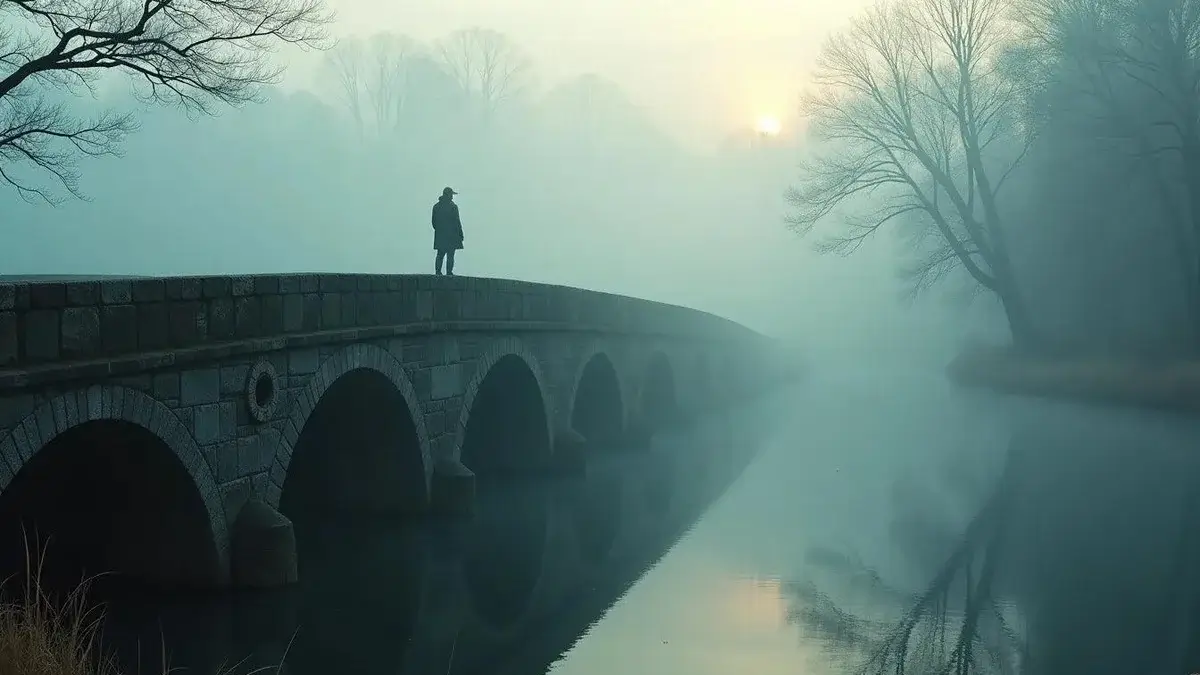
I sat on a bench beneath the bridge and watched the river as it flowed slowly towards the lough. A brace of grey mullet finned through the water. Swallows swooped low, dipping their wings in the water while a corncrake called into the evening from an adjacent field. A child in a summer dress, a chain of daisies around her neck, sang a nursery rhyme to her mother as they passed. I began to cry.
The river had taken on an orange hue as the sun bled across the horizon. A car backfired crossing the bridge as I dropped my bottle beneath a life buoy ring. I stood on the gravel at the water’s edge and set fire to my driver’s license before removing my belt. I lifted a large rock and strapped it to my chest, lowered my jeans to my ankles, and waded silently into the river.
—-
I awoke with a jolt and the smell of freshly cut grass caught in my throat. The walls of the room were painted bright white, a copper-coloured Saint Brigid’s cross hung above the wooden door. It was the room in the care home where they laid out residents who had passed away. At the foot of the bed, a nun sat mouthing words from a missalette. Somewhere outside a man laughed, and a lawnmower droned.
Your wife will be here soon, the nun said. Maybe you’d like to have a shower.
How did I get here? I asked.
One of the gardeners found you lying on the river bank, she replied. He said that you seemed to be more drunk than drowned.
I showered and put on fresh clothes. Classical music drifted in through the half-open door as I leafed through the missalette. After a light knock on the door, my wife entered the room. Her hair was clipped back, and she wore a yellow dress. She removed her sunglasses, revealing wrinkles around her eyes I hadn’t noticed before. She sat on the bed and folded her arms. For a moment neither of us spoke. I stared at the ground.
I’m sorry, I said.
She shrugged slightly before shaking her head.
Sorry you forgot your daughter’s birthday or sorry that you forgot that she’s having chemotherapy? she asked.
For everything. I regret…
Your problem is self-pity not regret, she said.
She took a cigarette from her bag and held it between her fingers before placing it back.
You drink and you run away, she said. You avoid things.
I shifted slightly in my chair.
When she got the cancer, it was like I’d stopped living, I said.
We all want to give up at times, but sometimes you have to pretend, she said. Pretend that life isn’t what it is.
I rubbed my hands along my thighs then crossed my legs.
Are you any happier now? she asked. Look me in the eye and tell me that you are.
I briefly glanced towards her.
Well, I guess we could call that a start, she said.
We walked together towards the entrance. As the door opened sunlight streamed in around our feet. The smell of the cut grass caught me in the throat again and I began to sneeze. The gardener loaded a lawn mower onto a trailer and secured the tail gate before driving away. My wife took her phone from her bag and read a text message. She put on her sunglasses and a tear streaked along her cheek. I reached for her hand but she pulled it away.
You’ve had enough chances, she said. God knows your daughter doesn’t deserve this; I don’t deserve this.
I nodded, then she walked across the car park and opened the car door. As she left, I noticed a mound of grass heaped in front of the statue of the one-armed Jesus. I walked back to the cottage to search for a rake.
.
THE END
Bio
Eamonn Furey is a writer from the North of Ireland. He has been previously published in All Your Stories magazine, The Argyle Literary magazine, The Galway Review, The Bath Flash Fiction Anthology, Close to the Bone magazine, The Raven Review and The First Light Anthology. He was also published in Flash Fiction magazine under the pen name Joseph Gatz. Eamonn was recently shortlisted for the Kate O’Riordan prize for short fiction at the Kenmare Literary Festival.