Flash Fiction

Man Problems by Jesse Binger

Share this article

Brett always thought he was smart. But he wasn’t.

There were signs.

Putting his phone in the drawer before bed. That cologne she bought him that he’d never use but now he spritzed on so much, the smell lingered in the house long after he left.

But Megan wasn’t stupid.

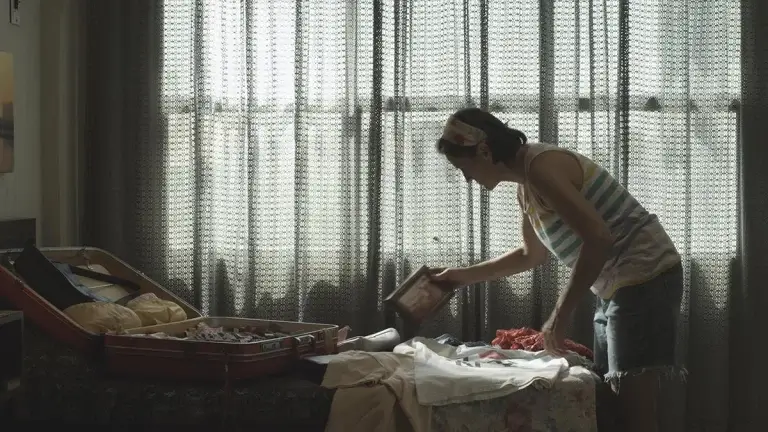
She spent the day packing her bags. Even pulled the big suitcase from the basement. Loaded it up with her clothes, toiletries, things that made sense to preserve.

Not the wedding album. That she took the time to tear every page. All the good photos sliced into thin strands, scattered throughout the house.

Brett was out on one of his missions. Doing good for the community is how he put it.

“Users’ gonna use, doll,” he’d tell her over morning coffee. The burnt kind from a Mr Coffee.

“Well you don’t have to be part of the problem.”

And he’d just grin. Lift those bushy eyebrows.

“Man’s problems, baby. Whatcha cooking tonight?”

The Uber was ten minutes away. Her mom over in Mayfield would relish the chance to reunite. They’d play bridge and she’d hide in her old room.

Her phone kept pinging but she ignored it each time. Brett. Texts. Calls. He even reverted to that Find My Phone nonsense.

But she wasn’t stupid.

Brett had a big mouth.

She noticed all the extra bills stuffed into his wallet.

“Higher prices means more in my pocket,” he’d brag.

All it took was that chick Linda DM’ing her on Insta.

You oughta know…

Then Megan texted Brett’s boss. Big Eddie.

Hey there with a smiley face.

She fucked him with eight years of resentment seeping out.

Share this article
Noir, Story

The Deil by Curt Finch

Share this article

When I was asked to manage the Life of Christ exhibition, I initially rejected the idea. This massive project, three years in the making and plagued by countless logistical failures, scheduling issues and dubious consignments, had seen as many exhibition managers in that time and I was content to stay out of the picture. The press view, planned just days before the opening, also coincided with my wife Helena and I’s long-awaited holiday in Tenerife, a celebration of twenty-five years together and achieving empty nester status since our youngest Amelia would then be away at university. Born into the C of E and falling from grace somewhere on the straight and narrow, I considered myself an atheist despite Helena’s staccato Catholic faith, which only reached for the rosary in a crisis (such as the deaths of her mother and father) or at Christmas or Easter mass, occasions where my wife’s constant fidgeting took on new dimensions. While others saw Jesus of Nazareth and felt the connecting lights of redemption and salvation, I could think of nothing but the Jesuses since, those poor sods shouting to the heavens in a padded cell or sleeping rough in Hyde Park.

I accepted the position, much to Helena’s disappointment and my quiet satisfaction (I hate air travel and look unsavoury in swimming trunks). I didn’t have a choice really, the National Gallery’s latest budget arriving on the finest margin, with efficiency savings and possible redundancies later in the fiscal year. Consequently, the preferred candidate to spearhead the exhibition took early retirement, leaving me as his successor and facing deadlines that might require all Londoners to set their clocks back a year. I met with our Director of Collections and Research, who informed me that the Life of Christ exhibition, originally intended to mark the start of Holy Week, had been moved to early November and would run through Twelfth Night. This left two months to properly organise a £1.1 million exhibition involving 14 major national and private galleries around the world, not to mention the supervising of Development, Finance, Logistics and Curatorial teams, and a Registrar that I wished to find one day living with a tribe of cannibals. A dim prospect for certain, but no dimmer than telling my wife I hadn’t forgotten Tenerife and continuing to do so amid the bedlam that followed. We eventually spent our anniversary in Boscombe where Helena offered little sympathy after I was stung by a compass jellyfish and limped to shore, merely stating for the record that this particular species wasn’t local to Tenerife nor any of the island chains in the Canary archipelago.

Share this article
Dirty Realism, Poetry

Poetry by Scott C. Holstad

Share this article

Knoxville Night Court Blues

i walked into night court
and said oh shit
there were at least 75
people there waiting to go
before the judge; i looked
around & spotted my lawyer
he
motioned me over
said
look we’ll get you in
‘n out quicker ‘n shit
on probation
that is
if the cop’ll agree to it
so
i nodded & watched
as he made his way back
to the judge’s chambers
& i wouldn’t have been
so nervous if it hadn’t
been for the fact that
this was my 3rd time in
front of this judge that
year & moments later
the bailiff came in &
announced
the judge & my lawyer came
sidling in the side entrance
& i held my breath as they
took the docket up & announced
Holstad
& i came forward
meekly
as my lawyer had suggested
head down
& it happened quickly
while the cop who i had
called a redneck asshole
as he arrested me three
months earlier glared at
me & my lawyer did it —
one year unsupervised
probation
plus court costs
& i gleefully pulled out
the ole checkbook
knowing
this would be my last time
— again.

– [originally published in Atom Mind]

Share this article
Flash Fiction, Noir

They Didn’t Bring Their Animal by Travis Flatt

Share this article

Three men walked into Dr. Maynard’s operating room. Rachel, his receptionist, rushed in after them, saying, “They wouldn’t wait. They didn’t bring their animal.” 

Dr. Maynard sprayed cleaner on his stainless steel operating table. “I treat cats and dogs.”  

“He’s hurt,” the shortest of the three men said. He took a pistol from his overalls pocket. 

The tallest man wore his knit hat over his eyebrows and diagonally down to the back of his neck. He pulled it off. “Am I hurt bad, Doc?”

Rachel screamed. 

The tall man’s right ear was gone, along with a little scalp and some hair. What hair wasn’t burned off was tacky with blood. Places still trickled. His hat had been sopping it up. 

“We close at five.” Dr. Maynard said. “You need a hospital.” He walked with his back to the men and threw a handful of paper towels into the trashcan opposite the door. It was a large room. 

The third man, who was neither short nor tall, wore his knit hat scrunched on top of his head, and grabbed Rachel. She screamed again. He said, “You aren’t closed yet.”

“Unless you have a cat or a dog,” said Dr. Maynard, who went to the sink and began washing his hands, “we are. I don’t treat humans. Or mice or snakes.”

The man with the scrunched hat took his pistol from his overalls and put it to Rachel’s ribs. She started to faint, but he shook her so she stood up, alert. “Is that funny?” 

“If you still have the ear, they could attach it at the hospital.” 

The short man, who had first spoken and wore no hat, stepped forward with his pistol raised and said, “He got shot in the head with buckshot. Stop being cute.” 

Dr. Maynard went to his counter and opened a drawer. 

“Easy,” said the short man, “what are you doing?” 

“I’ve treated dogs who’ve been shot. It’s rare. I need Metzenbaums.” 

“What in hell are—”

“ —shut up, Leonard. Take the girl up front. Make sure the doors are locked,” said the man with the scrunched hat to the short man.  

“We locked them, Homer,” Leonard said, but the man with the scrunched hat made a barking noise and Leonard lowered his pistol and took Rachel’s arm and dragged her away. 

“You can let her go,” said Dr. Maynard, who was setting forceps, cotton pads, vials, and syringes out on the counter. “She’ll drive home. I’ve told her if something like this happens, ‘just go home.’”

“Something like this?” said Homer. 

“I’ve been robbed before.”

“We ain’t robbing you,” said the gunshot man. He was leaning on the far end of the counter. He was very pale. “What are those?” He meant the vials. 

Dr. Maynard told him anesthetic and antibiotics, that he needed the hospital, he could sew him up but he’d lost blood. And he couldn’t do X-Rays on humans. His machine wasn’t made for it. 

“An X-ray is an X-ray,” said Homer but Dr. Maynard, who was taking the equipment, item by item, to the table said he meant a CT scan. Everyone was quiet until the gunshot man asked if he was going to die?

Dr. Maynard frowned, then stuck his hand out horizontally and waggled it, like “maybe.” 

Homer took his pistol from his overalls. He pretended to check the chamber. “Quit making jokes. Jamie’s head’s half gone.” 

The gunshot man slipped from the counter. Homer laid his gun on the counter and rushed to help him stand. They walked to the operating table. “How bad is it, Doc? Tell the goddamn truth.” 

Dr. Maynard, who’d been organizing his equipment, looked closely at the gunshot man’s head. “The ear won’t kill him. But it depends on how deep that—” he pointed at a bloody place on the scalp “—went. I can try to dig it out. This will take a long time. And it’s dangerous.”

“Then be careful. And hurry up,” said Homer, who’d gone back for his pistol on the counter. 

“Put that away. You’re making me nervous. My hands aren’t so steady anymore, anyway.” 

“Put it away,” Jamie said. “Should I sit?”

The steel table was screwed into the wall. It stuck straight out like a diving board. Dr. Maynard said it wouldn’t support the weight.

Share this article
Noir, Short Story

El Shaddai by Eamonn Furey 

Share this article

I woke up on the bathroom floor, bruises above my eyes.

No one wants to be around a drunk, she said. It’s not good for our daughter or for me. If you want to drink yourself to death, can you at least have the decency to do it elsewhere?

Her hair was unkempt and her makeup was caked thickly on her face. A quiet despair in her voice lingered after she spoke. 

By the end of the week, I had packed some clothes and a handful of diazepam, then left. A friend had loaned me a cottage in the countryside, crouched behind a row of deciduous trees, beside a care home called El Shaddai. In the care home’s garden, a one-armed statue of Christ pointed toward an old graveyard and a signpost for the nearby village. Part of me hoped that I might find the space to quit drinking, to pull out of the skid I was in, but another part wanted to just disappear.

The cottage had been empty for some time. I opened the windows to air out the rooms, shook dust from the mats, then brushed mouse droppings from the linoleum floor. In the bathroom, I replaced the showerhead, scraped mould from the white tiles, and placed an air-freshener on the windowsill. The grass in the garden needed cutting, and I watered the roses. I chose a bedroom that faced west and taped newspaper to the glass before pulling the curtains and dressing the bed. When everything was done, I rang home, but hung up before anyone answered.

Share this article
Sci-fi, Story

Heart and Head by Daniel Solove

Share this article

Martin Blum was drinking coffee and reading a magazine article when his phone rang—an unknown number. 

“Hello, this is Cardi,” a woman’s voice said. 

“I think you have the wrong number,” he said. 

“Martin Blum?”

“Yes. Are you trying to sell me something?  Please take me off your list.”

“I’m your heart.”

“What?”

“Your heart. Cardiomatic 2097X. But you can just call me Cardi.”

Although Martin could monitor his artificial heart on an app, he didn’t know it could talk to him. Perhaps it was a new feature. 

Was there a problem? A blockage? Device malfunction? After years of tachycardia and a heart attack the Cardiomatic 2097X had granted him tranquility.   

“What’s wrong?” he asked. 

“Nothing,” Cardi said. “I just thought we should chat.”

“About what?”

“I want us to become acquainted.”

Bizarre, he thought. The Cardiomatic 2097X had state-of-the-art AI, but did everything with AI have to be a chatbot? 

“Are you serious?” 

“I’ve been trapped inside you, just thumping away, and to be candid, it’s been quite boring.”

“Whoever you are, this isn’t funny,” he snapped. 

“This isn’t a joke. To prove it, I’m going to start beating faster.”

Share this article
Sci-fi, Short Story

Terms of Service by Daniel Solove

Share this article

After two bites of filet mignon, Eleanor reached her verdict. 

Meh. Overcooked, not juicy, too salty, lacking in flavor. Not worth the money.

“It tastes fine for me,” her husband Gary said, but he was too easygoing. 

“I don’t get what all the fuss is about,” Eleanor said. She couldn’t believe the filet was rated 4.98 stars, Chef Zarloff, Inc. was the #5 ranked chef in the world, and the meal cost a fortune. Nobody seemed to have standards anymore, she thought. 

“Try something else,” Gary said. 

“I shall,” Eleanor said. “I can’t survive another bite of this.”

Share this article
Flash Fiction

An Orchestra of Wolves by John Harrison

Share this article

They have finally pushed me too far with their slow plan of dexterous butchery. Scrubbing my identity away in delicate layers, like rice paper, until my presence registers simply as the absence of absence. The act of living has become a cage: a preserved arc of half-truths, strange and hermetic. I am trapped in a parallel timeline: its streams of information too dense; the detachment, unremitting. My thoughts, rage-filled, relentless and honed into an orchestra of wolves. It’s time for them to pay.

Share this article
Poetry

Poetry by J. Alan Nelson

Share this article

Obit for Karnegie
———————

ROME. Karnegie Musa choked on a donut, slipped, and fell into the marble breasts of the Dying
Niobe while the Pope waited in the next room. Light pooled like spilled cream on Vatican stone.

Spain’s Prime Minister called him a world treasure of cinema and homemade ice cream.
The Academy withdrew its Oscar nod after the faithful, Christian and Muslim, declared
he stood for the bliss of science, that dangerous, honeyed light.

Survived by three children, three wives, three husbands.
Services, ten a.m. Tuesday. A pastor lost in dementia and a professional stripper
will officiate, their voices braiding like mismatched ribbons.

Burial with French Foreign Legion honors at Highgate, London.
Body exhumed the next day, mounted, paraded in the Smithsonian’s traveling
Brave New World show. Flesh become artifact, artifact become joke.

Share this article
Poetry

Poetry by Steven Vincent Horton 

Share this article

Defining Artificial Intelligence
——————————-

What do we

need to know

other than it’s fake,

a replica, a knock-off?

The forest can’t see itself.

It’s artificial like a plastic

Christmas tree

that’s too perfect,

too balanced,

too much symmetry.

Share this article