
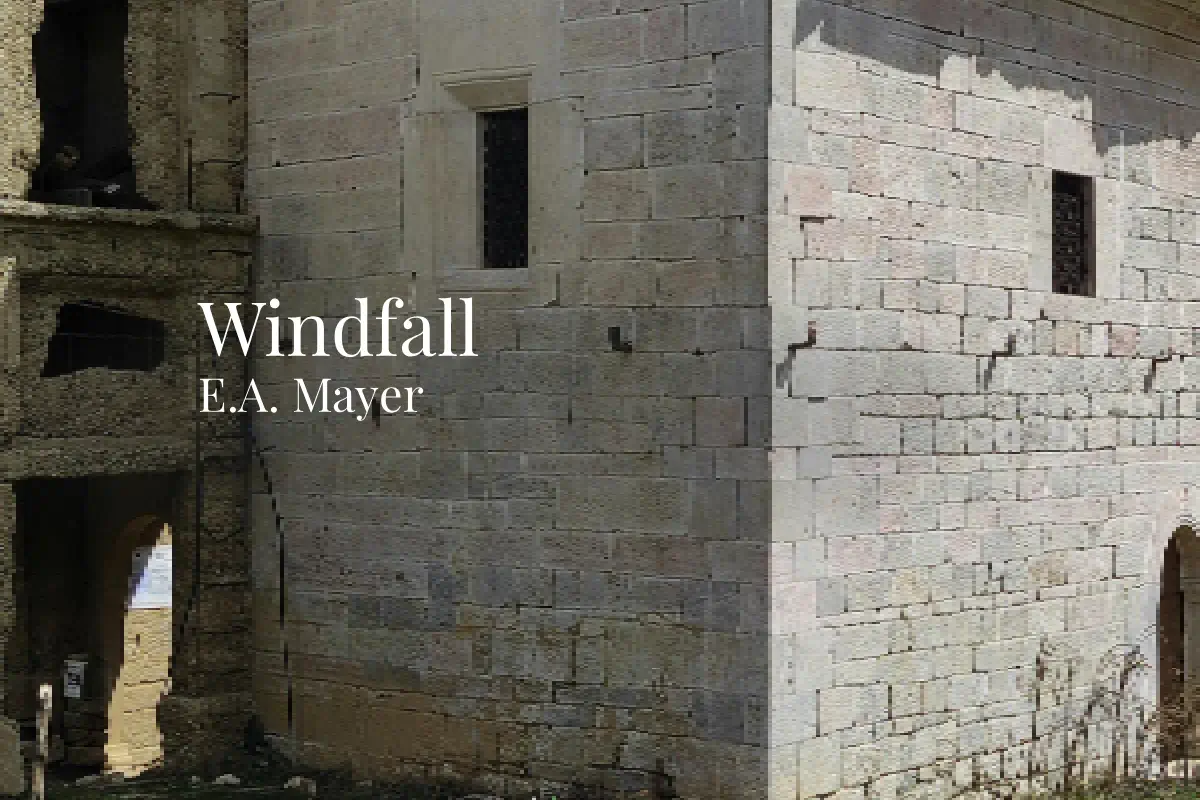
(1,947 words)
When Martin sees the weathervane on the steeple of the abandoned church—thanks to a random skyward glance on his morning run around Bedford—he knows exactly who will buy it. This is his talent, although it hadn’t prevented him from receiving a rating of Needs Improvement in his latest performance review at Tipton’s. He just needs an opportunity to redeem himself—to connect the dots between object and collector. And there is it: backlit by the weak November sun.
That afternoon, he confirms his initial hunch through binoculars. The weathervane is a Hutchfield & Sons stallion model, circa 1872, with all the bells and whistles: muscled chest, rippling mane, legs in full gallop, and an embossed H&Co. stamp on its underbelly. Even better, it has a terrific verdigris patina, marred only by streaks of bird shit and a small bullet hole on the left side which, in the quirky economics of the trade, is a mark of authenticity that will boost its value significantly. The last weathervane of this calibre was hammered down at Sotheby’s for $5.8 million. At the professional level, collecting is a contact sport, and his gut tells him that George and Helena Krantz will pay a substantial sum to possess it, if only to keep it out of the collections of their fellow point-one-percenters. They have probably driven—been driven—past this shabby chapel countless times on the way to their North Salem horse farm.
Martin has a puzzle to solve. In normal circumstances, an acquisition of this magnitude would be relatively straightforward; however, the focus of this deal, roughly two-and-a-half stories in the air, poses obvious challenges.
After a few hours of online searching, he learns that the church building was once a house of worship for a dying offshoot of Congregationalists but now exists in a state of legal limbo. A Greenwich developer has been skirmishing with a committee of underfunded preservationists over the vacant husk of the building and its slate-toothed cemetery. That makes it fair game. He is simply liberating a priceless artifact from potential destruction. Why wouldn’t he? Hadn’t the same logic built and filled the world’s museums?
Three nights later, he parks Julie’s car at the trailhead of one of Bedford’s many bridle paths, remembering that he is taking her to dinner at Francesco’s tomorrow evening, when he plans to float the idea of a less pricey—more fun—hotel for their Aspen getaway. The Little Nell had sounded exciting a month ago, but his current finances are rather illiquid until he can present the weathervane to the Krantzes.
He switches off the vaguely threatening weather report on the radio. The night is moonless—nothing else matters. He shoulders his rucksack for the half-mile walk to the old church. Standing at the rear of the building, he listens several minutes, hearing the scream of a car braking hard toward the center of town, a ghostly bird call, a tree branch scratching the clapboards as the breeze picks up.
He dons his headlamp and turns on the beam to locate the ventilation pipe he had spotted on the roof during his earlier reconnaissance. There it is. He kills the light. The pipe had better hold his weight. Uncoiling a skein of clothesline from the rucksack, he ties a fishing sinker to one end, lets out thirty feet, swings the line in a wide circle, and releases it toward the pipe. The weight clatters on the roof, tumbling to the ground when he tugs the line. Again, he slings the line at the pipe. Again, it falls. It’s a matter of getting the weighted end around the pipe to a point where he can lower it to the ground, knot it to a mountaineering rope, and begin his ascent.
Why hadn’t he brought a grappling hook as Plan B? He gives the lead weight a final desperate heave toward the pipe. It rattles on the roof. Yes—just jiggle the line. He feels the pull of gravity like a fish on the line as the weighted end descends. He ties the rope to the clothesline and hauls it up and around the pipe to create the makeshift pulley he imagined. Picking through the rest of his gear, he clamps the pair of ratcheted ascenders and their webbing stirrups to the rope, then steps into his seat harness. He’s on his way. The plummy bureaucrats at Tipton’s will soon learn that his eye for the exceptional is wasted at their calcified auction house.
Tightening the straps of his rucksack, he begins to scale the rope: slide the left ascender, step up in the stirrup, slight the right. The rhythm takes him back to his weekend excursions with the Bowdoin outing club. Fifteen, sixteen years ago? He was a decent climber then, but now? Wincing from a twinge in his shoulder, he is barely past the first-floor windows with their cataracts of 18th-century glass.
Copper cries above him as gusts slap the flanks of the stallion, nosing into the rumbling nor’easter. He ratchets the ascenders up the rope, gaining several feet before the weathervane squeaks again, calling to him.
Twenty-four hours from now, the Krantzes will have photos of the masterpiece that will be the cornerstone of their expanding American folk-art collection.
A vehicle with flashing blue lights speeds towards the church. He grips the rope, rehearsing his alibi. The patrol car passes, speeding west. He would say something about his passion—his lifelong commitment to the restoration of historic structures. In a town like Bedford, where a code dictates the shade of paint for the antique homes fronting the green, he might just skate away with only a fine of some kind. Come to think of it, once the Krantzes write a check for the weathervane, he will write one of his own to the Bedford Historical Society. He still remembers the comment he overheard from a legendary dealer in the coat check line at the Winter Show last January: You need to be comfortable operating in the margins.
He looks up toward the sound of the weathervane, flicks on his headlamp, spots a pair of yellow eyes blazing briefly above the stallion’s silhouette. Twenty feet to go. He slides the ascenders up the rope, two feet, then another ten, before resting in the climbing harness.
By the time he steps onto the shingled roof, the tools in his rucksack—hacksaw, wrenches, cordless electric drill—feel heavier than before. He treads lightly on the cedar shakes but hears the splintery wood crack and slide away to the cemetery below.
Jagged light pulses on the horizon. A gust knocks him to the roof. The rope holds. Keeping his weight low, he spiders toward the steeple, crunching something under his boots. His headlamp shines on clustered fur and feathers, rodent bones, dried entrails like ruined cassette tape.
Metal shrieks as the stallion swings back and forth in the wind. The steeple is more than half the height of the building and there is nothing to sling a rope around—nothing he trusts to support his weight. He is prepared for this: to employ unorthodox methods.
Martin pulls several handfuls of ringbolts from his rucksack, stuffing them into his pockets. He holsters an electric drill into his toolbelt. Reaching as high as possible, he drills a pilot hole into the weathered base of the steeple, drives a bolt into the wood, and clips his harness to it with a carabiner. He drills another hole, drives another bolt, creating footholds as he goes.
His progress up the steeple is monotonous and noisy, so he pauses after each new bolt, listening for threats: the clunk of a patrol car door, static from a walkie-talkie. He hums Stairway to Heaven to stay focused.
The sky flashes a charged, vibrating green. Thunder explodes close enough to feel the church tremble. Time to move faster or abort his plan. To turn back would mean leaving his hardware pinned all over this ramshackle heap. He sees the stallion see-sawing in the cold front. There’s no way he’s going to let a clueless developer sell the weathervane for scrap with the price of copper at an all-time high.
Bolt by bolt he climbs.
Fifteen feet higher, the wood crumbles under the drill bit, pitching him off balance. The harness stops his fall. He is playing an edgy game of Twister, stretching to drive bolts where the wood isn’t spongy with rot.
Rusted bearings whinny overhead. The air is electrified. The stallion is ten feet above him, wreathed in the dancing violet light. St. Elmo’s fire.
He puts on insulated gloves, drives one more bolt, and steps up toward the weathervane. Something punches his skull, rips off his headlamp, then whispers into the darkness.
He touches his scalp and his glove comes away wet, sheened with blood. He heaves a line over the weathervane and gives it a pull. Fifteen minutes with the hacksaw should do it. He wipes blood from his forehead and starts cutting the metal at the weathervane’s base. The hacksaw blade seems to catch fire, glowing bluish purple. A dagger of lightning splits a tree up the road. A blown transformer booms. It won’t be long before the power company trucks start rolling.
He has sawed halfway through the rod, exhausted with the effort. The placement of the cut begins to topple the weathervane. He ties a line around the stallion and saws harder. The blade sticks, pinched by the weight of the metal. He gropes higher, his toe barely on the bolt. He grabs a copper leg and pulls…just a little more….
Blood veils one eye, then the other, but he smears it away. He is close enough to make out the manufacturer’s stamp on the weathervane and smell the bird shit on the copper when the owl sweeps upon him in a hush, its face a sudden moon, eclipsing all.
Martin swats at the feathers and muscle with one hand, tightens his grip on the stallion’s leg with the other, feels his boot slides off the bolt. The weathervane holds his weight. He kicks wildly, flailing for a foothold, falling back as the oxidized copper pulls away from the iron rod. His harness bites into thighs then loosens as the eyebolt is yanked from the steeple. Metal and flesh collide with wood, tumble off the roof, smack the ground.
The first thing Martin hears is a low whine. It could be the sound of his searing headache or the thing pinning him down between his waist and his toes. Opening a blood-crusted eye, he sees faint morning light across a stone carved with vertical symbols. He tries to raise his head off damp grass, winces, reads the words: Died in the forty-second year of his age. He recalls being 39.
He tries to crane his neck, but it feels stuck. The whine comes closer as someone walks through the old church cemetery, clearing the crabgrass and poison ivy from the headstones with a weed-whacker. He attempts to roll to a sitting position, but his hips and legs seem far away, immovable. His shoulders are oddly twisted, keeping him from facing the presence that weighs upon him. In his mind, it has all the bells and whistles of the masterpiece he touched so long ago. Back when he could run.
.
THE END
Bio
E.A. Mayer’s short fiction has been published in the Swannanoa Review, Villain Era, Pindeldyboz, the Absinthe Literary Review, Squawk Back, the Dead Mule School of Southern Literature, and Tower, the literary magazine of Dartmouth College, where he earned an AB in English. He also earned an MA in communication from Stanford University.