Flash Fiction

Borrowed Smoke by Jesse Binger

Jimmy’s been doing wrong for as long as Spark can remember. He started young: a pack of gum from Ralph Rotten at eleven. Carton of cigs from the reservation shop a few years later. Now, it’s stolen Acuras and gold chains from those Ma and Pop jewelry stores.

Spark smokes a Marlboro. Pilfered from Jimmy. No surprise, right?

He stands at that spot under the bridge. Cars sputtering above him. Same place where he met Mona. Same place where he watched her OD. Same place now where he’s doing something he’d never forget. But what choice does he have?

Jimmy was the one who showed him how to shoot up. What to look for when you were sizing up the smack. What dealers were pure, which steeped too much, or too little. Like Spark was a little brother or something. Well kinda he was.

Pop Warner at fourteen. Spark taking the hike, falling back in the pocket. Spotting Tommy Tintilla posting down the field like he was Jerry Rice or something. Big D-Lineman coming at him hard. Two steps away and Jimmy downed him with a helmet to the solar-plexus. Touchdown. Now wheel the poor kid off the field.


Feature, Nonfiction

45 Minutes by Christian J. Farber

ME: I was standing in the shower. I had two of the four shower heads pounding warm water on my face. Soap was everywhere and I held onto the grab bar to stand upright. When I got my MS diagnosis, they told me to be very careful, mainly when I was in the shower, because it’s slippery and may cause me to fall. Falling for me is worse than falling for someone who isn’t sick. A slight knock on my head can have grave consequences. Head and spine injuries of any kind can kill me or make my condition worse. I am disabled already, and I don’t need any more to deal with.

So, I’m standing there holding the grab bar with one hand and soaping myself with the other. All is copacetic. I always have music playing in the bathroom on Alexa. My left arm started fidgeting and shaking, something new for me. The hot water kept pounding on me. Then my left leg started shaking.

THEM: The man stood in the shower, water pouring down on him from different angles. It must have been hot, the steam rose, filling the room with wet, white smoke. We had a murky view of him. He was covered in soap and held the bar with one hand. The bar was under the stupid window they put in. All you could see through it were trees.

Poetry

Poetry by JC Ambrose

Blue Lily

in shadowed rooms, colors sleep,
a lamp of azure, deep casts ripples
Through the night air, a finds a lily waiting
still.

This light to bend to nature’s will, pigments
drink the blue away and fade to winter stay.
Yet pale white petals, ghostly bright, reflect the
song: petals wear the sky, serene
anew, a bloom. reborn in borrowed blue.

My borrowed blue returns to where the earth drums.
In shadowed rooms where colors sleep.
from decency, a child. azure secrets deep.

Short Story

To Reference That Joy Division Song Again by Scott C. Holstad

I keep my curtains drawn, lights low, paranoia level high. Those fucking nosy neighbors called
the cops on me while I was washing the dishes with the kitchen window open, not yet owning
drapes or blinds. They told the cops they saw me break out a “butcher knife” and actually carve
my arms into bloody ribbons while giving them “death grins” and other weirdo shit that the cops
agreed, after arriving to check things out, seemed ludicrous. I mean, I was wearing a perfectly
clean white button-down, home from work. If I’d been using “a butcher knife to carve my arms
into bloody ribbons,” like my drugged-out neighbors asserted, my perfect white shirt would look
kind of different, you know? Maybe with some reddish stains, maybe actively dripping (or
worse) blood staining it or literally soaking through the cloth, confirming their indictment of me
rather than showing the cops they were weirdo troublemakers. Obviously.
Except.

Except the cops never asked to look at my actual arms, torso or anywhere else, nor to roll up my
sleeves or disrobe so they could ascertain for themselves the truth of what seemed obvious –
clean white shirt, no blood, no harm, no foul, right?

Poetry

Poetry by Gregory O’Neill

Gutter Hymn

It is true, a truer story.
Taught the counterfeit of warmth.
The barbaric calm of civilities long past.
Dead, slow, full-stop lilies of hunger.

They rag my feet and harden
the upturned faces they trail across,
gifting blisters, ransack.

To wake, commingled with intruders
in the residual skin of those skanking
esprits frondeurs, empty-faced—

moths in their mouths—
wings powdered with argument and ash.
They flutter, murmur:

’“tis said of old,
too hot, soon cold,
the dead, be gold.”

Noir, Short Story

To Avoid the Near Occasion of Sin By Emily J. Edwards

The humidity of the afternoon broke as the sun went down, hidden behind clouds that brought an hour-long torrential downpour. Now the stools on the patio were sopping wet, but no one seemed to mind. The lake-side bar was hopping– the clientele ranging from college kids out on summer break to retirees lobstered from a day of drinking on the boats they’d dreamed of one day owning– and Ksiądz Przemyslaw heaved himself onto the counter-height stool across from me. 

“What’s a good Catholic girl like you doing in a bar like this?” he asked, leaning his forearms against the sticky tabletop. 

The same line every week. 

“I’m not a girl anymore, Przemuś,” I said. I stood up to peel my thighs off of the wet vinyl barstool, but to also drive home the fact that no one who’s six feet tall counts as a kid. I bent at the waist to flip my head over and pull my long hair into a high ponytail. The summer humidity made everything stick to me and I felt claustrophobic and mean. “And you also know I’ve never been a good Catholic.” I was talking to my own stomach as I did my hair, but I know Przemuś heard me.

I said the same thing, every week.

A cute blonde girl came by and took our order as soon as I plopped back down– another beer for me, a whiskey on the rocks for Przemyslaw.

“Do you have a brand preference?” she asked.

Short Story

In the Rothko Chapel by Mike Lee

Katerina stood staring at the broken obelisk, set in a pool next to the Rothko Chapel, sculpted by Barnett Newman. The breeze had kicked up, leaves flying by in uneven flight under gray skies thick with moving high clouds, signaling a storm coming in from the Gulf of Mexico. Though the humidity had dropped to almost a sense of dryness, fall had finally arrived at the swamp, otherwise known as Houston.

Katerina wore her father’s Navy pea coat, the one she’d wanted from when she was little, when she discovered the photo of him wearing it on the deck of the ship he served on in the Mediterranean. Unfortunately, Katerina resembled a wartime orphan; the shoulders and sleeves were too long, and she’d already scorched the cuff twice with a cigarette.

The sunglasses Katerina wore were his old ones, cheap Foster Grants from the 1960s, which she found while going through a box of photo slides from vacations before her birth.

The sharply cornered trapezoid frames with moss-green lenses lent definition to her pallor, enhanced by foundation and powder, and the rich, royal purple wet lipstick as a contrast. Legs and feet were in opaque stockings and leather brothel creepers. The hem of her old tartan skirt, pleats flattened, deeply creased, and generally wrinkled, stuck out from the bottom of her coat, adding only physical color to Katerina’s attire.

Short Story

Frank Ballot by Robin Kandae

Frank Ballot’s eyes were open, but barely. The dull ticking of the clock above him, and in front him, both out of sync, were just enough to keep him awake. He listened to the first tick, then the second and he felt himself being thrown between the two clocks as the hour hand spiraled down, and the evening stretched on. Every half hour or so, he heard the Broadway Line train screech to a stop, then roar a minute later up to the Bronx. Sometimes his thoughts went with the train, but the ticks would chip them away and lead him back to the chair, the clocks, and the dull ache in his dead leg.
There was a wake-up call to make at five, another at five-thirty; the bulk came around seven. He leaned back in his chair and lit a cigarette, drawing the smoke out in short quick puffs.

Short Story

The Old Melby House by Kevin Joseph Reigle

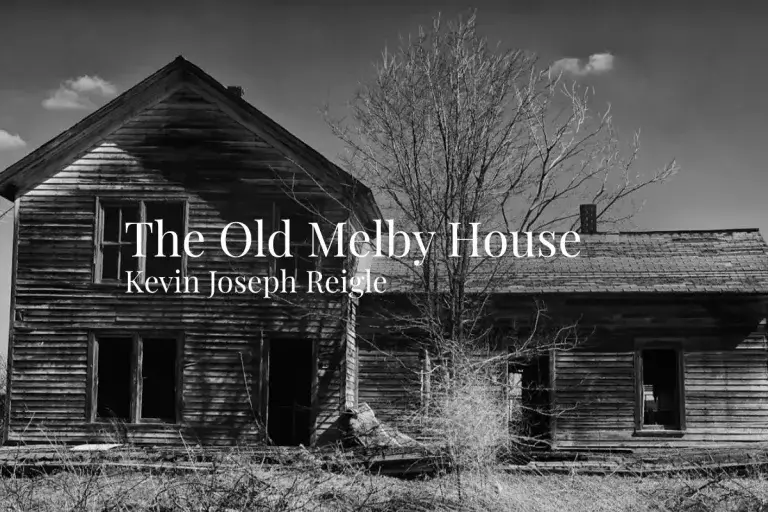
There’s this old house on the edge of town that all us kids are supposed to stay away from because they say it’s abandoned, and it’s over near the railroad tracks where sometimes drifters jump on and off the trains. But none of that scares me, and I ride my bike by the old house all the time, and I’d never seen nothing until last week when I saw an old lady through the upstairs window.

Everyone in town always says the place is abandoned and that no one’s lived there since the Melby twins, two old spinsters, died a long time ago. I dunno exactly when, but Pa says it caused a stir like this town ain’t ever seen. That’s when became a local legend, The Old Melby House.

That’s why last week, when I rode by at dusk and saw an old lady in the upstairs window, I had to investigate. Maybe she was a ghost. I wasn’t sure. Some kids would have been so frightened they’d have peddled away as fast as they could, but not me. I ain’t scared of nothing. 

I leaned my bike up against the rod iron fence. It’s the kind with the pointy tips, like you could impale your hand on if you aren’t careful. The gate between the fencing was gone; someone stole that a long time ago, so I went up to the porch and thought about if I should knock on the door or just open it. I figured if it was a ghost, she probably wouldn’t answer the door, so I pushed on the handle and it opened. Now I know you might be expecting creaking from rusty hinges or something scary like that, and I hate to be the one to disappoint you, but the door opened just fine. Smooth as oleo. 

I stepped inside, and the house was dark, darker than outside because all the windows were covered with those wooden plantation shutters. Some were in pretty bad shape, wood rotted out, but they still covered enough of the windows to make it creepy.

Flash Fiction

Nothing In The Dark (Extract) by Fred Muratori

I stayed up late to watch Dark Passage, the movie where Lauren Bacall helps Humphrey Bogart recover from plastic surgery and vindicate himself from a wrongful accusation of murder. The film was familiar to me, but this time I took special notice of the bus station scene where a man and a woman — waiting passengers and strangers to each other up to this point — start talking about themselves, how they have nothing to look forward to, no love in their lives. Americans, they don’t say very much, they’re not explicit about their pain, but it’s clear that a relationship is developing in the space of minutes, the way three or four brush strokes on a canvas might suggest an entire horse. The scene is a pause in the dramatic trajectory of the movie, almost apart from it, but it summarizes a double feature’s worth of hope and frustration and escape. It describes how swiftly a life can switch directions, as in my first intimate moment with Felice, when I felt like an amnesic tasting a fresh orange for what he believed was the first time.