Dirty Realism, Noir, Short Story

I Fell Down by Matt Gossman

Share this article

I worked most of the day. I had heard that a friend was in town. My girlfriend, Mary, and her family had made treats for everyone we knew. I left with a package of treats for my friend not long after arriving home from work. Mary was upset that I wouldn’t see her very much. I didn’t care. I hadn’t seen my friend in some time and he wouldn’t be in town for long. I assured her I would be quick and that we could catch back up. I lied. I think I knew I was lying. Perhaps I lied to myself as well.

When I arrived at a mutual friend’s house, you could hear the chatter from where I parked. I left some whisky in the car in case my friends didn’t do the job. It was cold out. I could see my breath. It was dark. There weren’t any stars. I approached the small house carrying the treats. It was a poor neighborhood, not very busy. Some familiar faces were smoking outside and laughing. I declined to smoke. I wanted to drink first.

I got inside and saw the friend that I had come to see. Most everyone was already drunk except my friend. If he was, I couldn’t tell. He smiled at me and you could see twinkles on the far edges of both of his eyes. He had the smile of a child actor. He was wearing a shirt with a Zia symbol. It might have said something like “I love New Mexico.” I thought it odd that he wore this while visiting from out of state, as though we would forget where his hometown was.

“Hello, how have you been?” he asked.

Share this article
Noir, Story

The Deil by Curt Finch

Share this article

When I was asked to manage the Life of Christ exhibition, I initially rejected the idea. This massive project, three years in the making and plagued by countless logistical failures, scheduling issues and dubious consignments, had seen as many exhibition managers in that time and I was content to stay out of the picture. The press view, planned just days before the opening, also coincided with my wife Helena and I’s long-awaited holiday in Tenerife, a celebration of twenty-five years together and achieving empty nester status since our youngest Amelia would then be away at university. Born into the C of E and falling from grace somewhere on the straight and narrow, I considered myself an atheist despite Helena’s staccato Catholic faith, which only reached for the rosary in a crisis (such as the deaths of her mother and father) or at Christmas or Easter mass, occasions where my wife’s constant fidgeting took on new dimensions. While others saw Jesus of Nazareth and felt the connecting lights of redemption and salvation, I could think of nothing but the Jesuses since, those poor sods shouting to the heavens in a padded cell or sleeping rough in Hyde Park.

I accepted the position, much to Helena’s disappointment and my quiet satisfaction (I hate air travel and look unsavoury in swimming trunks). I didn’t have a choice really, the National Gallery’s latest budget arriving on the finest margin, with efficiency savings and possible redundancies later in the fiscal year. Consequently, the preferred candidate to spearhead the exhibition took early retirement, leaving me as his successor and facing deadlines that might require all Londoners to set their clocks back a year. I met with our Director of Collections and Research, who informed me that the Life of Christ exhibition, originally intended to mark the start of Holy Week, had been moved to early November and would run through Twelfth Night. This left two months to properly organise a £1.1 million exhibition involving 14 major national and private galleries around the world, not to mention the supervising of Development, Finance, Logistics and Curatorial teams, and a Registrar that I wished to find one day living with a tribe of cannibals. A dim prospect for certain, but no dimmer than telling my wife I hadn’t forgotten Tenerife and continuing to do so amid the bedlam that followed. We eventually spent our anniversary in Boscombe where Helena offered little sympathy after I was stung by a compass jellyfish and limped to shore, merely stating for the record that this particular species wasn’t local to Tenerife nor any of the island chains in the Canary archipelago.

Share this article
Flash Fiction, Noir

They Didn’t Bring Their Animal by Travis Flatt

Share this article

Three men walked into Dr. Maynard’s operating room. Rachel, his receptionist, rushed in after them, saying, “They wouldn’t wait. They didn’t bring their animal.” 

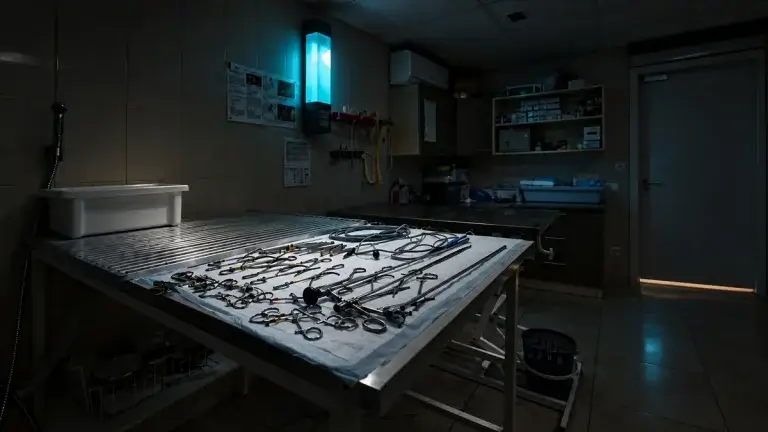
Dr. Maynard sprayed cleaner on his stainless steel operating table. “I treat cats and dogs.”  

“He’s hurt,” the shortest of the three men said. He took a pistol from his overalls pocket. 

The tallest man wore his knit hat over his eyebrows and diagonally down to the back of his neck. He pulled it off. “Am I hurt bad, Doc?”

Rachel screamed. 

The tall man’s right ear was gone, along with a little scalp and some hair. What hair wasn’t burned off was tacky with blood. Places still trickled. His hat had been sopping it up. 

“We close at five.” Dr. Maynard said. “You need a hospital.” He walked with his back to the men and threw a handful of paper towels into the trashcan opposite the door. It was a large room. 

The third man, who was neither short nor tall, wore his knit hat scrunched on top of his head, and grabbed Rachel. She screamed again. He said, “You aren’t closed yet.”

“Unless you have a cat or a dog,” said Dr. Maynard, who went to the sink and began washing his hands, “we are. I don’t treat humans. Or mice or snakes.”

The man with the scrunched hat took his pistol from his overalls and put it to Rachel’s ribs. She started to faint, but he shook her so she stood up, alert. “Is that funny?” 

“If you still have the ear, they could attach it at the hospital.” 

The short man, who had first spoken and wore no hat, stepped forward with his pistol raised and said, “He got shot in the head with buckshot. Stop being cute.” 

Dr. Maynard went to his counter and opened a drawer. 

“Easy,” said the short man, “what are you doing?” 

“I’ve treated dogs who’ve been shot. It’s rare. I need Metzenbaums.” 

“What in hell are—”

“ —shut up, Leonard. Take the girl up front. Make sure the doors are locked,” said the man with the scrunched hat to the short man.  

“We locked them, Homer,” Leonard said, but the man with the scrunched hat made a barking noise and Leonard lowered his pistol and took Rachel’s arm and dragged her away. 

“You can let her go,” said Dr. Maynard, who was setting forceps, cotton pads, vials, and syringes out on the counter. “She’ll drive home. I’ve told her if something like this happens, ‘just go home.’”

“Something like this?” said Homer. 

“I’ve been robbed before.”

“We ain’t robbing you,” said the gunshot man. He was leaning on the far end of the counter. He was very pale. “What are those?” He meant the vials. 

Dr. Maynard told him anesthetic and antibiotics, that he needed the hospital, he could sew him up but he’d lost blood. And he couldn’t do X-Rays on humans. His machine wasn’t made for it. 

“An X-ray is an X-ray,” said Homer but Dr. Maynard, who was taking the equipment, item by item, to the table said he meant a CT scan. Everyone was quiet until the gunshot man asked if he was going to die?

Dr. Maynard frowned, then stuck his hand out horizontally and waggled it, like “maybe.” 

Homer took his pistol from his overalls. He pretended to check the chamber. “Quit making jokes. Jamie’s head’s half gone.” 

The gunshot man slipped from the counter. Homer laid his gun on the counter and rushed to help him stand. They walked to the operating table. “How bad is it, Doc? Tell the goddamn truth.” 

Dr. Maynard, who’d been organizing his equipment, looked closely at the gunshot man’s head. “The ear won’t kill him. But it depends on how deep that—” he pointed at a bloody place on the scalp “—went. I can try to dig it out. This will take a long time. And it’s dangerous.”

“Then be careful. And hurry up,” said Homer, who’d gone back for his pistol on the counter. 

“Put that away. You’re making me nervous. My hands aren’t so steady anymore, anyway.” 

“Put it away,” Jamie said. “Should I sit?”

The steel table was screwed into the wall. It stuck straight out like a diving board. Dr. Maynard said it wouldn’t support the weight.

Share this article
Noir, Short Story

El Shaddai by Eamonn Furey 

Share this article

I woke up on the bathroom floor, bruises above my eyes.

No one wants to be around a drunk, she said. It’s not good for our daughter or for me. If you want to drink yourself to death, can you at least have the decency to do it elsewhere?

Her hair was unkempt and her makeup was caked thickly on her face. A quiet despair in her voice lingered after she spoke. 

By the end of the week, I had packed some clothes and a handful of diazepam, then left. A friend had loaned me a cottage in the countryside, crouched behind a row of deciduous trees, beside a care home called El Shaddai. In the care home’s garden, a one-armed statue of Christ pointed toward an old graveyard and a signpost for the nearby village. Part of me hoped that I might find the space to quit drinking, to pull out of the skid I was in, but another part wanted to just disappear.

The cottage had been empty for some time. I opened the windows to air out the rooms, shook dust from the mats, then brushed mouse droppings from the linoleum floor. In the bathroom, I replaced the showerhead, scraped mould from the white tiles, and placed an air-freshener on the windowsill. The grass in the garden needed cutting, and I watered the roses. I chose a bedroom that faced west and taped newspaper to the glass before pulling the curtains and dressing the bed. When everything was done, I rang home, but hung up before anyone answered.

Share this article
Dirty Realism, Noir, Short Story

Stellar Notions by Mike Lee

Share this article

With the hostile demeanor of an automobile line worker who has been doing this sort of shit fifty times a day for five years, Arthur blithely threw a handful of Romaine lettuce into the gray salad bowl. He reached into the white buckets set in ice in a gray plastic tub on top of the steel rack beside him, pulling out two cherry tomatoes, three rings of fresh-cut onions, and a smattering of purple cabbage.

Once finished, he slopped a half-ladle of greasy vinaigrette dressing into the bowl, set the finished product on a brown plastic plate, dropped two packages of saltines on the side, and walked through the double doors into the crowded dining area.

Immediately, Arthur bumped into Larry Bozzaterri in front of the six-top on table twelve. Arthur knocked the pen from Larry’s hand, sending it clattering like a misguided missile across the table, landing in a brisket platter. The consumer of said brisket stopped, stared at the offending device momentarily, then gingerly picked the pen from his mashed potatoes and returned it to Larry.

“Sorry, Bozzo.” Larry hated being called by his nickname.

Larry apologized to his customer, who waved him off with a good-natured shrug. With the dish towel that hung from his apron, Larry wiped the mashed potatoes off the pen.

Share this article
Noir, Short Story

Off The Croisette by Rob Schwartz

Share this article

Did you hear what happened to Josh at Cannes?

Oh, this is good.

He’s at the bar at the Carlton, early. 8:30pm. If you’re at the bar at 8:30, it means a couple of things. One, you’re not at that evening’s awards, which means you probably had no shortlists and you can’t stomach seeing anybody else’s success. Two, you weren’t invited to any dinners. All around Cannes, the media, production and tech folks host dinners for clients and agencies. The cars dispatch from the hotels at 7:00 p.m. By 8:30, you’re tucking into your shrimp and avocado appetizer on the way to a three-star meal.

So, 8:30 at the Carlton means you’re licking your wounds and drowning your sorrows. And that’s what made Josh a mark.

The locals know this.

So this woman—mid-twenties, thin, blonde, beautiful—starts to pay attention to Josh.

“Are you Americain?” she says in her French accent.

“Yes, sorry,” says Josh.

Share this article
Flash Fiction, Noir

The Dame of Hell by Vanya

Share this article

She was drunk and fighting a dart machine. My friend and I took the other machine and had just started playing when she interrupted: “Can I play it too? That machine won’t work.”

I agreed, and we set it to three players. She was good. I managed to close the gap. She needed one shot to win. She took her beer and poured it down her throat. Then she threw the dart without looking at the board. She won. I followed her to the bar and asked if I could buy her a drink.

“You could. But don’t ask for my number.”

I nodded. By my fourth beer, I was drunk. My friend went home. I stayed. Her hair smelled like beer. She had a soot-smudge on her lower lip from smoking and did nothing to hide it. 

“Same time tomorrow?” she asked.

“I have to work. How about Saturday?”

“Fine.” 

Next Saturday, I saw her at the bar.

“Can I buy you a drink?”

“You can, but don’t ask for my number.”

“You remember me?” I asked.

She turned toward me. “No. Should I?”

I laughed, then realized she meant it.  I bought us beer, and we talked. She asked if I wanted to come back tomorrow. I said yes, mostly to see whether she’d remember me. She did. 

She suggested pizza. She told me she had never left the town. Everyone she knew had. When it arrived, she tore into it like she hadn’t eaten for days. I offered her mine, and she ate that too.

“Do you want to go to a lake?” she asked.

“It’s already dark.”

“It’ll be fine. I live nearby.”

We drove to her place. “Give me a minute,” she said, and stormed into the house. She came back with a bottle. I took a sip, then she did. We walked around the lake, drinking. After a while, she climbed onto a table. She was about to pee when a cop walked over. She saw him, but it didn’t stop her. When he shouted for her to come down, she jumped on him. His head hit the ground. I stepped in and pulled her off. I begged. None of us wanted paperwork. She still got community service for public urination.

A few days later, I was laid off. She suggested I move in with her. I did. She loved parties. Money dried up, but she wanted more.

One Wednesday night, after everyone left,

Share this article
Flash Fiction, Noir

Spider Theater by Fred DeVecca

Share this article

The insidious thing about crystal meth is not that it makes you feel high, it’s that it makes you feel normal. Your brain’s been straight-up nuked but you think this is the way you’re supposed to feel. You think that’s how everyone feels all the time.

It also makes you see things with startling clarity that aren’t really there – not just simple fuzzy objects but entire complex ghastly scenes  – dramas, mysteries, farces, dark horror shows that can torture you forever. 

But maybe they really are there – maybe.

“That’s Spider Theater,” Richie said. “And it’ll get you bad. Every time.”

He showed up in town with a ton of the stuff from Nelson, his AC guy. He was supposed to deliver it to a customer, but instead we sucked it up for four straight days. 

We didn’t put a dent in it. Nor did we eat, sleep or leave the apartment. Felt totally and completely normal. 

Then he loaded us both into his Coup deVille. 

They said Nelson couldn’t be killed. He was a ghost. Or Satan. Or Jesus. Maybe God.  No one was sure which. Richie said he once shot him point blank with his .38 and nothing happened. 

“Emptied all six into the bastard,” he said. “He didn’t feel a thing.”

So I wasn’t sure why he would try it again. But that’s what we were heading out to do.

I was just along for the ride. Richie wanted me close. I was his good luck charm and he said anyone who goes to Atlantic City needs luck. 

And this was before gambling was legal there. 

He was pushing the Caddy up to 110 on 476. A quart of Steg and a crap joint were circulating. The windows were open and springtime’s cool breeze flushed through the car. We talked nonstop bullshit. 

In a nice suburb just north of AC Richie pulled into a tree-lined street and parked in front of a red ranch house. He motioned for me to follow him.  

We walked right through the front door without knocking. It wasn’t locked.

Nelson was sitting at the kitchen table with a big pile of white powder, a stack of bills, and a bunch of glassine envelopes which he was filling up with the powder. There were two huge blocks glimmering with translucent shards at the back of the table. Two legit full keys, maybe more. 

He didn’t look up when we entered and he spoke to us without making eye contact. He didn’t see us but he knew who we were and why we were there.

He used a playing card to chop up a fat line. It was the ace of spades. He rolled up one of the bills – it was a hundred – and took a solid snort.

Share this article
Noir, Short Story

You Can Never Be Too Sure by Michael T. Smith

Share this article

It was the cancer-sticks that let her get through this long life.

She opened the pack of Marlboros and took a long drag on one, receiving a glare from a passing mother of two as she blew a puff of smoke out of her mouth. It wafted down the barren sidewalk as if deliberately following the passerby.  She had tried e-cigarettes.  Once.  But they had no appeal for her, and the habit she formed during Margaret Sellers’ twentieth birthday party out on Chesapeake Pier would not leave her that quickly.

A sign marked Tyche Insurance Company tore into the sky above her.  After taking a final puff of the cigarette, she dropped the stub on the ground and entered the building, a building situated in a swank district of town she not just rarely but never visited.

Share this article