
(1454 words)
Mom would tease Uncle Sid, saying, “Why you been payin’ fifty-five dollars a month to store six hundred dollars of garbage for the last ten years?”
On his deathbed, Sid left me his bankcard and password. I could have drained the account and let the storage fees pile up, but I felt that would have left a bad name for him. Although I needed every dollar, I’d do it right and settle any outstanding payments.
When I called the owner of Frontier Storage Units, he told me that the contract stated fees would be processed unless the locker was empty.
Maybe I’d find something in the locker for a keepsake before tossing everything in the dump.
***
Frontier Storage was a forty-five-minute drive from Saint John’s, Newfoundland, and then twenty minutes down a dusty dirt road. It was a hot, humid summer morning, and I had the windows rolled down in my pickup because I couldn’t afford to get the AC working. I could see how someone might keep putting off coming out here to empty their unit. But I had a big expense due, and needed to deal with the locker.
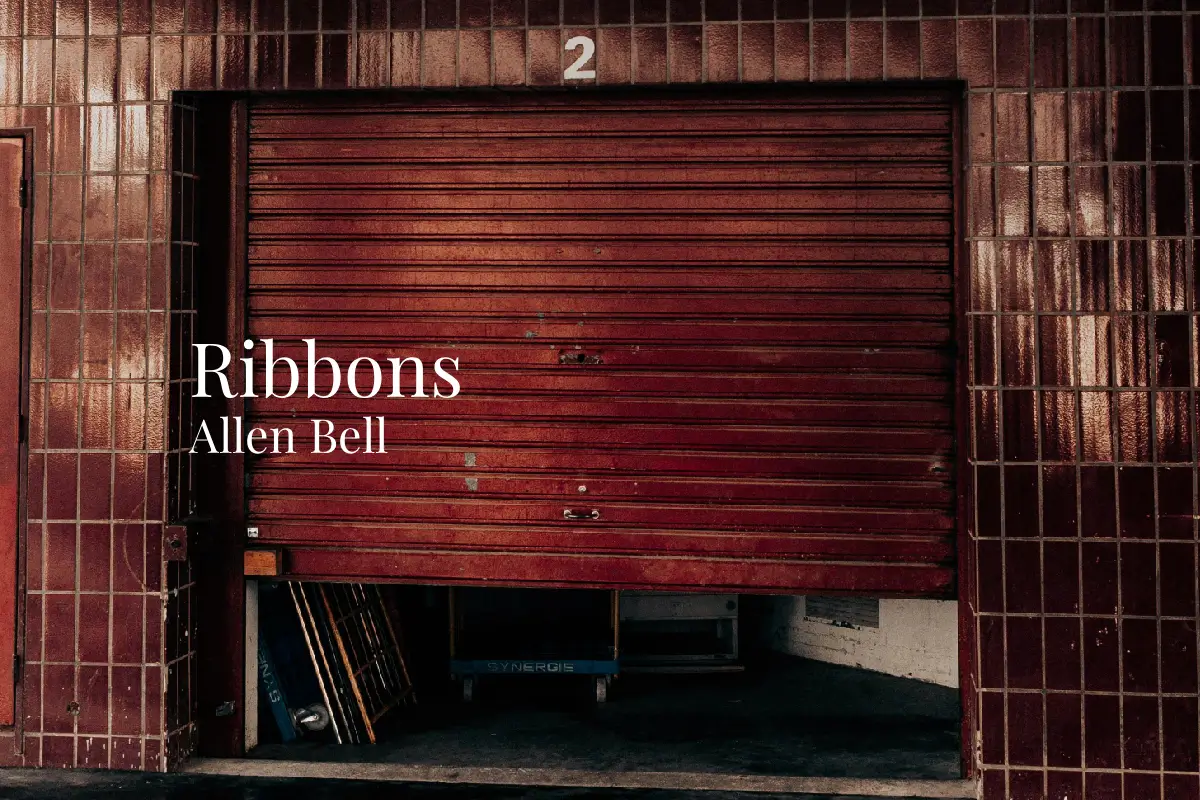
I parked beside the wooden barn that had been converted into storage units. I made sure the truck was perfectly parallel to the building, got out, and looked up. Faded red paint flaked off the face of the building in strips. I checked for any loose boards that might fall from the dilapidated structure and hit my truck, or worse, have the building collapse while I was inside.
“You, Marty,” I heard from behind me.
A small, pudgy man was approaching. When he got close, I could smell whiskey on his breath.
“I called earlier about my uncle’s locker.”
“You, the runner, Sid used to talk about?”
“I guess.”
“Ol’ Sid was a hero around here.” He took a pack of cigarettes out of his front shirt pocket.
“The barn door open?”
“You got the death certificate I told you to bring?”
I handed him two document folders, one with the death certificate, squared evenly in a clear protector. The other Sid’s letter, saying the locker was part of my inheritance. Both documents as pristine as the day I received them.
He reached in to take out the certificate. I held up my hand and said, “Hold on now, you can see it clearly through the folder.” I didn’t want his grimy fingerprints on them.
He tilted his head back and frowned at me, like it was an unreasonable request, then looked the paperwork over too quickly to read and handed it back. “Sid’s is number three. You got the combo?”
I nodded.
“I’ll be in the garage when you’re done.” He opened the lock and left it hanging on the hasp. “Come get me so I can make sure the space is empty before you leave, and I’ll cancel the payments.”
I removed the lock from the hasp, tugging and yanking on the heavy barn door as it screeched along its sliders, opening just enough for me to pass through. Dust particles hung in the streams of light. In the shadows, lockers lined the inside perimeter. Ten small concealed cubicles –roughly framed with fir plank– covered with chain-link fencing, each with a combination lock.
I found and unlocked Sid’s unit. A string attached to an incandescent light dangled through the chain-link ceiling. The string broke apart when I pulled it. The bulb sizzled, flickered, and then went dead.
Please, no rats.
I kicked a few boxes hard to give any diseased rodents a chance to jump out. A musty smell was aggravated with a slight putrid scent of a decomposing animal carcass.
After a couple minutes of listening intently for any scurrying claws, I dug deep into the clutter. I discovered a photo album in one of the boxes. Between the pages –behind clear film, lay my Uncle’s red and blue cross-country ribbons from the 1980s.
They reminded me of when I was a teenager, and Sid gave me tips on how to control my violent rages through running.
I flipped through the album of news clippings and ribbons. The first article mentioned how Sid started competing in marathons at eighteen and quickly became a prospect for the Olympics. A blue first-place ribbon was placed beside it.
It brought me back to twelfth-grade provincials when I threatened to beat the favored runner’s ass if I didn’t place in the next heat. Word got to the officials, and I was disqualified from competing. I gave the kid such a beating he never ran again.
My uncle was there when I was sentenced to six months in juvie. I was expecting to see a broken-hearted man, but he stared back at me with no emotion.
A news clipping from the Vancouver marathon in 1985 didn’t mention Sid’s name, but beside the article was a blue-dyed rough-cut piece of leather. The article was slightly crooked; an uncontrollable urge to straighten it gnawed at me. The clear film peeled back like skin off a sunburn. The article clung to the film, and on the backside of the clipping was a headline: Unidentified man’s body discovered in Stanley Park.
I squared the article. The ribbon didn’t feel quite like leather; it had a rough, brittle texture, like it could crumble if I handled it too much. I gently nudged it evenly to the sides of the article, then set the album aside and continued rummaging.
In an hour, I had rifled through the locker and loaded Sid’s things into the box of my truck. The pudgy morning drinker staggered over, did a quick look around, and signed off the contract.
“I’ll have the withdrawals canceled for next month,” he said.
I hauled everything off to the dump, except for the photo album and a small shoebox-sized fire safe that I’d have to break open.
As I was tossing my uncle’s memories at the transfer station, my cellphone rang.
“Hello, Martin Rider?” A woman’s voice said. “This is Ashley, Mr. Singh’s assistant. We’ll need to settle your legal fees of seven thousand five hundred dollars before we can go forward with the proceedings.”
“You don’t have to worry, I’ll etransfer it tomorrow morning.”
“It’s not my worry, sir. Have a nice rest of your day,” she hung up.
The day after my uncle passed, my anger issues flared up, and I had a road rage incident, which resulted in an assault causing bodily harm charge. I consulted with Mr. Singh, who said that because of my prior serious violent offence, I would end up in prison. With his assistance, I had a chance at probation. I needed to figure out another outlet for my rage.
***
At my apartment, I examined the keyhole lock on the firebox and decided that I could drill out the tumblers using a cordless drill. When I was a kid, I used to peep on people and saw my uncle Sid drill out the lock on a similar box. When he saw me, he rushed over and whopped my ass, saying he was beating the creepiness out of me. As a child, violence was always about lessons that left a vivid scarred memory.
As I flipped through the album, I found another crooked article and another fragile blue ribbon. Sid’s name wasn’t mentioned in this article either.
The resistance of slowly peeling back the clear film made the back of my head tingle like tiny spiders racing across my scalp.
As I straightened the article, another clipping slid from behind. Another unidentified body had been found. The article said a strip of flesh had been sliced from each side of the victim’s spine.
Eight articles where Sid’s name wasn’t mentioned. Eight hidden, delicate blue ribbons.
I picked up the firebox and shook it. There were only a couple of solid items in it, maybe some coins or keys.
I drilled the lock, and inside were two keys and thirteen photos of stretched out bodies face down, hands and feet bound, lying on the ground in a thick forest. Each body was tall and slender. They looked like males. Each has strips of skin peeled from both sides of their spines.
I Googled a couple of news clippings to look for more information. Three of the articles had the victim’s names. They were men who had won the city marathon where their bodies were found.
I looked online for a decent pair of joggers. The rush of adrenaline sent more tingling through my scalp as I searched for the location of the next marathon. I’d practice this newfound rage-control in Toronto, three weeks from now.
.
THE END
Bio
Allen is writing out of Calgary, Alberta. He’s been published in Yellow Mama, Guilty’s Flash Fiction, Punk Noir, and Pistol Jim Press. His partner says he has to get up and move around more because it’s not good for the recliner to be writing in it for hours on end. He’s currently considering writing full-time once he figures out how to live off of passion instead of a paycheck.