
I stayed up late to watch Dark Passage, the movie where Lauren Bacall helps Humphrey Bogart recover from plastic surgery and vindicate himself from a wrongful accusation of murder. The film was familiar to me, but this time I took special notice of the bus station scene where a man and a woman — waiting passengers and strangers to each other up to this point — start talking about themselves, how they have nothing to look forward to, no love in their lives. Americans, they don’t say very much, they’re not explicit about their pain, but it’s clear that a relationship is developing in the space of minutes, the way three or four brush strokes on a canvas might suggest an entire horse. The scene is a pause in the dramatic trajectory of the movie, almost apart from it, but it summarizes a double feature’s worth of hope and frustration and escape. It describes how swiftly a life can switch directions, as in my first intimate moment with Felice, when I felt like an amnesic tasting a fresh orange for what he believed was the first time.
from NOTHING IN THE DARK
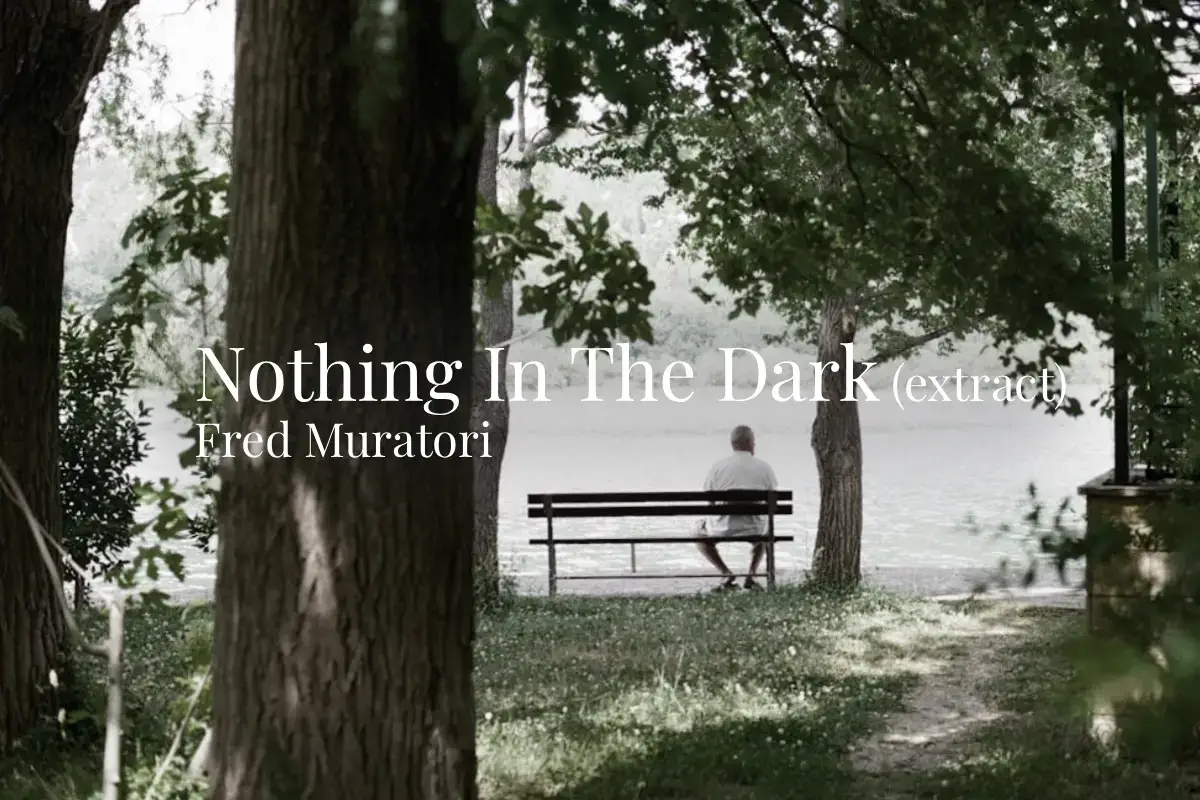
The object of my attention was a middle-aged man in a gray raincoat. I say middle-aged as if it were a condition of remote otherness, as if I had observed him from the arrogant vantage of youth, but in fact the man was probably no more than a year or so older than I. That I held myself at arm’s length from mortality — as if everyone were older — was a ruse I could employ with ever diminishing returns. True, the man was more rumpled, more bald, more despondent-looking as he sat on the park bench staring at his knees through a pair of thick, black-rimmed spectacles, but he and I might have been kindergarten playmates, might have ogled the same cheerleader in high school, might have served in the same battalion. For all that, he seemed older in his sadness. His wife — my client — had hired me to confirm that he was having an affair with an administrative aide in his accounting office. If it were true, then the affair had passed from the romantic phase to the how-do-I-get-out-of this phase. I pitied him. I wanted to pat him on the back and tell him that sometimes mistakes are the tripwires of rejuvenation. But just then a woman approached him — blonde, buxom and tight-skirted, maybe twenty years his junior. He rose awkwardly but quickly to hug her. At that moment I felt no shame whatsoever in taking their picture.
.
THE END
Bio
Fred Muratori has published three full-length collections of poetry (Despite Repeated Warnings, The Spectra, A Civilization) and one chapbook (The Possible). His work has appeared in journals such as The Iowa Review, Poetry, Poetry Northwest, Boston Review, Redivider, Hotel America, New American Writing, Vinyl, Barrow Street, The Best American Poetry anthology and many others. His reviews of current poetry appear in American Book Review, Manhattan Review, Library Journal and others. A graduate of the Syracuse Creative Writing Program, he lives and works in Ithaca, NY.
more
- Night Shift Politics by Michael Wegener
- Shangri-La by Robert M. Ingram
- Pauli by Matt Gossman
- The Butterfly Collector by Eamonn Furey
- Intoxication by Lynda Williams
Out Now
💀 Bring Hell: A Western Revenge Thriller
A land without mercy. A man without peace. A story written in blood.
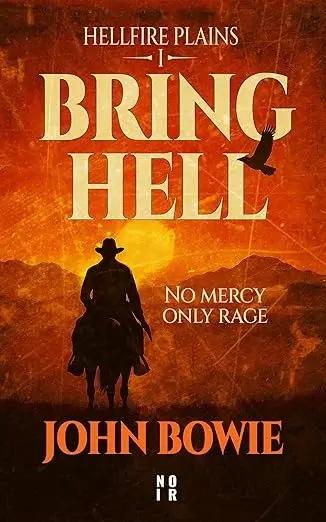
When the sun sets on the lawless frontier, one man rides out of the smoke with nothing left to lose.
Haunted by his past and hunted by his sins, he crosses a dying land to settle a score written in blood.
Along the trail lie burned towns, hanging stations, and men who mistake cruelty for justice. Ahead — only the ghosts of what he’s done, and the vengeance he can’t escape.
In a world where every dawn burns red, there are no heroes.
Only those who bring hell before it finds them.
From the creators of Bristol Noir comes a gritty Western thriller novella steeped in guilt, violence, and retribution — a modern tale of the old West told in smoke and scripture, for readers who ride with Cormac McCarthy, Larry McMurtry, or John Deacon.