

(Word Count: 2,325)
Anticipation. Hope. Happiness; there were none attached to these three words—not in the years after my mother moved us out of her parents’ mobile home and into our own, in a shabby trailer park on a hill off of US 70 near the Blue Ridge Parkway on the outskirts of Asheville, North Carolina. I did not recall if it ever had a name other than a county number, and it was not until years later, when I looked it up, that the street I lived on had a name: Reddick Road. I don’t remember a sign, but I lived there from twelve to just after my fifteenth birthday, and street addresses were not a high priority.
I was too embarrassed to let anyone I met in junior high and later my first year in high school know where I lived. Not that I had anything in the way of friends. I mainly kept to myself.
Why? I was shy, somewhat of a mess, and never fit in. I read too many books older than my age and dressed weirdly.
Much of what I wore came from my aunt in Texas, who sent over hand-me-downs in time for Christmas and my birthday. I wore drainpipes in a classroom of flared jeans and dungarees. That marked me for potential teasing, which I didn’t handle very well.
I finally got my first pair of blue jeans. Imagine going through half the 1970s without a pair? Talk about a total loser: until then, it was all colored corduroy Wranglers, which I hated. Mom got the jeans at the Tunnel Road K-Mart. They were the store brand, on sale because the store just opened, and they had a dungaree dark blue color; they were wide-legged and never fit, running baggy, looking like I had barrels for legs.
The first time I wore them to school, I was openly laughed at and never put them on again.
Since they were on sale, Mom couldn’t return them, as she didn’t with the ugly-ass pair of Spectators she bought. They were a size too big and looked like clown shoes.
I wore Keds to church. Keds to school. I wore them while wandering the woods between the trailer park and the parkway, and I made my way down the muddy hill, which, as I discovered almost immediately upon moving in, was partially a garbage pile covered with dirt. I nearly speared myself falling on the tail fin of a rusted-out red Chevy sticking out of the mud after a heavy rainstorm the first whole weekend after we moved into the trailer park.
We lived on the very top of the hill, in lot 4, between a refugee family with four kids, a single mother, and a middle-aged prostitute who serviced clients most evenings. Their caterwauling was my lullaby.
The trailer was rented. Mom paid for the building and the lot. We had a tree in what passed for our yard, gravel, and dirt decorated with clumps of grass and weeds. Mom hung a swing on the tree the day after we moved in. I was too old for a tree, but I appreciated the attempt. I let the youngest neighbor and his older sister use it.
The trailer park had no signage or numbers posted on the lots. Judging by the handful of small cabins scattered on the hill where we lived, this began as a tourist motor court. The road was usually muddy and froze in winter, making driving with chains on the hazardous track imperative.
Mom had insomnia, so I got the master bedroom because that end of the mobile home faced the stoners living in the old tourist cabin across the road, and she couldn’t stand the racket. She also didn’t want to sleep next door to an old hooker. My bedroom had a toilet and was next to the kitchen, which made it possible for me to never interact with Mom except for dinner.
It wasn’t that I disliked her by then—I was a teenager—but I didn’t like her boyfriend, Frank, who drove a cab and lived with his retired mother.
Mom and he had a lot in common, and mostly the bad—depression and poetry, it seemed. Since I faced the road, I could pop open the screen in the window and climb out and wander any time at night after my mother went off to bed. Unfortunately, since I had no real friends to hang out with late at night, it was nearly a year before I bothered to do so.
Work was getting the better of Mom; shortly after we moved into the mobile home, she was forced to leave her lab technician gig when the cardiologist she worked for retired.
Her new job was as a medical assistant for a doctors’ group in the same complex. She received less pay, so she began taking in medical transcription work on the side—more extended hours, and I saw her less. At the time, she started having problems with her boyfriend, which I pretended not to notice. He drank a lot. I avoided him.
I made no friends that first year. None of the kids in the park were my age and sketchy.
I resented my mother for moving us out of my grandparents’ mobile home. I liked the relative peace and isolation of living on the side of a mountain and long hikes. Yet, I understood we had to get out, at least for my mother’s sanity, which she never fully grasped.
I paid little attention to her comings and goings as long as the TV dinners were in the freezer and I had a couple of dollars for an allowance. It got odd at times, however, such as when she said all she had was two bucks in her wallet, and I would get one of them. That’s when it struck me how terribly poor we were. When living with my grandparents, I was somewhat shielded. I never had what the other kids had, but I didn’t mind so much. This time, though, was different.
We managed. The rent was paid, and we had food, mostly TV dinners. Mom and I ate at the table, but usually, it was me alone after school. As for television, we had an old Curtis Mathes television that mom received from her boyfriend’s mother. It had a picture but no sound. On top of the Mathes was a Sears portable we bought at a flea market that naturally had no picture but sound.
Music was never a problem. I bought LPs at the flea market for a quarter each. I had exciting tastes—the first record was Black Sabbath’s Sabotage, and the second was Iggy and the Stooges’ Raw Power. Mom preferred jazz and big band. Most of the jazz was interesting: Parker, Dizzy, West Coast Harry James, and a few people I had never heard of at the time, but discovered later they mainly were hepcat blues types that raised my mom’s coolness factor long after it mattered. People like Clifford Brown, Cecil Taylor, and Ornette Coleman.
So it was shit, but this was like—a shit life living on top of a hill with at least a dollar in my pocket to stretch for a week, which I added to by shoplifting cartons of Marlboros at different supermarkets and in a wholesaler downtown with an open back door.
I did well–selling packs at fifty cents to my junior high classmates. This wasn’t so bad, and I liked the concept of being a petty criminal. I didn’t do this often, though. I knew better than to be greedy or arrogant and rely wholly on the stupidity of store clerks and warehouse workers.
Usually, I would filch several cartons on a Saturday morning and sell them for the week—I would move an entire carton’s worth in one day. Once, I scored big, taking a whole case of cigarettes errantly left on a skip in the alley behind the wholesalers.
I had to stash it under a tarp behind some disused oil drums several blocks away, making several trips to empty the cartons into my backpack for two days. So, for weeks, I did not feel the need to forage for filters, as I liked to call it then.
Even so, I had become so good at theft that I had little to spend my criminal gains on—I stole paperbacks and comics all the time, and my grandmother bought my first guitar, a beginner’s acoustic. Mostly, I spent my money on LPs, 4.77 at K-Mart and a little more at Bridge Sound Company in Biltmore Village. I also finally bought a decent pair of blue jeans—Levis—which I lied to Mom about, saying I saved up for them.
She was so proud of my frugality that she gave me an extra dollar, which I spent guiltlessly playing pinball that afternoon at the mall arcade, where much of my money went.
But, damn, was it ever so lonely living on top of that hill. Felt like crying at night but learned to lose myself with the cassette player next to me and reading my increasing collection of stolen paperbacks. I wrote poetry then and short stories on school-lined spiral notebooks. Occasionally, I’d ineptly strum my guitar and pretend I was in a band. I pretended a lot—daydreaming all the time—so much so my memories of those daydreams and musings are better than the actual reminisces of those times. Those fanciful longings took me temporarily to refuges no drugs could place me, but in the end, I was always back to my bed, next door to a hooker, across from some stoners, with a crazy mother, her drunk boyfriend and TV dinners most of the week.
After a few months, school finally ended. My grades were okay, enough to keep me in the B group for eighth grade. A week into summer vacation, I met a girl while watching a softball game in a park.
Actually, she met me. I came by to sell the last carton of cigs from the stolen case. After nearly getting caught at the wholesalers the weekend before, I decided to lay low and play clean until I regained my confidence.
I still had over a hundred dollars under my mattress, and Mom and Frank bought me a ticket to the KISS concert later that month for my birthday. I decided it best to relax and move on to something new. I didn’t need the money, though I wanted the black Les Paul Special in the mall guitar store. That would have been a lot of cigarettes, and I knew there was no chance of it without eventually getting busted. I had no interest in the Juvenile Evaluation Center in Black Mountain, where I would be sent, and I liked my life.
I sold the carton for three bucks and lingered to watch the game, mainly to watch the lanky girl wearing the St. Genevieve/Gibbons Hall jersey coming up to bat. Her long legs made her look tall, but barely over five feet tall. With her hair, Brunette pulled askew with a plastic clip and smirked confidently when she stepped up to the dirty dishrag that was home plate, absently kicking it with her low-heeled sandal as she prepared for the first pitch.
She was a total badass French-Canadian: pale, strong features, with coal-black eyes, which made me think of a Jack Kirby comic book. She was the type of girl who could strut standing still, and judging by the private school she attended, she also clearly came from money. St. Genevieve/Gibbons Hall was the rich kids’ Catholic school.
When I was a child, my mother had an unrealistic idea of me going, and I did visit their rival, St. Joan of Arc, but I learned later that my grandmother refused to pay for it. She had terrible experiences in parochial schools and shut down the idea.
Our eyes met. Lydia smiled at me, turned to face the pitcher, and knocked his first throw deep down the third base line for a triple. It would have been a home run if she wasn’t wearing sandals. The next batter hit a line drive over the center fielder’s head for an easy home run, and the girl half-jogged in, picking up the bat and carrying it with her to her side of the field. I stood with Keith, the guy I sold the carton to, and asked if he knew her.
“Who, Lydia?” Keith snorted, shaking his head in derision. “She’ll do anything for Smirnoff. She’s one of Duane Colquitt’s cousins. Thought all you Catholics know each other.”
“Uh, no. Lydia lives in Asheville, a different parish, so I never saw her.”
“Then you’re out of the running. Lydia’s got too much money for us grits.”
“Doesn’t seem the type that would do anything for Smirnoff.”
He ignored my response. “Wish you luck,” Keith said. “She looks stuck-up, too.”
“See what happens”
I watched her eyes. Occasionally, I caught Lydia looking at me before she took the field.
Keith had left by the end of the game, so I decided to wait to see if Lydia would talk to me. She walked toward me alone, her bat over her shoulder.
We talked and walked to her Kenilworth home before it got dark. I caught the bus at the mall. Mom was still at work, so I called Lydia and sat on the floor by the front door, talking for hours until Mom finally arrived.
From that night on, life was different. Living on that muddy hill wasn’t so bad. The trailer park was still a shithole. We stayed poor. Mom was still crazy, and Frank remained a drunk, and I continued daydreaming more than I should have.
However, I had a girlfriend.
.
THE END
BIO
Mike Lee is a writer and editor at a trade union in New York City. His work appears in or is forthcoming in Wallstrait, Bristol Noir, Lowlife Lit, The Opiate, Roi Faineant, Brussels Review, Brilliant Flash Fiction, BULL, Drunk Monkeys, and many others. His story collection, The Northern Line, is available on Amazon.
Out Now
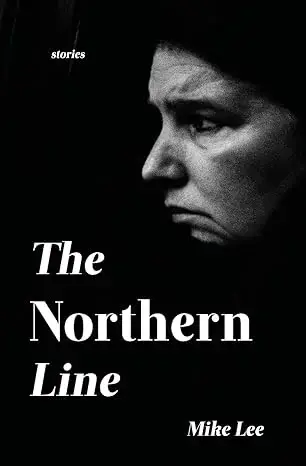
A young man returns to his hometown to mourn the reasons he left. An abused spouse copes with a lifetime of bullying in identifying with the lead character from an independent film. A political prisoner is snatched from a firing squad to find himself exiled in an obscure land. A family flees the Dust Bowl of the 1930s, using magic as a tool to survive.
The Northern Line is a collection of stories about dreamers of what was mislaid, lost souls seeking redemption, sudden opportunities and missed chances. The stories are of people grappling with a world of unexpected changes, striving for stability in uncertain, and often surreal, times.