(2,384 words)
In first period, Mitchell wrote: Sitting here at seventeen thinking of writing my last will and testament—a testament of what, one may ask. Does it matter? I’m living in an age where failure meets life, and I marry and live happily ever after. Unfortunately, life gets laid by failure and becomes pregnant with reality, so they have a marriage of inconvenience, and therefore, nothing is left but waiting for this bastard child reality, who eventually is delivered by Depression, and the not-so-proud parents pay the hospital bill and go forth to raise this child. What child is this? This bouncing baby bastard can give out so much pain given the circumstances and receives in return my soul to play with like a rattle until it grows bored and casts it aside.
My soul is no longer mine, I feel. It was taken away one night. A furtive glance from a stranger into my mind, and it disappeared. It is a longer and much closer search that lasts forever until I realize it will never be returned. Yet taken by whom? An easy answer: taken by my own volition by a mad thief in the night, a she-wolf that knows no pity or morals, a succubus of the first order.
******
Counting the days, two six weeks equals a semester, and that’s the end. A summer of nothing before celebrating graduation if he could wrap up the backlog of homework and daunting exams in late May.
Until then, he looked forward to the sixth period in Biology and that girl who always stared at him. No girl had done that before. He was too shy to admit that or write in his journal, and he didn’t know the girl—he never saw her before they were in class together.
He liked her, though he was unsure to tell friends about her, and again, he did not mention it in his journal. At some point, he would muster the courage to ask her out. Maybe. Sometime. Well, times and situations constantly change, he thought.
He liked the way she looked and how she carried herself. There was something special about her, a charismatic aura. That is what it is called; he believed it fit this context. That made her attractive to him beyond the attention she gave when he sat at the seat one row across from her.
He realized he was shaking. This was rare—the nervousness and excitement of entering that Biology class and her waiting for him.
He lit a Camel filter. He liked the brown pack, the only reason he could choke on this rough-and-tumble brand. “How sweet is life,” he said as he walked toward the building. “Ah, well, so it goes.”
He smiled at her as he stubbed his cigarette on the concrete before the entrance.
Later, Susan stood beside her desk as Mitchell half-jogged in at the bell ring, ending break and starting the third period. She stared at him, placed her right hand on the back of the seat, and sat down.
Mitchell stared back at her, noticing that she looked at him while placing his folder on his desk. He rammed his left hand in his pocket and smiled, his head down while looking up at her, attempting an awkward sensuality.
Surprised by his reaction, Susan blinked suddenly and smiled back, trying to recover. She then looked away, turned, and closed her eyes.
Meanwhile, Mitchell had already sat and opened his folder. He turned several pencil-filled sheets until he finally got to a blank page. Mitchell then brought stubby yellow number two from his back pocket and began writing, seemingly oblivious to Susan sitting beside him. He suspected something, though.
There was an attraction, but he felt a lot of shyness to overcome, and they were too awkward to face that extended encounter. So here he was, a punk rocker getting the eye of one of the rich kids from the west side, the right side, who, by accounts, was the biggest catch in class.
******
The night before, Mitchell lit another cigarette and sat behind the typewriter, wishing he didn’t have to write today. But he felt the urge and the need. These days aren’t the best, and it was hot in the mobile home, but he had to write.
Methodically, he rolled in a sheet, remembering to put in two because the keystrokes were harsh, and it fucked up the roller. Began writing as ashes dropped on the back of his left hand.
He wrote about a girl named Maria. She had so many problems, and as of late, he thought about making them more mundane than extreme—make the issues about her relationship with her mother and acne. That would do for her because she was another fifteen-year-old girl with cycles, and he sensed and sympathized with the rage inside she would feel as the flow came on. Perhaps not, but he tried as he wrote, banging keys fitfully as Mitchell continued down the page of the electricity Olivetti’s mom got from her job. She gave him under the proviso that he would not damage it and kept the machine clean.
He stubbed out the cigarette in the ashtray and typed out the final two lines before pulling out the page. He checked it for errors and, finding none, placed the paper face down on the others on his right. He rolled another page in and continued writing. Maria had internal dialog to communicate, and he listened to her speak in the rhythm of Olivetti’s typewriter keys.
******
In his journal, Starring at the Girl, Mitchell writes: I had a fantasy while sitting in Philosophy class, in the back of the room, hiding from the teacher, the students, hoping they would not take note of my existence. I was running low on hope and self-confidence.
I grimaced as I left my thoughts momentarily and finally noticed that considering this again was not worth my time. I stopped taking notes, returned to my black notebook underneath, and wrote a poem. I managed to write six lines before scratching them out. Finally, I turned the page, put my head on my desk, and pretended to sleep.
I went through the rest of the day in a haze. I couldn’t remember what I had done in school. I guess I worked through the hours methodically, as usual, robotically, and without much thought. Just did what I could, and then the day was over.
As I left the building, it struck me that I had failed again to achieve anything of note as I made my way to the shuttle bus. I felt broken again when I got on the bus, brought to the back, and sat down.
I leaned back and looked out the window, watching the traffic pass. A carload of frat boys in a gold Buick Regal yelled out the windows—primal screams of young men as directionless as me, emoting over nothing. How many have gone back to this age? I wondered.
I closed my eyes as they passed, only opening them once the shuttle bus reached its destination at Littlefield Fountain.
I got off and began wandering through the University of Texas grounds. It was a hard, hot pavement under my feet, even with the shade, and I sweated profusely. I thought of burning sky—cold soul, such as the state of my poet’s hardened heart.
******
The cigarettes—he needed those damn smokes. They were his pleasure crutch and symbolized part of his self-image. They did not impair his mind, just screwed up his lungs, and he didn’t need them to think, brood, and devise brilliant schemes to improve his life.
Smoking was stupid, that he knew. There were no excuses for smoking, but he liked it, and liking something was important.
As for the girlfriend, the stunning ex who left him for Chip, the surfer dude from Port Aransas, he wished her well but certainly missed the love she showed until she could not wait anymore. She dropped him, and he took it like a man is supposed to do in movies and poorly written novels.
They understood when he talked about the situation with John and his lover and told him to learn to move on. So, moving by crawling, he did it because the process was so challenging. The right track was there, but getting there was fucking tricky because she was different. She loved him, and he knew those feelings lingered. She just could not bear his bullshit any longer.
So she left him for a dude named—Chip.
He hoped all the memories would eventually fade. Then, maybe he could leave Austin, go to New York, and try to make it up there.
That would never happen. Mitchell had nothing going on here, and he could still make something out of nothing here than out in the great beyond of unknowns.
Starting over begins at home. There was a rent-free trailer and registration at Austin Community College. He could get a job, probably washing dishes. He still had his car. That was not much of a future, but he could still dream. There was something left. Something that remains. Yes, remains—not ashes. But, again, he had no complaints.
With that, Mitchell decided he was no longer afraid, so he rose from his seat in Biology and walked out of the class. He stepped down the long hallway, took a left and looked straight ahead, went to the double doors, pushed them in, and left high school, never to return.
He had realized it was the final move. He had finally been sickened by all the backstabbing around him. As he climbed up the hill behind the high school, he thought about where to go from this moment. He crossed the MoPac Expressway and the railroad tracks and sat on the UT shuttle bus bench, waiting to finally escape this place of sadness and frustration. He was alone now, having burned his bridges. But, gladly, he had burned them all and felt strangely satisfied he had made his most significant, most important decision.
The shuttle bus arrived, and Mitchell got on. He picked a seat in the far back and sat silently, staring out the window at all the mundane sights associated with West Fifth Street—crumbling bungalows, a pair of shacks, and a television repair shop in stucco.
Mitchell blandly noted each building because he had taken them all for granted for years, and this was the last time for a while, at least, he would see them. As far as he was concerned, none of these structures held promise, just as much as four years of high school did, and soon, there was nothing else for him to do but shut his eyes. So he closed them until the bus reached its destination at Littlefield Fountain on the University of Texas campus.
Late May, the sun was shining hot already, but the bride was not singing, the people were not laughing, and to Mitchell, everything from the surrounding buildings to the grass was brown and dying. Such was his mood. Everything was just mud and concrete. Austin, encompassing school, friends, and the entire world around him, was not worth the trouble anymore. So as he wandered aimlessly through the University campus toward The Drag—Guadalupe Street—he just looked down at the ground, taking in the cold reality that there was no plan for the days ahead. Mitchell had to lie to Mom about dropping out before somehow figuring out a way to avoid serious trouble by doing something, but he had yet to think what that would be. He eventually would think of something—there was nothing but staying blank.
He made his way to the corner of 24th Street and The Drag, crossing briskly, and stopped off at the deli near the opposite corner.
He opened the door and made his way to the cheese counter. He picked up a 90-cent slab of cheddar, pulled a Lowenbrau from the cooler, and placed them on the counter. The counter lady asked if that would be all, and Mitchell nodded, dropping two worn dollar bills, and collected his change. The counter lady took out a church key and opened the bottle.
Mitchell sat outside at a table and opened the wrapper, breaking off a piece of cheese and munched slowly as he stared off into the street, focusing on the mural on the side of the Varsity Theater and swigging from the Lowenbrau. After finishing the cheese, he downed the beer and headed toward the record store across the street.
His acquaintance, an older man who enjoyed his company and knowledge, owned the record store. Mitchell had hoped for years to get a job from him, but he had come to the stunning notion this was not to be. Even so, he liked coming in, looking around, buying records when he had the money, and just relaxing in the air-conditioned din of music constantly playing on the store’s turntable.
He glanced around and greeted the two clerks behind the counter. After a few minutes, he felt not in the mood for music or hanging around. He smiled at one clerk, an attractive blond girl he had a crush on, and walked out.
Mitchell continued down The Drag, hands in pockets, staring down at the cracked concrete, only to look up at the crossing lights with each block. Passing the stores unnoticing, he had seen it all before nearly every day for four long years, always after school, except all day during the summer, and on most weekends—the same old, same old thing.
Mitchell wondered if he would ever return—it was not within him anymore. The gray is gray, and everything seemed nothing, and nothing means nothing, he thought, as he crossed Martin Luther King Boulevard, Guadalupe Street again, leading toward the Colorado River.
The further he walked, the deeper into his thoughts he plunged. The blocks passed quickly by the Travis County Courthouse, the Public Library, 9th Street, and the Alamo Hotel on West 6th Street.
He thought about Susan. Maybe, but no. Did not want to get hurt again.
Mitchell crossed the railroad tracks and, at that moment crossing the bridge over the water, disappeared into himself.
~
THE END
Bio
Mike Lee is a writer and editor at a trade union in New York City. His work appears in or is forthcoming in Wallstrait, Bristol Noir, The Opiate, Roi Faineant, Press Pause, Brilliant Flash Fiction, BULL, Drunk Monkeys, and many others. His story collection, The Northern Line, is available on Amazon.
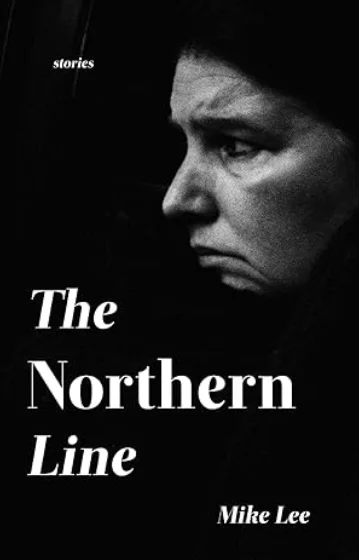
Out Now: The Northern Line by Mike Lee
A young man returns to his hometown to mourn the reasons he left. An abused spouse copes with a lifetime of bullying in identifying with the lead character from an independent film. A political prisoner is snatched from a firing squad to find himself exiled in an obscure land. A family flees the Dust Bowl of the 1930s, using magic as a tool to survive.
The Northern Line is a collection of stories about dreamers of what was mislaid, lost souls seeking redemption, sudden opportunities and missed chances. The stories are of people grappling with a world of unexpected changes, striving for stability in uncertain, and often surreal, times.