
(1455 Words)
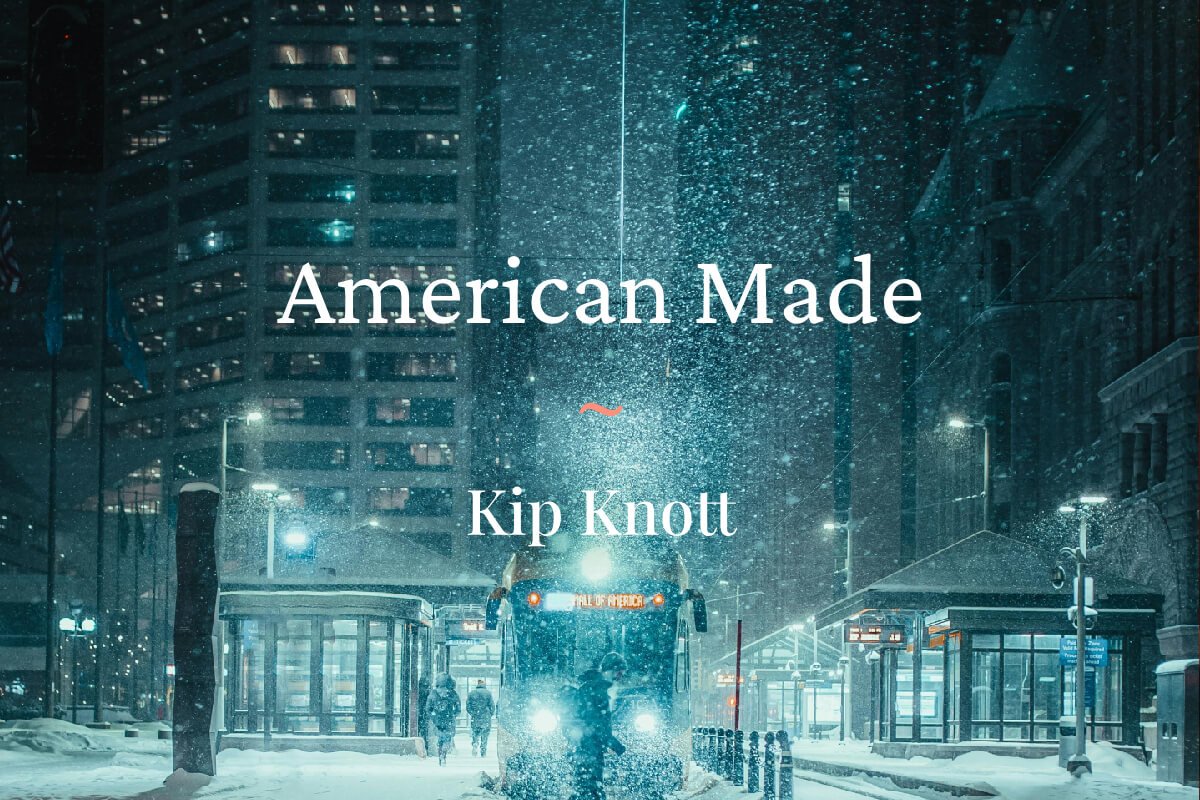
Jack missed snow. Living more than fifteen-hundred miles south of his hometown of Hemlock, Vermont, for more than seven years now, he could barely remember what snow looked like floating in the sky. Sometimes just for kicks, Jack would scratch his head furiously to kick up a halo of dandruff that would hang suspended for a moment before drifting down like tiny snowflakes upon his black t-shirt and conjure shadowy memories of his absent parents. Like the thrill of sledding down Kimble Hill on his father’s lap the winter before his father died. Or the smell of incense in his mother’s hair when he kissed her goodbye for the last time. It was times like this when Jack would stream a 10-hour video of falling snow on YouTube and wallow in the drifts of self-pity that came with 80-degree days in December. Something had to give in Jack’s life, and he knew it wasn’t going to be the weather.
The reasons Jack found himself living this far south of the home he had known all his life weren’t complicated. One November, Jack’s engineering firm temporarily transferred him to their sister firm in Ashland, Florida, assuring him it would be for three months at most. But the downside of being too good at his job meant that three months had turned into a permanent relocation.
Jack’s first Christmas this far south (forty miles south of Miami, to be precise), was like celebrating the Holidays on Mars: there was no hope at all of feeling even the slightest chill in the air that could remind Jack of Christmas and home. At first, the flat plastic snowmen the town hung from palm trees amused Jack. But when the town’s groundskeepers began to spray paint the tips of palm leaves white with fake snow, Jack felt they had gone too far. The complete impossibility of snow-covered palm leaves was too much to believe in. Even as a lapsed Catholic, it was easier for Jack to believe in talking animals on Christmas than to believe in snow-covered palm trees.
And that was the moment when the seed had been planted deep inside Jack’s psyche. That seed had lay dormant for all these years. But now, coming up on his eighth Christmas in Florida, the covering had finally broken open and a tiny tendril grew quickly into thorny vines that tangled around Jack’s brain.
After about two hours of watching YouTube snow, Jack was asleep and dreaming of when he was twelve years old and the last Christmas in Hemlock he shared with his mother who was then dying of cancer. Nearly all 300 residents gathered to cheer for Jack’s mom as she lit the communal Christmas tree and then sang carols in the softly falling snow. Jack instinctively opened his mouth in his sleep, half expecting a few stray snowflakes to land on his tongue and linger for a brief moment before melting into nothing.
Waking with a start, Jack shook his head to clear his mind of the dream before hitting the pause button. Still groggy, he pulled himself out of the chair and walked to the linen closet where he kept three heavy comforters that his mother had hand-sewn after he was born: one for her, one for his father, and one all his own. Jack had brought the comforters with him when he moved south, even though he knew they were about as useful here as a bonfire in Hell. Sometimes, though, he would take them out and pile them on top of himself just to feel their weight. Jack wouldn’t go so far as to say that the comforters were his security blankets, but he had to admit that he felt completely safe beneath them.
Jack lifted the comforters off the shelf and held them to his face, breathing in the fragrance of coal smoke from the potbelly stove that burned all winter long in his childhood home and that had woven itself into every thread. He took one last, deep breath, and then gently laid them on the floor. This time it wasn’t their weight that Jack needed, but the rifle that lay under them. Once Jack’s transfer to the new firm became permanent, his neighbor, Tom, a 74-year old widowed retiree from Michigan, encouraged Jack to buy a rifle for his protection. “You can’t live in Florida without owning a gun. It’s just not done,” Tom explained. “You never know when you’ll need it for a stray gator.” Jack slid the AR-15 off the bare shelf. Even though he had only ever fired the gun once the day he bought it, he checked the magazine to make sure it was fully loaded. He wrapped the rifle in the comforter his mother had made for him, placed the remaining two back on the shelf, and closed the closet door.
Cradling the cloaked rifle in his arms the way one might carry a cherished family pet, Jack walked out to his car. Tom, who was watering his azaleas, waved at Jack.
“Where you off to?” Tom asked.
“Thought I’d get in a little target practice,” Jack said, lifting up the wrapped rifle.
“Sounds good. Keep the pattern tight,” Tom advised before returning to his watering.
“Will do.”
Jack opened the passenger door of his 4Runner, tilted the seat all the way back, and laid the bundle down. Once behind the wheel, Jack synched his phone with the car stereo and chose “Jack’s Favorite Christmas Songs” from his playlists. The first song up was the one song that put him in the Christmas spirit above all others, “Let It Snow” by Andy Williams. Every time Jack heard those first soft flute notes of the song, he was instantly transported back to all the Christmas mornings of his youth in Hemlock, mornings when he would wake up under the weight of his comforter only to see his breath because the furnace could never keep up with the cold.
By the time Jack turned onto Main Street, “We Need a Little Christmas” by the New Christy Minstrels was playing. The street was virtually empty, but the sidewalks were bustling with pedestrians walking their dogs, roller blading, or sitting on benches in the scant shade of the palm trees that lined the street. Just up ahead was the town roundabout, a large circular area with an ornate fountain of dolphins surround by sand and twelve large palm trees that formed a horseshoe. Jack pulled into a space at the open end of the horseshoe and turned on his hazard lights.
The roundabout was alive with children, parents, grandparents, and couples either lounging on the sand or splashing in the fountain. Jack rolled his window down and cranked the stereo up. Bing Crosby’s “White Christmas” blasted out into the humid air, and a few people turned from the fountain to find the source of the music. When Jack saw that they had discovered the music was coming from his car, he waved and started to sing as loud as he could, “I’m dreaming of a white Christmas. . . .” To Jack’s surprise, a few people started to sing along with him, smiling and waving with all the cheer that we like to associate with the Holidays. Jack closed his eyes and thought he could feel snowflakes melting down his face. But after a few seconds, he realized that it was sweat and not the soothing sacrifice of melting snow that he was feeling.
Jack opened his eyes and turned the music off. He reached for the bundle in the seat next to him, carefully unwrapped the rifle from the comforter, and checked the magazine one last time. Slowly, he pointed the rifle out of the driver’s side window. He took a deep breath to steady his aim and then squeezed the trigger over and over again as fast as he could. A squall of plastic bits of snowmen hanging high in the palm trees, glittering shards from a thousand blue Christmas lights, and fragments of white-tipped palm leaves erupted over the scattering crowd like a blizzard. Jack sang as loud as could, “Let it snow, let it snow, let it snow!” until the rifle clicked empty.
Jack tossed the rifle onto the street and pulled the comforter over him, glad for the weight of it. When he looked outside, he believed that it was actually snowing. He believed he could feel the muscles of his father’s legs beneath him as they flew down icy Kimble Hill. He believed he could smell the patchouli in his mother’s hair as she bent down to pull mittens onto his hands before they built a snowman together. And for a moment, Jack believed that he was cold.
~
THE END
Bio
Kip Knott is a writer, poet, teacher, photographer, and part-time art dealer living in Ohio, U.S.A. who likes to spend time traveling the backroads of Appalachia and the Midwest taking photographs and searching for lost art treasures. His prose has recently appeared in Best Microfiction 2024 and The Wigleaf Top 50. His most recent book of poetry, The Misanthrope in Moonlight, is available from Bottlecap Press. You can follow him on Instagram at @kip.knott and read more of his work at www.kipknott.com.
More
- Night Shift Politics by Michael Wegener
- Shangri-La by Robert M. Ingram
- Pauli by Matt Gossman
- The Butterfly Collector by Eamonn Furey
- Intoxication by Lynda Williams
Merch
