
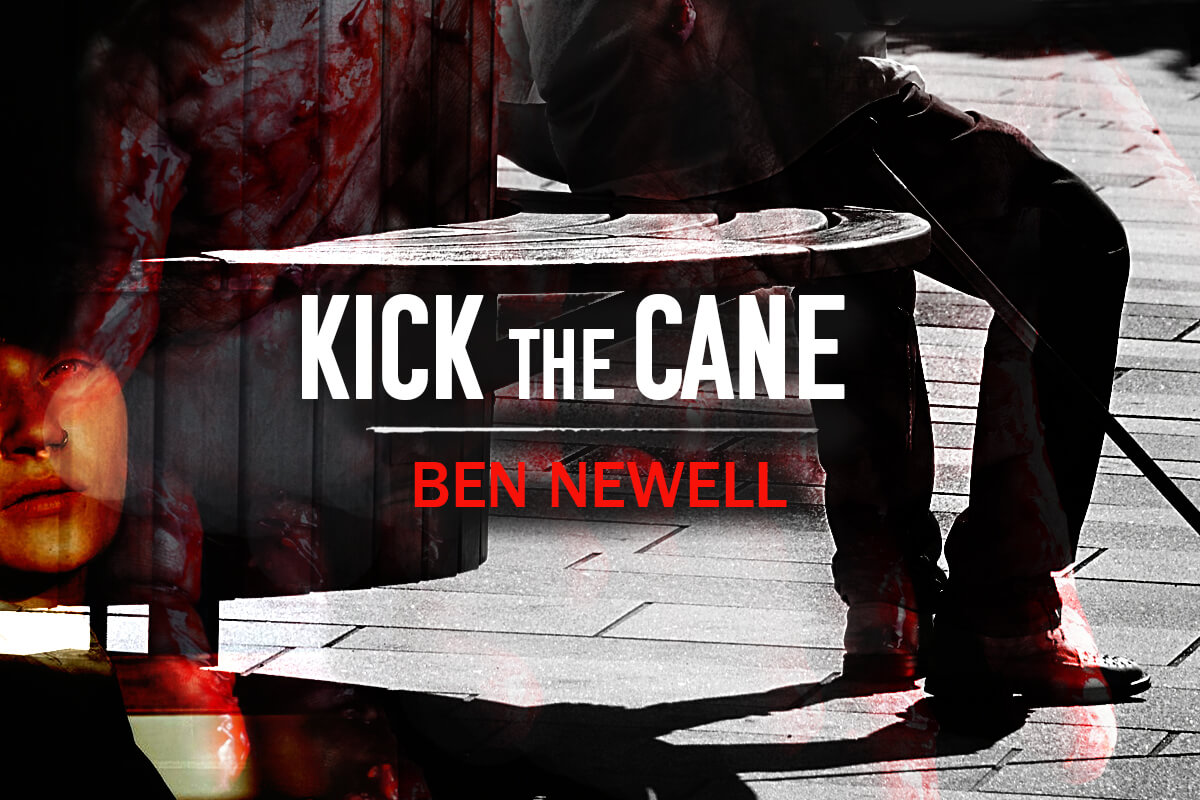
It was blustery; the wind slashing in from the river could cut right through a man, but this man was quite comfortable. He never embarked on his late afternoon walk without being properly dressed. Today’s ensemble included a ski cap, scarf, and heavy wool coat with collar upturned for extra protection.
He moved along with his cane, shuffling and stooped, following his standard out-and-back route. He started his walk at the same time each day, finding a measure of peace in the sameness of his routine. Such predictability made him an easy target for anyone meaning to do him harm; a mugger, perhaps. He knew this, and thought about it often. Still, he refused to vary his method . . .
#
“I’m sorry,” the young emergency room doctor had said. “We did everything we could do . . .”
Nick could still recall the pungent antiseptic as he had stood at his mother’s bedside, peering at her serene face. He had said a silent prayer as the doctor granted him privacy in that most painful of moments. It had been an awfully wicked spill. Broken collarbone. Fractured arm. Cracked skull. Had his mother not hit her head . . .
Of course, he had been expecting this sort of thing for years. She was eighty, lived alone, didn’t see so well, and walked with the aid of a cane. A fall was inevitable. He was actually surprised that it hadn’t happened sooner.
But not like . . .
An eyewitness had provided police with a full account of the incident. Some punk had come up behind his mother and kicked her cane, turning her daily walk along the riverfront into a nightmare. Nick had been shocked to learn that the perp had done this sort of thing before. The sick bastard got his jollies watching old folks topple to the pavement. According to the police, his mother—the first victim to die from their wounds—was number three. Her cane, like the other two, had been swiped by the perp, claimed like some sort of serial killer trophy.
“Three times,” Nick had said to an overworked detective. “You’ve got to catch this guy.” “We’re doing all we can,” the detective had said.
And Nick had believed him.
But weeks had turned to months as the kicker continued his reign of terror, felling the elderly (thankfully no more deaths) and collecting their canes with impunity. After reading about the sixth victim—a retired high school History teacher and baseball coach—Nick had needed a six-pack and half a pint of scotch to quell his rage.
#
If it ever happens, he thought, this will be the spot.
The picnic area marking his turnaround point was shrouded in menacing dusk. On weekdays it was deserted at this hour; picnics were the furthest thing from the minds of the workaday crowd. He could see the commuters crossing the river; their headlights slid across the suspension bridge at a mesmeric clip, though not enough to distract him from furtive movement, nor the crunch of leaves underfoot. He felt the cane disappear beneath his hand, felt the sudden absence of support as it sailed through the gloom, then skittered across the asphalt pedestrian path.
But he didn’t fall. He straightened, acquiring an erect posture befitting a man of his age. His gloved hand came out of his coat pocket clutching a .32 automatic.
The kicker was bending over to grab the cane when the first round punched into the grass just inches from his hand. The kicker turned; his eyes bulged with fear. His mouth gaped. The second round drilled him in the shoulder.
He put the gun in his coat pocket, assumed a leisurely pace and retrieved the cane. He stood there, ramrod straight, above his quarry.
Young, he thought. Fourteen, maybe fifteen.
“You killed my mother,” Nick said.
“Please, don’t—”
“What’s with the canes?”
The kicker winced with pain.
“Tell me. Why?”
“Gang initiation. Lucky seven and I’m in.”
“Lucky seven, huh . . .”
“Yeah.”
Nick clenched his jaw.
“Close,” he said, “but no cigar.”
He brought the cane down, the first of many blows to the head. It would take ten to kill the kid.
THE END
ABOUT THE AUTHOR
Ben Newell is a poet, reviewer, and fiction writer living in the deepest South of Mississippi. He dropped out of the Bennington Writing Seminars during his first semester, eventually resuming his studies at Spalding University where he earned an MFA. He works at a public library.