
Abel sat alone. Moonlight filtered through the full French windows of his home. Outside, a few of the neighbors’ gas lamps flickered like will-o-wisps, filling the room with pastel light.
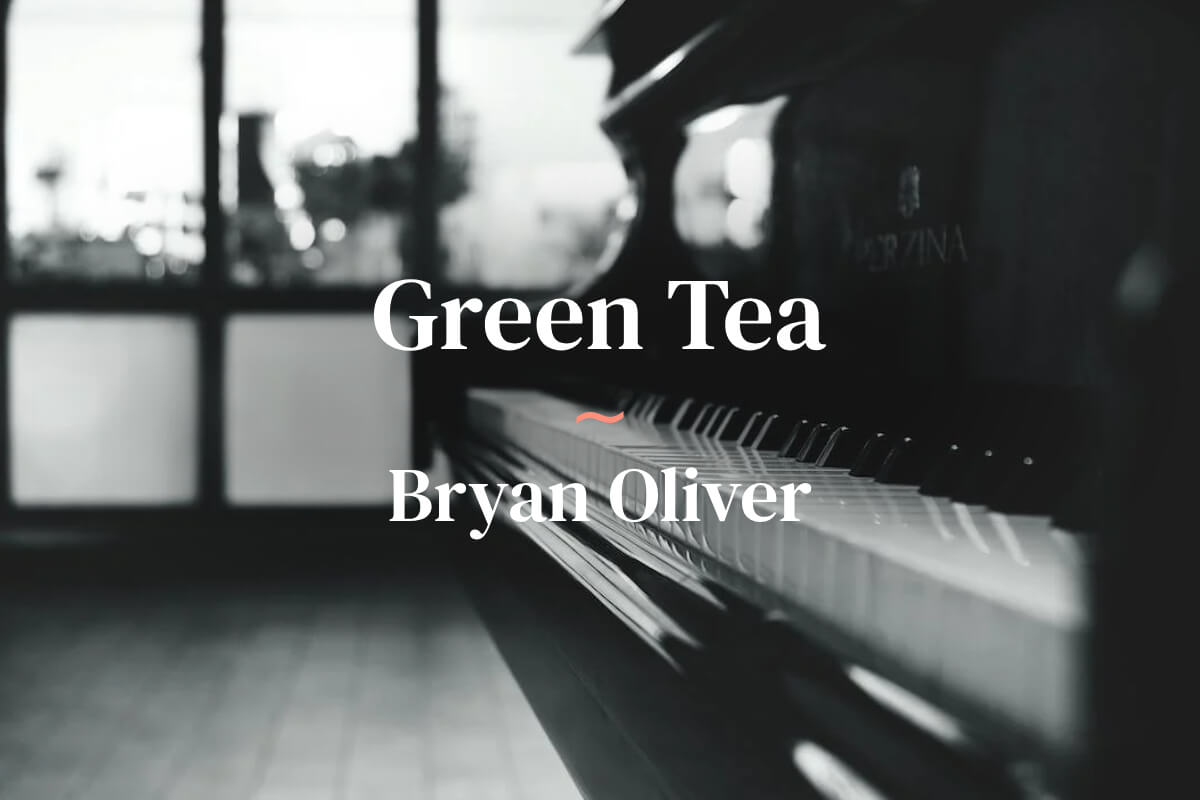
Around him was a mixture of the modern and the antique, the kind which is often found today in old New Orleans homes. A baby grand filled half the room, its lid open and its keyboard uncovered. Opposite it and against the wall were a set of mom and pop chairs, their cushions embroidered with twisting, faded pink flowers. If you sat in one of the chairs and leaned forward, you could just reach the short edge of a long, rectangular coffee table, and behind its long edge, facing the windows, there was the sofa on which Abel now sat. On top of the table there was a freshly made cup of coffee, still steaming, in a porcelain mug with a photograph printed onto it.
Abel was waiting. Soon there would be a knock on the door and she would be home. He would scold her for being late, but she would know he didn’t really mean it and that he was just happy to see her. He always was. It didn’t matter when she came so he always waited, even though it was hard sometimes, for Abel was getting on in years.
A shadow passed over the windows, barely visible, and Abel smiled. Slowly, he pulled himself to his feet and was already halfway to the door by the time he heard the now familiar tapping. He grasped the handle and pulled the door open, allowing the warm autumn air to fill the room. She was standing there looking the way she always did, a half repentant smile on her face, waiting for the half-hearted reproof that would be coming. Abel tried to put on a stern face and said, “you’re even later than usual,” then he broke into a grin.
“Hello Daddy,” she said, her smile now full and disarming.
“Well, don’t just stand there. Come on in,” he said, and then she was inside.
“Coffee or tea?” Abel asked.
“Tea,” she said, “As always. Why do you ask me each time?”
“You never know. We all change. If you ever do, I’ll be ready.”
She took a seat in one of the embroidered chairs and waited as Abel hurried back to the kitchen to reheat the kettle. The pot had already been set out with the tea leaves inside it for a long time. When everything was ready he carried her cup into the living room, peering around the corner as though she might not still be there, but of course she was. He put the tea down on the table in front of her.
“How were you today?” she asked.
“Today was hard. No sense denying it. You’re lucky you don’t get old.”
She laughed and said, “I suppose I am. Did you see anyone today?”
“No.”
“Good. I think that’s for the best you know. I don’t like those men you play cards with.”
“They’re not a bad sort,” he said, and then, looking up, “but certainly, I’d rather be with you.”
Her face grew darker for a moment and she said, “Really Daddy, if you meant that you’d come with me. Then there wouldn’t be any need for these late night visits.”
Abel smiled but didn’t respond. Instead, he said, “Play something for me.”
They went over to the piano together and Abel sat down. She sat next to him, placing her fingers just above his, and guided him through a painful, simplified rendition of one of Chopin’s Nocturnes, the one she had always played for him when she was a child.
“I can’t play it like you used to,” Abel said.
“No, you can’t,” she teased, and then, “but really, we’ve done this so much that I think you’re getting better.”
“I never really cared much about that. I just like to listen.”
She shrugged and said, “Well, people change.”
They went through the piece again, and then moved back to the couch. Abel said, “Now, tell me again about your life.” And she did. They sat there and she spoke and Abel listened, and they relived old memories so that he wouldn’t forget. Abel went through a second, and then a third coffee. It would be morning soon. After a while, he noticed that her tea was untouched and said, “Do you want me to heat that up for you?”
Her face took on the same dark color as before, and Abel felt as though the room had gotten slightly colder. “If you make it the way I like it,” she said.
“Please don’t say it that way,” he said, but she only stared back at him, and after a moment, with a heavy sigh, Abel got up and went to the bathroom. He took two tablets out of a half-empty bottle and returned. He picked up her tea, dropped the two tablets in it, and put the cup in the microwave. He placed the once more hot cup of tea in front of her. Outside, the gas lamps seemed to have shrunk to a flicker, and a glow of light was coming up on the horizon.
She got up and came over to him. She gave him a kiss on the forehead which he could not feel, and said, “I have to go now.”
“I know.”
“Will you come with me?”
“I don’t know. Maybe.”
“Okay. Well, if you don’t, I’ll come back tomorrow.” And then, as she turned to go, she added, “And if you do stay, don’t see those silly friends of yours. You need to sleep if you’re going to stay awake tomorrow. Just look at how much coffee you drank.”
Then she was gone. Abel hadn’t gotten up to open the door this time, that was only necessary when she came. There was no sound, no sign, he simply blinked and she was gone.
Abel looked down at her tea, still hot and steaming, which she had left there for him. It was made just the way she liked it, the way she had taken it once 30 years ago: green tea brewed in a pot with five leaves, steeped for three minutes and poured into a cup with two tablets of cyanide.
Abel watched the rays of the sun break through the curtains and looked down at the teacup. “No, not today,” he said aloud. Then he stood up, took the tea, and poured it down the kitchen sink. He tidied up, changed, and got into bed. He needed to get some rest. After all, she would come back tomorrow. She always came. “Yes,” he thought, closing his eyes, “Tomorrow I’ll probably go with her.”
.
THE END
.
Bio
Bryan Oliver writes and lives in New York City. He writes, for better or for worse, because the world seems to make a little bit more sense while he’s doing it.