
Joey was an itinerant musician busking the streets and playing at lowbrow bars at night to get by. He followed the seasons to cities and towns where the weather matched his clothes. Now, he was back in Frisco after seven long years.
Hitting a new town, the first thing he did was rent a room at some transient flophouse and Frisco was no different.
Walking down Mission Street, looking for a vacancy sign and cheap rates, as always, Joey stopped and gazed into the glare of nicotine-stained lobbies with filled shabby furniture. It was the usual scene in any place he hit on his travels – one hotel was pretty much the same as every other place he stayed – hourly rates – old men patiently waiting for the Grim Reaper. All sitting in the lobby under flickering fluorescent lights while reading newspapers or catatonically watching a TV hung from the ceiling. Several men clad in well-worn clothes clutching short dogs of wine wrapped tightly in brown paper bags as if they were hiding it from the desk clerk, and of course, the disinterested clerk was leaning on the counter reading a magazine or falling asleep behind the desk. All those transient hotels were the same as chain restaurants where the menus are all the same.
Standing beneath a buzzing green, white, and red neon sign, the text blinked, “Vacancy” and Joey stepped in the door. The lobbies of those old hotels always seemed to be stiflingly overheated and smelled of thick vintage must.
He rang the push bell on the counter, and the desk clerk came out from behind a motheaten pool table green felt curtain. He stood well over six feet, covered in prison tattoos, and had a glass eye that was a different color from his good eye.
Joey asked, “What’s your weekly rate?”
“Seventy-five bucks,” said the clerk.
As Joey reached for his wallet, there was a commotion at the top of the stairs. A john was trying to stiff a hooker by running out the door. She followed, screaming like a banshee, naked as she chased him down the stairs. Nonchalantly, Joey tripped the guy with his guitar case. As he got up the clerk came from behind the counter and coldcocked him with a bone-crushing blow to the head, proceeded to carefully remove his wallet, and asked the hooker, “How much did he try to stiff you for?”
The hooker said, “Fifty.”
The clerk said, “He’s only got thirty-seven,” and handed her the cash plus his credit card.
She seemed satisfied and went back upstairs to get dressed and hit the street again.
The clerk yanked the john to his feet, shoved the wallet into a jacket pocket, and lead him to the door, saying, “If I ever see you around here again, I’ll really kick the shit out of you!”
As Joey signed the register and handed the money over, the clerk said, “Thanks, man, I get paid to watch out for the girls, but still, it ain’t right. I would’ve fucked him up anyway. I might’ve missed him if you didn’t slow’em down.”
Joey said, “I can dig it. I’ve been stiffed by a lot of club owners. You should have given him a little extra,” and asked him if it was safe to leave his guitar in his room.
The clerk said, “You’re the only guy staying here with an axe, I’ll let the night guy know. There ain’t nobody getting out of here with your guitar.”
Joey gave him a knuckle bump and went up to his room knowing everything was cool.
After getting settled, Joey wandered around and dropped in bars and clubs looking for familiar faces, and he got the feeling this was going to be the same as hitting another city cold like New Orleans or Atlanta. It was going to be a rough start.
About the only thing that hadn’t changed in Frisco was the South of Market St. area; it was still seedy and the derelict winos still lurked in the shadows or begged for change under the streetlamps. The only difference was that new actors replaced the old cast of down-and-out characters.
It didn’t take long for him to see he’d entered into a different dimension.
The next day, he decided to visit his old friend Boo who he was sure lived in the same flat at Fell and Fillmore to catch up on things.
Nearing Boo’s flat, there was a group of people gathered outside a liquor store beneath the flat smoking dope, drinking, dancing around, and talking jive shit as if there was some significance to their existence. Joey called them “Jitterbugs.” They reminded him of waterbugs haplessly scurrying about on top of a pond going nowhere fast.
He recognized a conga player in the crowd he did some recording sessions with as sidemen and tried to push through the crowd as he called out his name – people grabbed him and one guy flashed a knife in his face.
The conga player recognized Joey and said, “He’s cool,” ran up, and to the ‘jitterbugs’ amazement, gave Joey a hug like a long-lost brother.
Joey asked, “How you been doing, Zim – any gigs around town I can sit in on? I need to get a start in the clubs.”
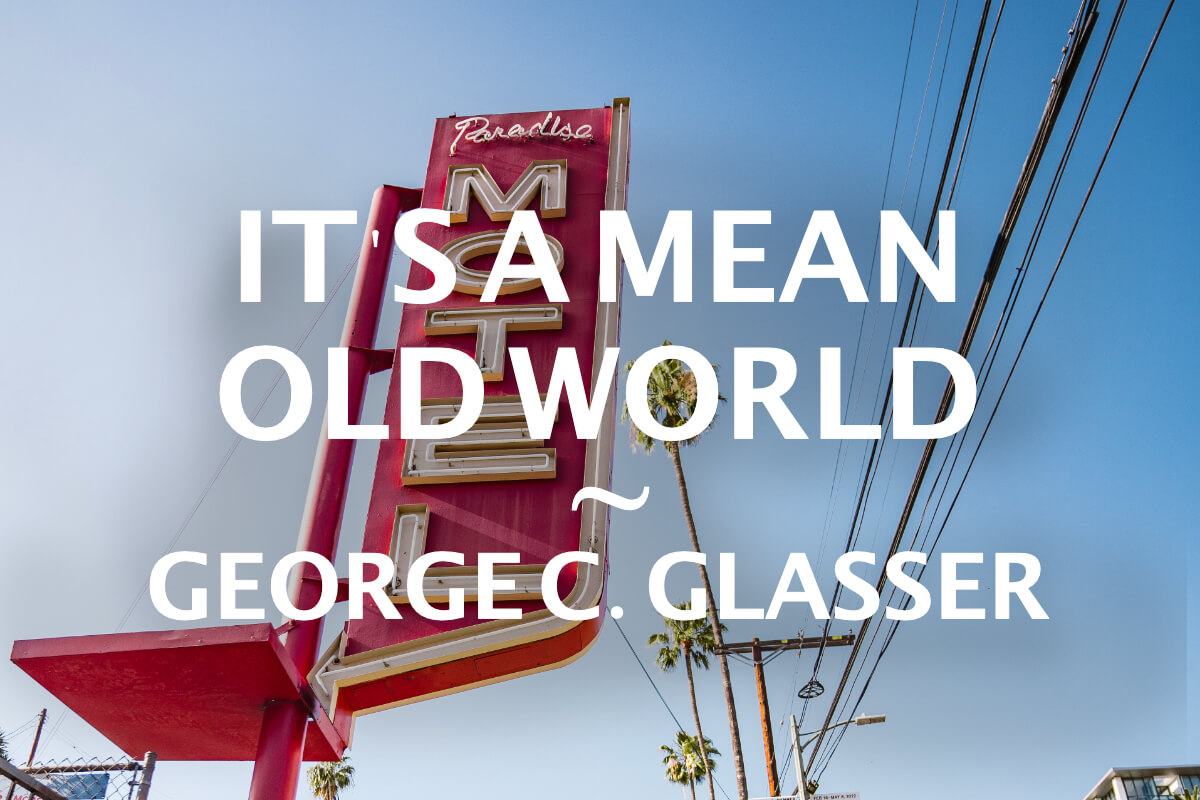
Zim said, “There ain’t much around for guys like us anymore. You know, it’s mostly jive middle-class white folks’ shit – pretty white boys singing pretty tunes. I get enough session gigs to get by. It ain’t like it used to be – it’s a mean old world for people like us these days.”
After a little small talk punctuated by a few slugs of wine and drags off a joint, Joey asked, “Does Boo still live upstairs?”
Zim said, “Nah, man. Boo scored big time and got some books published. He’s living in Maui now smoking righteous reefer, drinking fine wine, and soaking up the Hawaiian sun. What you up to these days?”
Joe replied, “Just got back in town and I been busking over at Ghiradelli Square. I evicted a couple of fiddle-de-de players. You’d think those assholes owned the street by the way they squawked when they found me in their spot. I’m making decent change off the tourists. It pays the rent with a little left over.”
“You still got that old raggedy-ass resonator guitar you glued together,” asked Zim.
Joey laughed and said, “Dig it, man, it might be ugly, but it’s loud and attracts attention when I’m busking – it’s my moneymaker. By the way, is Maggie still around?”
Zim said, “Your old squeeze?”
“Yeah, I was thinking about looking her up,” said Joey. “We had some good times.”
Zim said, “Not anymore. She got hooked on smack and OD’d a couple of years ago. There ain’t many of the old crowd left. They’re either dead, in jail, or got respectability. You know how it is, ain’t many of us left in the game. You been away a long time, things naturally change.”
Cutting the conversation short, Joey said, “Anyway, I got to hit the road. I got an audition at a folk club in Berkeley.”
“Be cool,” said Zim. “We’ll catch you around.”
Back in his dingy hotel room, he realized that aside from his guitar, all his worldly possessions were contained in a knapsack. Leaning over a rust-stained washbasin hung precariously on the wall, Joey gazed at his broken reflection in a shattered mirror, splashed water on his face, and said, “I gotta get out of this life. I’m going to head down to Florida, put together a band, and settle down. I’m getting too old for this nickel-and-dime life.”
About the Author
By a stroke of fate, Glasser landed in San Francisco in 1966 when the “Love and Peace” thing was happening; however, he got adopted by the old Beatnik crowd which was comprised of every stratum of society from Stanford intellectuals, to North Beach titty dancers, to Alcatraz alumni, etc.
He met a lot of the Beat writers and poets like Ferlinghetti and McClure, but didn’t know who they were at the time – just thinking they were people of high status in the scene. The whole scene could be volatile at times, and mundane at times, but he got a fast education about how to survive in the underbelly of society.
He also lived in Santa Monica, Ramond Chandler’s stomping ground where a friend of his had a milkman who took side orders for barbituates, pot, and benzedrine. The milkman was the type of sleaze that offered candy to little girls.
~
Glasser was an investigative environmental journalist for twenty years. For the past ten years, he wrote music reviews for an online Jazz radio station’s blog while he began compiling a collection of short stories.