
(estimated reading time – 9 mins)
Gunselle stopped to read at the “HELP WANTED” sign taped to the door. It didn’t take her long. What a bore, she thought, to work a square job.
“Wake up!” she shouted, breezing into the overheated, cheaply panelled room. Howard’s eyes popped open behind black-framed spectacles as he flailed his arms in tilted-desk-chair panic.
“Mrs. Davis. Very nice to see you again,” he said, gripping the edge of the desk.
Her surname wasn’t really Davis, and she’d long ago decided Howard was hopelessly in love with her. The young man had flushed tenacious Japs from tunnels on Okinawa, yet whenever she brushed against him, it seemed as though he might rattle apart at the seams.
The Hawkwood Pistol and Rifle Club offered its services about twenty miles west of Petaluma. Gunselle generally arrived midweek, during the morning, when she knew many of the private club’s other members would be working. She leaned the long, soft scabbard against the wall. Inside was her Springfield. Her big girl.
“Are we hitting the rifle range today?” asked Howard, glancing at the scabbard.
“Yes, Howard. We’re hitting the rifle range today.” He wasn’t the only man who jabbered nonsense when confronted by her soft brown hair, her bright-red lipstick, and her movie-star looks. “I’ll bring my pistols next time.”
Gunselle didn’t work very often, but she did have a job lined up for tomorrow. A big job. She felt tense, which was unusual, and she wanted to get started. It wasn’t the job ahead that made her nerves flutter. Killing the scandal-plagued mayor of Sacramento as he cut the ribbon on a new city park would be easy from the window of the high hotel room she’d reserved. And the pay was good. Usually, she killed men up close with her pretty pistols, and that never bothered her either. No, the thing that worried her right then was the creeping suspicion that she might be losing her keen eyesight at the age of thirty-two. The road signs on Highway 101 had been noticeably less distinct on the drive up, the horizon less promising. Gunselle regretted having put off a visit to the optometrist but not as much as she dreaded the way she’d look wearing eyeglasses.
* * *
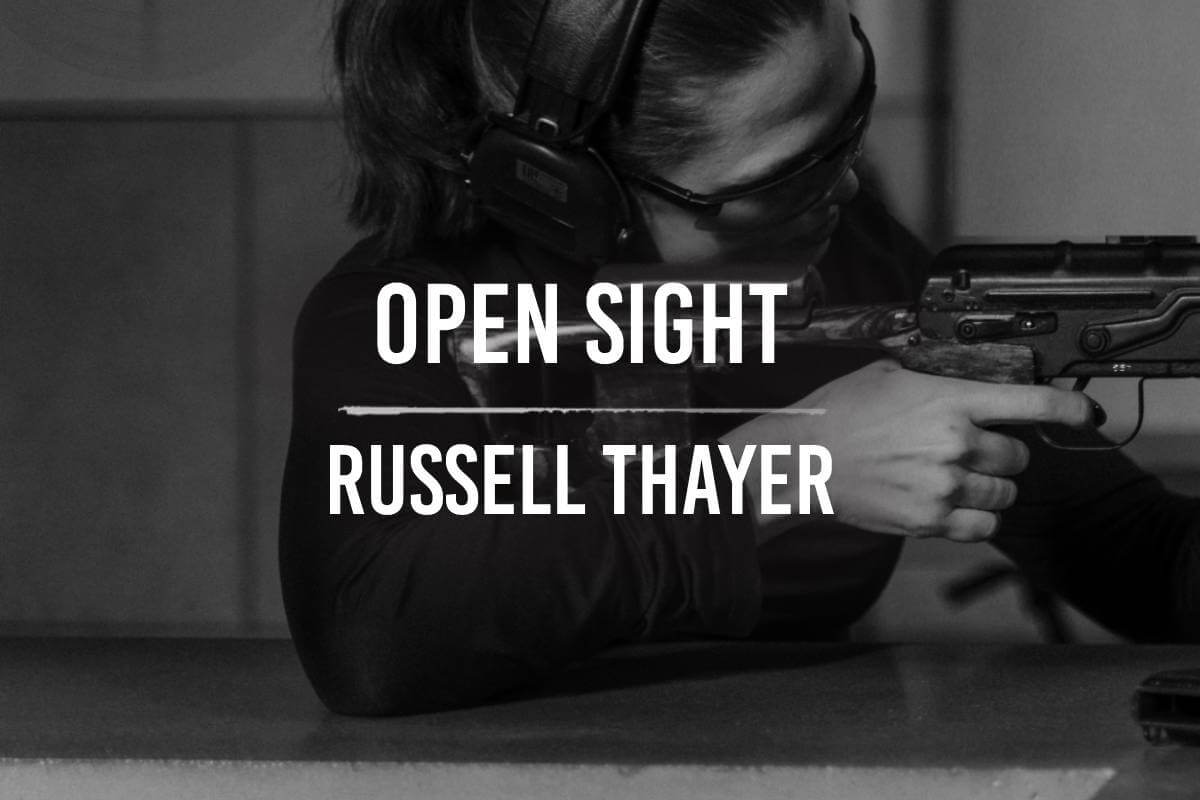
Howard spread a blanket over the gravel at the firing point. Gunselle, in khaki slacks and a loose sweatshirt, lay prone, the unzipped scabbard at her side. She’d requested human silhouettes at two hundred yards. Easy as pie.
“Are you staring at my bottom?” Gunselle asked as she pressed five .30-06 rounds into the rifle’s internal magazine.
“No, ma’am. Of course not.”
“Keep your eyes on the target,” she said as she lined up the sights, squinting to focus on the vaguely abstract outline downrange. She blinked her eyes a few times to clear them, fighting the blur, slowing her breathing, then feeling that small burst of excitement as the rifle kicked in her arms.
“You missed entirely,” said Howard.
“Are you sure?”
“I’m watching through binoculars. You were wide.”
“Damn it,” she said, squinting down the barrel again. The target had lost even more of its definition. She fired off three more rounds.
“Wide!” Howard shouted after each shot.
A couple of older men plugged away at targets nearby. Gunselle wondered if they could hear Howard broadcasting her failure. She thought about shooting the men and then Howard. All the witnesses. She’d never miss from this range.
“Maybe you should try a scope.”
“Stop right there,” said Gunselle. “My high school shooting team was Idaho State Champion three years running. Thanks to me. I was State Individual Champion each year. I once killed an elk at a thousand yards with this very rifle, and I’d never insult such a beautiful creature by using a scope to bring her down.”
“I’m sorry. Do you want to try my glasses?” Howard squatted next to her, holding the clunky black frames. The boy wasn’t bad-looking, she thought, without his cheaters.
Gunselle took the warm plastic in one hand and peered through the lenses at the gloomy clouds.
“They’re filthy.”
Howard took them back and breathed on each lens, wiping them on the hem of his white undershirt.
With a sigh Gunselle placed the eyeglasses on the bridge of her nose.
“Oh, my God,” she said as she looked at the hillside. Things were worse than she’d thought. It was as if she could now read nature’s fine print. “How do I look?”
“You’re still as pretty as a picture postcard,” said Howard, sounding pleased to get the compliment off his chest.
“Thanks,” said Gunselle, rolling prone on the ground again. The Springfield, with its familiar oily smell, seemed to crawl back into her arms. Her father had walked her down to the station when the train carrying surplus rifles for sale stopped in town. It was the only thing she owned that was a part of her past, other than the bad memories.
The frames sat large on her face and slid down her nose. She felt like a goofy kid pushing them up again as she lay on the ground. Lining up the sights, she was amazed that the lenses worked perfectly. She hadn’t seen this well in years. After collecting tomorrow’s payoff she’d have plenty of dough for a new outfit, a trip to Havana, and a pair of the prettiest designer eyeglasses money could buy.
Gunselle squeezed off another round. She could see the target flutter. A spray of dirt on the ground behind it. Howard glanced through his binoculars.
“Smack dab in the middle of his forehead. You’re a fine shot, Mrs. Davis.”
Gunselle felt her nerves settle. After rolling to her side and up on her elbow, she pushed the frames into her hair.
“Howard?” she said. “What would you say if I asked to borrow your goggles for a couple of days?”
“I don’t think that’s a good idea,” he said, looking pained. “I mean, I need them to see. To drive home, at least. And they don’t fit you, anyway.”
“That’s the wrong answer,” she said, picking a piece of dried leaf off of her breast. “Let’s try this, then. I’m thinking of staying at a motel in town tonight. Would you like to take me to dinner?”
“Golly. That’d be swell,” said Howard, turning red.
“Fine,” said Gunselle, using her prettiest smile as she handed back the eyeglasses, wondering if he’d miss them in the morning.
* * *
Lunch customers hurrying in and out of the dining room filled the hotel lobby. Gunselle set the heavy, rolled rug upright against the lobby desk. Held together at each end with leather straps, the rug was sized for a small entryway and rolled with the finished side out to protect it from oil stains. It bore a dangling price tag.
“Good afternoon, madam,” said the clerk. “Do you have a reservation?”
“Ann Smith.” Gunselle brushed her hand against her best blond wig.
“Let me see,” he said, running his finger around on a thick ledger. “Ah. Here it is. Room 610. The top floor. Marvellous view. Do you have any bags?” He glanced over the counter.
“Just these. I can manage.” She’d also brought a small suitcase.
“That’s a lovely rug. Persian?”
“Yes. I’ve been shopping all morning,” said Gunselle as she gathered everything together, along with the key. “You’ve got good eyes.”
A few men stared at her in the elevator but the heat wasn’t there. Maybe it was the wig. Maybe she was getting old. She’d noticed a pretty woman in the lobby wearing eyeglasses, and she smirked as she thought how men were always surprised in a movie when someone became suddenly glamorous after removing their spectacles with a seductive smile, their carnal secrets somehow hidden all that time behind a small cage of plastic. She recalled sitting on top of Howard last night, naked from the waist up, wearing his glasses, asking him if he truly found her attractive with them on. Every indication seemed to point toward the affirmative. However, he did ask her to please take them off.
After locking the hotel room door, Gunselle went to the lone window. The portable stage, decorated with bunting, had been set up at the edge of the park, as promised. This would be an easy shot. There was little wind. She couldn’t miss.
Gunselle unrolled the Springfield on the bed, then opened the suitcase. Buried among the old clothes was a metal box about a foot long. The box contained a black Maxim silencer. She lifted the window half a foot, pulled the shade down to the bottom of the sash, then knelt on the floor and studied the shot. She would get only one, but that was part of the business of killing. And it was good business. It had gotten her away from Idaho in desperation, then away from Los Angeles and the tough whoring she’d had to do in her early twenties when the small movie parts dried up. She banked her kill-money with an investment firm that didn’t ask questions. When the time came she would put away her guns and purchase a little dress shop far away. She hadn’t bagged her limit yet.
Gunselle sat quietly in the dim hotel room for half an hour. A soft breeze began to lick at her through the open window. It wasn’t enough to worry about. She surprised herself by thinking of Howard again, how handsome he’d looked sprawled in the bed that morning, how pleasing he’d been before that.
A crowd soon gathered in the park, cheering as the mayor took the podium. Gunselle picked up her loaded girl and fitted the silencer over the end of the barrel. She eased it out the opening but not too far, breathing slowly, sighting calmly.
Gunselle squeezed off the shot without judgment, true as always, then slowly eased the barrel in. Screams came from the crowd, from women with brain matter in their hair. She calmly wrapped the Springfield in the Persian rug, securing the ends with the leather straps. After repacking the silencer in the suitcase, she unlocked the door. A sleek Studebaker waited in a garage two blocks away. Her heart beat heavily, as it always did when time was of the essence, but she barely perspired, barely shook.
On the elevator ride down, people spoke frantically about a possible shooting in the park across the street. Gunselle expressed shock when a man asked her if she’d heard. A clamour permeated the lobby, people straining to catch a glimpse of something out the windows. She crossed the room toward the entrance, unsuspected, and walked into sunshine.
* * *
Gunselle exploded into the office. It was still too hot in the room. Howard sat at his desk, chin in his hands. He seemed a thousand miles away. On the bloody rocks of Okinawa, perhaps. Or remembering the night before. She threw the “HELP WANTED” sign on the desk.
“Wake up!”
He lifted his head, eyes red-rimmed, pathetic.
“Mrs. Davis,” he mumbled. “Where did you go this morning?”
“I had an appointment with your eye doctor.”
“Really?”
“Pull it together, Howard. You look like a king who’s lost the keys to his kingdom. And I was thinking,” she said, tapping the sign with her finger, “that maybe we could work together for a while. Might be fun.”
“Golly, Mrs. Davis.” He blushed. “I’d like that.”
“After our little get-together in the motel, maybe you could call me Vivian.” It wasn’t her real name either. Reaching out with the folded specs, she zeroed in to touch him on the end of his nose. “And dinner is on me tonight.”
THE END
BIO:
Russell Thayer’s work has appeared in The Phoenix, Evening Street Review, Cirque, Close to the Bone, Bristol Noir, Hawaii Pacific Review, Shotgun Honey, Punk Noir, Pulp Modern, and Tough. He received his BA in English from the University of Washington, worked for decades at large printing companies, and currently lives in Missoula, Montana. He can be found lurking on Twitter @RussellThayer10